
About Diriye Osman
Born 1983. Diriye Osman is a Somali painter, writer and author.
Diriye Osman (, ) (born in 1983) is a British-Somali author, visual artist, critic and essayist. His books include the award-winning collection of stories, Fairytales For Lost Children, and the collection of interlinked stories, The Butterfly Jungle, which Osman wrote and designed on his phone. Dubbed "a master of the surreal" and one of the most influential LGBT people in the UK, his writing and art have appeared in The Guardian, Granta, The Financial Times, The Huffington Post, Vice Magazine, Poetry Review, Prospect Magazine, Time Out London, Attitude Magazine, Afropunk, and many other publications.
Biography Osman was born in 1983 in Mogadishu, Somalia. When the civil war broke out in the early 1990s, he and his family relocated to Nairobi, Kenya.
As a child, Osman developed an interest in fashion design. His parents encouraged his desire to become a designer. An avid reader, he was also enthralled with the works of C. S. Lewis and Roald Dahl, as well as The Adventures of Tintin and Calvin and Hobbes. In 2001, Osman and his family moved again to London, England.
In 2002, at the age of 18, Osman was diagnosed with psychosis and institutionalised in a mental hospital in Woolwich, South London. He was so traumatized by the experience that he did not speak for nearly six months. After he was released from the hospital, his mother encouraged him to apply for a library card and he began to read Nuruddin Farah, Arundhati Roy, Zadie Smith, Manil Suri, Alice Munro, Alison Bechdel, ZZ Packer, Edwidge Danticat and Junot Díaz. By reading as widely as possible, Osman regained the confidence to speak. Reading extensively also made him want to learn about characters and stories that echoed his own experiences. He has commented that although he writes for a general audience, his main interest is in positively representing the universal Somali experience. Much of his literary work has also been based on his own life as a gay man, as well as other personal experiences. These and other stories were published as part of his 2013 debut collection Fairytales for Lost Children. Osman personally designed the illustrations for the book over several weeks. With the assistance of his cousin Osob Dahir, a poet, he translated the title of each story using Arabic calligraphy.
Fairytales for Lost Children was well received by literary critics, with Magnus Taylor of New Internationalist calling Osman "a startlingly original voice". Binyavanga Wainaina hailed the book as "taut, feral, sinewy, fearless", Jameson Fitzpatrick of Next Magazine noted that the "stories are suffused with the possibility of joy and pleasure"; Alison Bechdel added that through storytelling Osman creates a shelter for his displaced characters, "a warm place which is both real and imaginary, in which they find political, sexual, and ultimately psychic liberation;" Roxane Gay in The Nation also summarized the piece as a "raw collection of short stories"; Eden Wood of Diva Magazine praising Osman's "vivid and intimate" style; Will Davis, writing in Attitude Magazine, likewise noted that Fairytales for Lost Children was "a rich, complex and lyrical set of tales," adding that "this collection of stories is sure to move and enthral in equal measure." Additionally, Somali writer Nuruddin Farah described Osman's prose as "fantastic", indicating that he "read some of the stories more than once and saw in each one of them plenty of talent everywhere". Osman was praised by Brittle Paper as being "a master of the surreal", Described as a book with Afrofuturist influences, Osman wrote the novel on his phone.
Osman's writing has appeared in a number of publications, including the Poetry Review, Financial Times, Time Out London, Prospect, Kwani?, Under The Influence, The Guardian, The Huffington Post, Vice, Jungle Jim, Attitude and SCARF Magazine, the latter of which was founded by Osman's editor Kinsi Abdulleh. To this end, Osman's piece The Goddess Complex – Aquatic Arabesque, which he painted during a three-week commission for an Omani-English couple with whom he was friends, features a poem entitled "Your Love" by the Syrian poet Nizar Qabbani. Osman's At The Altar of Imagination, a non-commissioned drawing, likewise contains Hebrew script in addition to Arabic verses by the Sufi poet Ibn ‘Arabi.
Osman usually paints using 3D textile paint, glow-in-the-dark glue, powder dye and temporary tattoo stickers, among other craft-based materials. He also utilizes Swarovski crystals for a more lavish effect. The Guardian also named the work one of the best books of the year. Osman was named one of the most influential LGBTI people in Britain by The Independent on Sunday.
Selected works Writing Fiction Fairytales for Lost Children (2013) This Is How We Soften Our Hearts (short, 2014) We Once Belonged to the Sea (2018) The Butterfly Jungle (2022)
Non-fiction How Art Can Save a Life (2014) To Be Young, Gay and African (2014) in Gordon, J.R. & Beadle-Blair, R. eds., 2014. Black and Gay in the UK - An Anthology A Feminine Man is a Powerful Thing To Be (2014)
Visual art THE GODDESS COMPLEX – Aquatic Arabesque At The Altar of Imagination Keepsakes of Light The Enchanted Forest Inside My Head
Don’t just read it —
keep it.
Full-length biographies made to live with: read them, listen on the way to work, watch them tonight.
- E-book
- Audio
- Video
Instant download · yours to keep · every purchase keeps this site free
Important facts
People in Diriye Osman's life
Named in this biography and alive at the same time

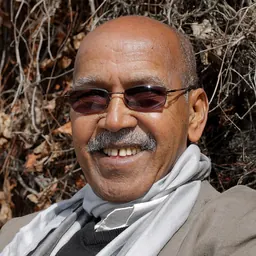

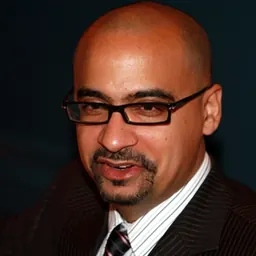
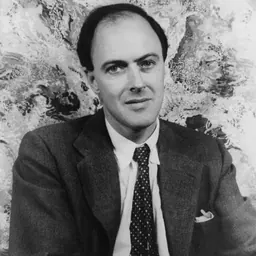
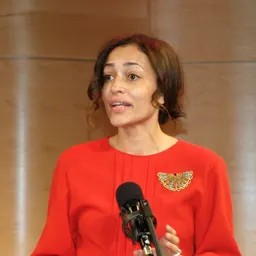
Related people
Same field, nearest in time



Contemporaries
People whose lives overlapped Diriye Osman's




Frequently asked questions
Who is Diriye Osman?
Somali writer and visual artist
When was Diriye Osman born?
Diriye Osman was born in 1983 in Mogadishu.
What is Diriye Osman's occupation?
Diriye Osman is a painter, writer and author.
What nationality is Diriye Osman?
Diriye Osman is Somali.
Sources & further reading
Cite this page
APA: Biography.guide. (2026). Diriye Osman. https://biography.guide/diriye-osman/
MLA: "Diriye Osman." Biography.guide, https://biography.guide/diriye-osman/.
Chicago: "Diriye Osman." Biography.guide. https://biography.guide/diriye-osman/.
Data last updated: 2026-09-20 · Spot an error? Report a correction.
Page generated 2026-09-27 05:28 UTC