
About Dion of Syracuse
Lived 409 BC – 354 BC (aged 54–55). Dion of Syracuse was a politician and tyrant.
Dion (; ; 408–354 BC), tyrant of Syracuse in Magna Graecia, was the son of Hipparinus, and brother-in-law of Dionysius I of Syracuse. A disciple of Plato, he became Dionysius I's most trusted minister and adviser. However, his great wealth, his belief in Platonism and his ambition aroused the suspicions of Dionysius I's son and successor, Dionysius II. An indiscreet letter from Dion to the Carthaginians led to his banishment. Settling in Athens, he lived a prosperous life until Dionysius II dispossessed him of his estates and income. Landing in Sicily in 357 BC, he was successful in conquering Syracuse (other than the citadel). However, Dion soon quarrelled with the radical leader Heraclides and was forced into exile. Recalled in 355 BC, he became master of the whole city but alienated the population with his imperious behaviour and financial demands. His supporters abandoned him, and he was assassinated. Dion's attempts to liberate Sicily only brought the island political and social chaos which lasted for nearly 20 years.
Family Dion was the son of the Syracusan statesman Hipparinus, who had served with Dionysius I in the Syracusan army. Hipparinus' other children were Megacles and Aristomache. Aristomache married Dionysius I, who also married Doris of Locris at the same time. Although Dion's sister was popular with her fellow Syracusans, it was Doris who gave birth to Dionysius I's heir Dionysius II.
Aristomache had four children. Of these children, Sophrosyne married Dionysius II and Arete married Dion (with their son being called Hipparinus).
Advisor to Dionysius I As a trusted advisor to Dionysius I, Dion was given the most important diplomatic assignments. Dion excelled in managing the embassies that dealt with Carthage. Dionysius I was so satisfied with Dion's role as advisor that eventually Dion was authorized to withdraw money from the Syracusan treasury. The tyrant demanded, however, to be informed daily when he did so. Despite this requirement, Dion became extremely rich and his residence was magnificently furnished. Nonetheless, Dion occasionally criticized Dionysius I. Dion joined Plato's philosophical school, where he excelled as a disciple, (References to Dionysius in this article hereafter refer to Dionysius II unless otherwise specified.) As an adult Dionysius was given to libertine practices. After 13 days, Dion's fleet reached Sicily at Pachynus. However, despite his own helmsman's advice, Dion sailed further along the southern coast of Sicily where the fleet was hit by a storm and nearly smashed into pieces against the rocks near Cercina, in northern Africa. The fleet had to wait for five days until a favourable southerly wind brought it back to Sicily. Dion was then able to land in Carthaginian territory. As he was a personal friend of the governor Synalus of Heraclea Minoa, the Carthaginians offered lodging and plentiful supplies to Dion's expedition. However, Diodorus (16.20.6) described these honours as heroic.
During the next days, most of the opponents of Dion fled. Amongst the few who remained was Heracleides who sought Dion's pardon. Dion's foreign mercenaries suggested that he should be executed. However, Dion pardoned him and agreed to the arrangement where Dion would be general with full power on land while Heracleides would remain admiral by sea.
The Syracusans began insisting, once again, about redistributing land and restoring democracy. However, according to Bury, Dion thought democracy was as bad a form of government as tyranny. Instead he hoped to create a Platonic state and establish an aristocracy with some democratic limitations and with a king and a senate made up of aristocrats. Also, the people of Syracuse wished to see the citadel of the tyrant demolished, but Dion allowed it to remain. Dion seemed to have no intention of allowing the Syracusans to manage their own affairs. His authority was now only limited by his joint command with Heracleides.
Heracleides refused joining the aristocratic senate even after an invitation of Dion and, again, the populist leader began conspiring. He protested because Dion had not destroyed the acropolis and because he had brought in foreign politicians. At last, Dion was persuaded to consent to having Heracleides assassinated at his own home.
Although Dion led the funeral for the popular leader, the assassination was quite resented by the people of Syracuse.
Assassination Among those who had come with Dion from Greece to help liberate Syracuse was a pupil of Plato named Calippus.
From his exile, Dionysius had offered a bribe to Calippus to kill Dion and Calippus had accepted the offer. Calippus used the money from Dionysius to bribe some of Dion’s troops to defect to him. He then won Dion’s trust by betraying some of these soldiers to Dion, who then enlisted Calippus as a secret agent to discover further plotters. So whenever Dion was told that Calippus was undermining him, Dion simply thought that Calippus was acting in his role as a spy.
Shortly afterwards, Dion’s only son fell from a window and died. Dion’s wife, Arete, and sister, Aristomache, discovered Calippus’ plot against Dion, but Dion was still paralysed with remorse from his son’s death, and refused to take action.
Arete and Aristomache continued their enquiries into Calippus' plot against Dion, and when Calippus discovered their inquisitiveness, he approached them and told them that he was loyal and that he would prove his loyalty. They told him to take the Great Oath, involving a ceremony in Persephone’s temple, which he took. Following the ceremony, Calippus broke his vow and planned to kill Dion on the day celebrating the goddess Persephone.
On that date, Dion was celebrating at home with his friends. The assassins were Zacynthians, who wore light garments and who were unarmed. They walked into the house while other accomplices began shutting all doors and windows. The mercenaries attacked Dion choking him and then with a short Spartan sword he was stabbed to death.
Following Dion's assassination, Calippus seized power himself and ruled as tyrant of Syracuse for about a year before Syracuse successfully revolted against his rule and he was exiled from the city.
In popular culture Dion appears as a central character in Mary Renault's historical novel about classical Syracuse The Mask of Apollo (1966).
Don’t just read it —
keep it.
Full-length biographies made to live with: read them, listen on the way to work, watch them tonight.
- E-book
- Audio
- Video
Instant download · yours to keep · every purchase keeps this site free
Important facts
People in Dion of Syracuse's life
Named in this biography and alive at the same time
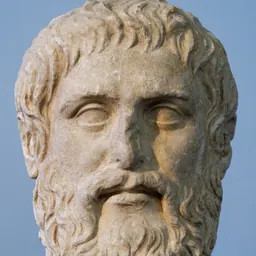

Related people
Same field, nearest in time

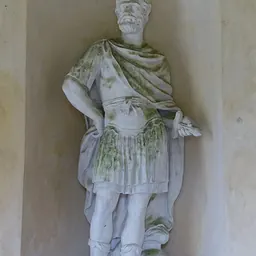


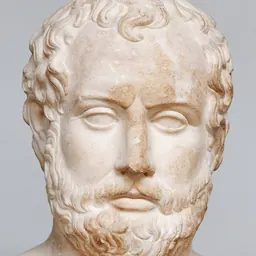
Contemporaries
People whose lives overlapped Dion of Syracuse's
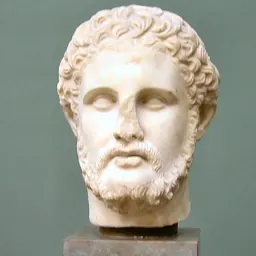


Frequently asked questions
Who was Dion of Syracuse?
4th-century BC Tyrant of Syracuse
When was Dion of Syracuse born?
Dion of Syracuse was born in 409 BC in Syracuse.
When did Dion of Syracuse die?
Dion of Syracuse died in 354 BC in Syracuse.
What was Dion of Syracuse's occupation?
Dion of Syracuse was a politician and tyrant.
Sources & further reading
Cite this page
APA: Biography.guide. (2026). Dion of Syracuse. https://biography.guide/dion-of-syracuse/
MLA: "Dion of Syracuse." Biography.guide, https://biography.guide/dion-of-syracuse/.
Chicago: "Dion of Syracuse." Biography.guide. https://biography.guide/dion-of-syracuse/.
Data last updated: 2026-09-26 · Spot an error? Report a correction.
Page generated 2026-09-27 05:15 UTC