
About Dioguinho D'Mello
Lived 1908 – 1976 (aged 68). Dioguinho D'Mello was a writer and singer.
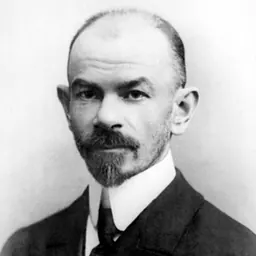
Francis Diogo Romano de Mello (3 March 1908 – 30 September 1976), known professionally as Dioguinho D'Mello, was an Indian writer, singer, playwright, and sailor known for his work in tiatr productions. Referred to as the "Ambassador of the Konkani stage" by writer Fausto V. Da Costa, he was a multilingual singer. Using the pen name Diodem, de Mello wrote for publications such as The Goa Mail and The Goa Times of Bombay. In addition to Mogachi Vodd, he penned several novels including Tambddo Moyekar, Dharunn Calliz, Khotto Put, Konn Zait To Crimidor?, and Ugddas 1901 Vorsacho.
Early life Francis Diogo Romano de Mello was born on 3 March 1908, in Pangim, Goa, which was part of Portuguese India during the Portuguese Empire. He was a native of Candolim. His early education was conducted in the Portuguese language, while his higher education was in English. This bilingual upbringing enabled him to develop proficient skills in both languages. De Mello embarked on a career in the industrial sector, initially working at the Mazagon Docks and later at Richardson and Cruddas in Bombay. However, his adventurous character led him to pursue opportunities as a steward on various ships, allowing him to voyage to destinations such as Europe, Mexico, and Miami in the United States of America.
Career De Mello introduced a unique yodelling technique characterized by a natural tremolo in his voice. His yodelling performances often resulted in applause. De Mello's vocal style encompassed melodic and expressive sounds, transitioning between falsetto and his normal voice. His literary work, Mogachi Vodd, which had its second edition released in 1971, served as the inspiration for the first black and white Konkani film titled Mogacho Aunddo, produced by Al Jerry Braganza of Mapuçá. The film premiered on 24 April 1950. De Mello commenced his career on the Konkani stage at the age of 17. His compositions featured songs in Konkani, English, and Portuguese, often translating English songs into Konkani, a practice commonly adopted by solo singers in tiatrs during that era. De Mello's performances garnered acclaim, earning him a reputation and bringing recognition to the state of Goa. As he traveled worldwide, he showcased Konkani songs at various events, effectively promoting Goan culture and acting as a cultural ambassador for the Konkani stage. During his visits to Bombay, de Mello actively participated in tiatrs.
De Mello was known for his adeptness in composing and performing a diverse range of songs, including Mandos, Dulpods, and devotional compositions. His musical repertoire encompassed a wide array of themes, exemplified by tracks such as "Atom Bomb," "Hem Mannic," "Cheddum Forsugelem, "Ponnjechea Pattear," "Orasaum Fatima Saibinnik," and "Sam Francis Xavier." These compositions gained popularity among the Goan populace and continue to be sung at places of worship, Mando festivals, and other auspicious occasions to this day. De Mello belonged to an era where he showcased his talent for blending English and Konkani songs, distinguishing him from his contemporaries. Among his peers were Patrick Fireman, Luis Borges, Emidio Sailor, Anthony Vaz, A. R. Souza Ferrão, Souza Guiao, and Anthony De Sa. In 1947, de Mello's vocal abilities earned him the first prize in a singing competition held at the Indo-Portuguese Institute in Bombay. During a visit by the Stars of Portugal to Goa, he was recognized as the preeminent voice of Goa among the gathering of singers. Many of his compositions were recorded by record labels such as Gramophone Company India and Twin/Tone Records, further contributing to their popularity. Additionally, de Mello collaborated with his sister Ismenia, creating duets that captivated audiences in tiatrs, which are popular Goan theatrical productions. He played a pivotal role in promoting the works of fellow tiatrists by introducing them to The Gramophone Company of India. His support and guidance played a significant role in establishing Jacinto Vaz as a professional musician, as he facilitated Vaz's admission into the National Artist Unity. Furthermore, de Mello assumed the key position of lead singer and organizer of the Konkani section of Emissora de Goa, a broadcasting station dedicated to promoting local talent and culture. (née de Mello), who was employed by Emissora de Goa and was a singer in the Konkani theatrical genre. De Mello was recognized as a devoted Roman Catholic, regularly participating in Eucharistic celebrations, even during his travels as a seafarer. His sister, Ismenia, resided in the Orda ward in Candolim and was a neighbor of writer and politician Tomazinho Cardozo. De Mello frequently visited his sister, engaging in evening singing sessions with her and their friends. Despite declining health that led to the loss of his eyesight in his later years, de Mello remained active, demonstrating his passion for Konkani language, Konkani theatrical performances, and Konkani music through his creative endeavors. On 30 September 1976, he died, aged 68, in Goa.
Selected stage works
Don’t just read it —
keep it.
Full-length biographies made to live with: read them, listen on the way to work, watch them tonight.
- E-book
- Audio
- Video
Instant download · yours to keep · every purchase keeps this site free
Important facts
People in Dioguinho D'Mello's life
Named in this biography and alive at the same time


Related people
Same field, nearest in time
Contemporaries
People whose lives overlapped Dioguinho D'Mello's


Frequently asked questions
Who was Dioguinho D'Mello?
Indian writer and singer (1908–1976)
When was Dioguinho D'Mello born?
Dioguinho D'Mello was born on 3 March 1908.
When did Dioguinho D'Mello die?
Dioguinho D'Mello died on 30 September 1976.
What was Dioguinho D'Mello's occupation?
Dioguinho D'Mello was a writer and singer.
Sources & further reading
· Wikipedia: Dioguinho D'Mello
Cite this page
APA: Biography.guide. (2026). Dioguinho D'Mello. https://biography.guide/dioguinho-d-mello/
MLA: "Dioguinho D'Mello." Biography.guide, https://biography.guide/dioguinho-d-mello/.
Chicago: "Dioguinho D'Mello." Biography.guide. https://biography.guide/dioguinho-d-mello/.
Data last updated: 2026-09-20 · Spot an error? Report a correction.
Page generated 2026-09-27 05:31 UTC