
About Dimitri Tiomkin
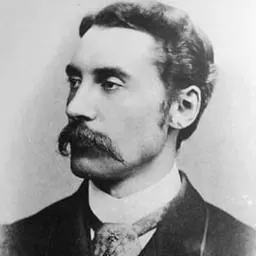
Lived 1894 – 1979 (aged 85). Dimitri Tiomkin was an American and Russian pianist, composer, conductor, film score composer, film producer and music arranger.
Dimitri Zinovievich Tiomkin (May 10, 1894 – November 11, 1979) was a Russian (Attributed to the following sources: in Kremenchug, a city then in the Poltava Governorate of the Russian Empire and now in Ukraine.)
His family was of Jewish descent; his father, Zinovy Tiomkin, was a "distinguished pathologist" and associate of professor Paul Ehrlich, and later a notable Zionist leader. His mother, Maria Tartakovskaya, was a musician who began teaching the young Tiomkin piano at an early age. Her hope was to have her son become a professional pianist, according to Tiomkin biographer Christopher Palmer. Tiomkin described his mother as being "small, blonde, merry and vivacious." He also studied piano with Isabelle Vengerova.
He survived the revolution and found work under the new regime. In 1920, while working for the Petrograd Military District Political Administration (PUR), Tiomkin was one of the lead organizers of two revolutionary mass spectacles, the Mystery of Liberated Labor, a mystery play for the May Day festivities, and The Storming of the Winter Palace for the celebrations of the third anniversary of the Bolshevik Revolution. He supported himself while living in Saint Petersburg by playing piano accompaniment for numerous Russian silent films.
He moved to Paris with his roommate, Michael Khariton, to perform a piano duo repertory together. They did this before the end of 1924.
Career In 1925, the duo received an offer from the New York theatrical producer Morris Gest and emigrated to the United States. They performed together on the Keith/Albee and Orpheum vaudeville circuits, in which they accompanied a ballet troupe run by the Austrian ballerina Albertina Rasch. Tiomkin and Rasch's professional relationship evolved into a personal one, and they married in 1927.
While in New York, Tiomkin gave a recital at Carnegie Hall that featured contemporary music by Maurice Ravel, Alexander Scriabin, Francis Poulenc, and Alexandre Tansman. He and his new wife went on tour to Paris in 1928, where he played the European premiere of American George Gershwin's Concerto in F at the Paris Opera, with Gershwin in the audience.
After the stock market crash in October 1929 reduced work opportunities in New York, Tiomkin and his wife moved to Hollywood, where she was hired to supervise dance numbers in MGM film musicals.
Working for Frank Capra (1937–1946) Tiomkin received his first break from Columbia director Frank Capra, who chose him to write and perform the score for Lost Horizon (1937).
In his autobiography, Please Don't Hate Me! (1959), Tiomkin recalls how the assignment by Capra forced him to first confront a director in a matter of music style:
e gave me the job without reservation. I could write the score without interference, and he would hear it when it was done. Lost Horizon offered me a superb chance to do something big.... I thought I might be going a little too far in the matter of expense, and went to Frank one day as he sat in the projection room [and explained the score.].... He looked shocked. "No, Dimi, the lama is a simple man. His greatness is in being simple. For his death, the music should be simple, nothing more than the muttering rhythm of a drum." "But Frank, death of lama is not ending one man, but is death of idea. Is tragedy applying to whole human race. I must be honest. Music should rise high, high. Should give symbolism of immense loss. Please don't hate me."
According to film historian Arthur R. Jarvis Jr., the score "has been credited with saving the movie." Another music expert, Mervyn Cooke, agrees, adding that "the song's spectacular success was partly responsible for changing the course of film-music history". Tiomkin composed his entire score around this single western-style ballad. He also eliminated violins from the ensemble. He added a subtle harmonica in the background, to give the film a "rustic, deglamorized sound that suits the anti-heroic sentiments" expressed by the story.
Tiomkin won two more Oscars in subsequent years: for The High and the Mighty (1954), directed by William A. Wellman, and featuring John Wayne; and The Old Man and the Sea (1958), adapted from an Ernest Hemingway novel. During the 1955 ceremonies, Tiomkin thanked all of the earlier composers who had influenced him, including Beethoven, Tchaikovsky, Rimsky-Korsakov, and other names from the European classical tradition.
The composer worked again for Zinnemann on The Sundowners (1960).
Film genres and other associations Many of his scores were for Western films, which were extremely popular in this period, and for which he is best remembered. His first Western was the King Vidor-directed Duel in the Sun (1946). In addition to High Noon, among his other Westerns were Giant (1956), Friendly Persuasion (1956), Gunfight at the O.K. Corral (1957), and Last Train from Gun Hill (1959). Rio Bravo (1959), The Alamo (1960), Circus World (1964) and The War Wagon (1967) were made with the involvement of John Wayne. Tiomkin received Oscar nominations for his scores in both Giant and The Alamo. He told TV host Gig Young that his aim in creating the score for Giant was to capture the "feelings of the great land and great state of Texas."
Although influenced by European music traditions, Tiomkin was self-trained as a film composer. He scored many films of various genres, including historical dramas such as Cyrano de Bergerac (1950), The Fall of the Roman Empire (1964), and Great Catherine (1968); war movies such as The Court-Martial of Billy Mitchell (1955), The Guns of Navarone (1961), and Town Without Pity (1961); and suspense thrillers such as 36 Hours (1965).
Tiomkin also wrote scores for four of Alfred Hitchcock's suspense dramas: Shadow of a Doubt (1943), Strangers on a Train (1951), I Confess (1953), and Dial M for Murder (1954). Here he used a lush style relying on solo violins and muted trumpets. He composed the score for the science fiction thriller The Thing from Another World (1951), which is considered his "strangest and most experimental score." He also appeared as a contestant on the October 20, 1955, episode of the TV quiz program You Bet Your Life, hosted by Groucho Marx.
He composed the music to the song "Wild Is The Wind". It was originally recorded by Johnny Mathis for the film Wild Is the Wind (1957).
Composition styles and significance quote=He's a Russian-born gentleman who has written just about the most American-sounding tunes you and I have ever heard. — —Gig Young, TV interview with Tiomkin in 1956
He came from a Big Country, too, and in America's vastness, particularly its vast all-embracingness of sky and plain, he must have seen a reflection of the steppes of his native Ukraine. So the cowboy becomes a mirror image of the Cossacks: both are primitives and innocents, etched on and dwarfed by a landscape of soul-stirring immensity and rugged masculine beauty. And as an exile himself, Tiomkin would have identified with the cowboys, pioneers and early settlers who people the world of the Western ... . hose like Tiomkin who blazed a trail in Hollywood were actually winning the West all over again.
Tiomkin paid careful attention to the voices of the actors when composing. According to Epstein, he "found that in addition to the timbre of the voice, the pitch of the speaking voice must be very carefully considered...." To accomplish this, Tiomkin would go to the set during filming and would listen to each of the actors. He would also talk with them individually, noting the pitch and color of their voices.
Tiomkin explains why he took the extra time with actors: The music has the function of helping describe the characters. It helps paint the portraits.... [Giving an example] It was my job to soften her face, to make her look more Continental, more refined. We did it with the music which accompanied her every appearance on the screen, by developing a delicate, graceful theme. she died in 1967. In 1972, he married Olivia Patch, his secretary.
On November 11, 1979, Tiomkin died in London, England, two weeks after fracturing his pelvis in a fall. He was interred in Forest Lawn Memorial Park Cemetery in Glendale, California.
Legacy During the 1950s, Tiomkin was the highest-paid film composer, composing close to a rate of a picture each month, achieving his greatest fame during the 1950s and 1960s. Between 1948 and 1958, his "golden decade," he composed 57 film scores. In 1952, he composed nine film scores, including High Noon, for which he won two Academy Awards. In the same decade, he won two more Oscars and his film scores were nominated nine times. During his televised 1954 Oscars acceptance speech for "The High and the Mighty", it was noted that Tiomkin thanked classical composers Bach, Brahms, Beethoven, and Debussy rather than his modern-day colleagues. In 2014, his theme songs to It's a Wonderful Life and Giant were played during the closing ceremony for the 2014 Winter Olympics in Sochi, Russia.
Beginning with Lost Horizon in 1937, through his retirement from films in 1979, and until modern times, he is recognized as being the only Russian to have become a Hollywood film composer. Other Russian-born composers, such as Irving Berlin, wrote their scores for Broadway plays, many of which were later adapted to film.
Tiomkin was the first film score composer to write both the title theme song and the score.
During a TV interview, he credited his love of the European classic composers along with his ability to adapt American folk music styles to creating grand American theme music.
A number of Tiomkin's film scores were released on LP soundtrack albums, including Giant and The Alamo. Some of the recordings, which usually featured Tiomkin conducting his own music, have been reissued on CD. The theme song to High Noon has been recorded by many artists, with one German CD producer, Bear Family Records, producing a CD with 25 different artists performing that one song.
In 1999, the US Postal Service added his image to their "Legends of American Music" stamp series. The series began with the issuance of one featuring singer Elvis Presley in 1993. Tiomkin's image was added as part of their "Hollywood Composers" selection.
In 1976, RCA Victor released Lost Horizon: The Classic Film Scores of Dimitri Tiomkin (US catalog ARL1-1669, UK catalog GL 43445) with Charles Gerhardt and the National Philharmonic Orchestra. Featuring highlights from various Tiomkin scores, the album was later reissued by RCA on CD with Dolby Surround Sound.
The American Film Institute ranked Tiomkin's score for High Noon as No. 10 on their list of the 100 greatest film scores. His scores for the following films were also nominated for the list: The Alamo (1960) Dial M for Murder (1954) Duel in the Sun (1946) Friendly Persuasion (1956) The Guns of Navarone (1961) Lost Horizon (1937)
Awards and nominations
Academy Awards 1972 – nominated for "Best Music, Scoring Adaptation and Original Song" Score for Tchaikovsky (1969) 1965 – nominated for "Best Music, Score – Substantially Original" for The Fall of the Roman Empire (1964) 1964 – nominated (with Paul Francis Webster) for "Best Music, Original Song" for 55 Days at Peking (1963) for "So Little Time", sung by Andy Williams 1964 – nominated for "Best Music, Score – Substantially Original" for 55 Days at Peking (1963) 1962 – nominated for "Best Original Song" for Town Without Pity (1961) 1962 – nominated for "Best Scoring of a Dramatic or Comedy Picture" for The Guns of Navarone (1961) 1961 – nominated (with Paul Francis Webster) for "Best Music, Original Song" for The Alamo (1960) for "The Green Leaves of Summer", sung by The Brothers Four 1961 – nominated for "Best Scoring of a Dramatic or Comedy Picture" for The Alamo (1960) 1961 – nominated for "Best Original Song" for The Young Land (1959) 1959 – won an Oscar for "Best Scoring of a Dramatic or Comedy Picture" for The Old Man and the Sea (1958) 1958 – nominated for "Best Scoring of a Dramatic or Comedy Picture" for Wild Is the Wind (1957) 1957 – nominated for "Best Original Song" for "Friendly Persuasion", "Best Scoring of a Dramatic or Comedy Picture" for "Giant" (1956) 1955 – won an Oscar for "Best Scoring of a Dramatic or Comedy Picture" for The High and Mighty 1955 – nominated for "Best Original Song" for "The High and the Mighty" (1954) 1953 – won (with Ned Washington) an Oscar for "Best Original Song" for High Noon (1952) for "Do Not Forsake Me, Oh My Darlin'", sung by Tex Ritter 1953 – won an Oscar for "Best Music, Scoring of a Dramatic or Comedy Picture" for High Noon (1952) 1950 – nominated for "Best Scoring of a Dramatic or Comedy Picture" for Champion (1949) 1945 – nominated for "Best Scoring of a Dramatic or Comedy Picture" for The Bridge of San Luis Rey (1944) 1944 – nominated for "Best Scoring of a Dramatic or Comedy Picture" for The Moon and Sixpence (1943) 1943 – nominated for "Best Scoring of a Dramatic or Comedy Picture" for The Corsican Brothers (1941) 1940 – nominated for "Best Music, Scoring" for Mr. Smith Goes to Washington (1939)
Golden Globe Awards 1965 for "Best Original Score" for The Fall of the Roman Empire (1964) 1962 for "Best Motion Picture Score" for The Guns of Navarone (1961) 1962 for "Best Motion Picture Song" for Town without Pity (1961) 1961 for "Best Original Score" for The Alamo (1960) 1957 he received the "Special Award" as "Recognition for film music" 1955 he received the "Special Award" "For creative musical contribution to Motion Picture" 1953 for "Best Motion Picture Score" for High Noon (1952)
Don’t just read it —
keep it.
Full-length biographies made to live with: read them, listen on the way to work, watch them tonight.
- E-book
- Audio
- Video
Instant download · yours to keep · every purchase keeps this site free
Important facts
People in Dimitri Tiomkin's life
Named in this biography and alive at the same time






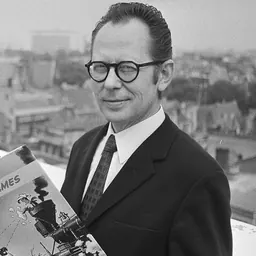
Related people
Same field, nearest in time
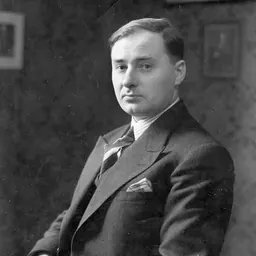

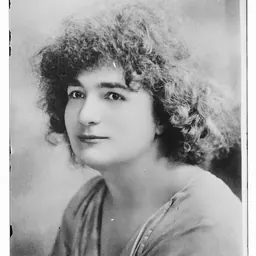
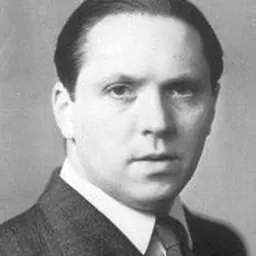

Contemporaries
People whose lives overlapped Dimitri Tiomkin's
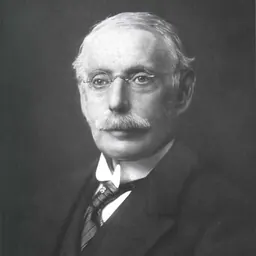
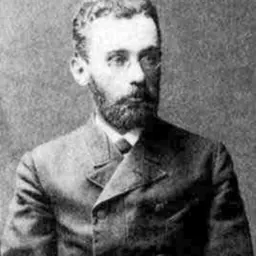
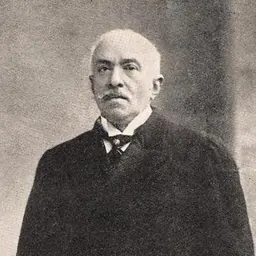

Frequently asked questions
Who was Dimitri Tiomkin?
Ukrainian and American composer
When was Dimitri Tiomkin born?
Dimitri Tiomkin was born on 10 May 1894 in Kremenchuk.
When did Dimitri Tiomkin die?
Dimitri Tiomkin died on 11 November 1979 in London.
What was Dimitri Tiomkin's occupation?
Dimitri Tiomkin was a pianist, composer, conductor, film score composer, film producer and music arranger.
What nationality was Dimitri Tiomkin?
Dimitri Tiomkin was American and Russian.
Sources & further reading
Cite this page
APA: Biography.guide. (2026). Dimitri Tiomkin. https://biography.guide/dimitri-tiomkin/
MLA: "Dimitri Tiomkin." Biography.guide, https://biography.guide/dimitri-tiomkin/.
Chicago: "Dimitri Tiomkin." Biography.guide. https://biography.guide/dimitri-tiomkin/.
Data last updated: 2026-09-26 · Spot an error? Report a correction.
Page generated 2026-09-27 05:14 UTC