
About Dilma Dila
Born 1977. Dilma Dila is an Ugandan writer, film director and screenwriter.
Dilman Dila is a Ugandan writer, film maker and a social activist. He is the author of two collection of short stories, A Killing in the Sun and Where Rivers Go to Die, and of two novellas, Cranes Crest at Sunset, and The Terminal Move. He was shortlisted for the 2013 Commonwealth Short Story Prize for "A Killing in the Sun", longlisted for the Short Story Day Africa Prize in 2013, and nominated for the 2008 Million Writers Award for the short story "Homecoming". He was longlisted for the BBC International Radio Playwriting Competition with his first radio play, Toilets Are for Something Fishy. His film The Felistas Fable won four awards at the Uganda Film Festival 2014, for Best Screenplay, Best Actor, Best Feature Film, and Film of the Year (Best Director). It won two nominations at the Africa Movie Academy Awards for Best First Feature by a Director, and Best Make-up Artist. It was also nominated for the African Magic Viewers Choice Awards for Best Make-up artist, 2013. His first short film, What Happened in Room 13, is one of the most watched African films on YouTube. In 2015, he was longlisted for the Inaugural Jalada Prize for Literature for his story "Onen and his Daughter".
Early life and education Dilman was born in Tororo, Uganda. He grew up with his family on Bazaar Street, which harboured a multitude of cultures and nationalities. It is exposure at an early childhood to different stories from different tribes that gave him a strong foundation in storytelling. He attained primary education at Rock View Primary School, and secondary education at St. Peter's College, Tororo, before proceeding to Makerere University, where he did a BA in Social Sciences, majoring in Political Science (International Relations) and Economics.
Upon completing his university degree, he worked for human rights organisations, and for non-government developmental agencies for eight years, an experience that not only made him a social activist, but provided him with material for his writing and filmmaking.
Writing He was introduced into storytelling at an early age by the folktales that he used to hear from his parents, and from fellow children, in the town he grew up in, Tororo. His first works appeared in print in The Sunday Vision in 2001, and have since featured in several e-zines and book anthologies. These include The African Roar anthology in 2013, Storymoja, and Gowanus Books.
He writes speculative fiction, especially in the genres of horror, science fiction, and fantasy. The story that won a shortlist with the Commonwealth Short Story Prize, "A Killing in the Sun", is a ghost tale. In 2014, he launched his first collection of speculative short stories, during the Storymoja Festival, in Nairobi, Kenya.
In 2013, he was shortlisted for the prestigious Commonwealth Short Story Prize and longlisted for the Short Story Day Africa Prize.
In 2013, he facilitated a short-story surgery workshop, together with Alexander Ikawah, in collaboration with Commonwealth Writers, at the Storymoja Hay Festival. and in 2014 he was a mentor in the Writivism project. He returned to the Storymoja Festival, where he was a festival guest in 2014, conducting a masterclass with Prajwal Parajuly.
In 2013, San Diego State University included his short story "Homecoming", in its syllabus for an English course.
Film making Dilman Dila is a self-taught film maker. He attended five different labs with Maisha, spanning a period from 2006 until 2008, in the areas of screenwriting and directing, for both fiction and documentary. The other trainings he attained include the Durban Talent Campus 2008, MNet Screenwriters Workshop in 2009, European Social Documentary International in 2012, and Berlinale Talents in 2014.
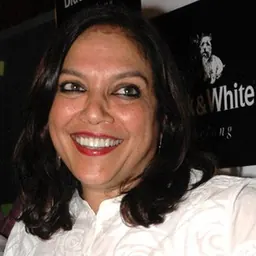
Many regard his first short film, What Happened in Room 13 (2007), featuring the famous comedians Ugandan Richard Tuwangye, Anne Kansiime, Veronica Namanda, Hanningtong Bujingo, and Gerald Rutaro, as a masterpiece from Uganda's young industry. The Young Ones Who Won't Stay Behind (2008) was his first collaboration with the world-famous film maker Mira Nair. Dila spent two years in Nepal, after receiving funding from Voluntary Service Overseas (VSO), to work with local organisations on film making for social change. While there, he made several documentaries. Untouchable Love (2011) was selected for IDFA's Docs for Sale, 2011, where it picked a UK-based distributor. With The Sound of One Leg Dancing (2011), he won The Jury Award at the Nepal International Indigenous Film Festival in 2012. The Dancing Poet (2012) made its debut at the We Speak, Here online festival in 2014. The two years in Nepal helped him to hone his craft, before he felt that the next stories he wanted to package and send out into the world were explicitly African in makeup, even if they came from a shared perspective that informed his earlier work.
His first narrative feature, The Felistas Fable (2013) won two nominations at the Africa Movie Academy Awards for Best First Feature by a Director, and for Best Make-up Artist It was also nominated for the African Magic Viewers Choice Awards 2014 for Best Make-up Artist.
Film Winner of The Jury Award (Bronze drum) at the Nepal International Indigenous Film Festival, with The Sound of One Leg Dancing, 2012 Winner of Film of the Year (Best Director) at the Uganda Film Festival 2014 for The Felistas Fable Winner of Best Feature Film at the Uganda Film Festival 2014 for The Felistas Fable Winner of Best Screenplay at the Uganda Film Festival 2014 for The Felistas Fable Nominated for Best First Feature by a Director at the Africa Movie Academy Awards 2014, for the film The Felistas Fable His film, The Felistas Fable, was nominated for Best Make-up Artist at the Africa Movie Academy Awards 2014 and at the African Magic Views Choice Awards, 2014
Published works Novellas, Chapbook
Short story collections
Short stories "The First War", in The Sunday Vision, January 2001 "The Soldier's Wife", in The Sunday Vision, February 2001 "The Campaign Agent", in The Sunday Vision, May 2001 "Death in the Moonlight", in The Sunday Vision, May 2001 "Stu's Honeymoon", in The Swamp, 2004 "Bloodline of Blades", in ShadowSword, October 2005 "Lights on Water", in The Short Story anthology, 2014 "Fragments of Canvas", in Dark Fire, January 2005 "Homecoming", Gowanus Books, 2007, and nominated for the 2008 Million Writers Award: Notable Online Fiction of 2007 "In Search of a Smoke", Gowanus Books, 2007
"Stones Bounce on Water", Storymoja.com, April 2011 "Billy is Three Weeks Dead", in "The Broken Pot", in "The Puppets of Maramudhu", in "Lights on Water", in The Short Story, 2014 "Red Bati" in Dominion: An Anthology of Speculative Fiction From Africa and the African Diaspora, 2020 "Yad Madit" in Africanfuturism: An Anthology, (2020, Brittle Paper)
Filmography
Producer/Director/Writer Under Sarah's Bed (2007, Uganda), 1 minute, film Home is a Fine Place to Die (2007, Uganda), 3 minutes, film Listening to Her Voice (2008, Uganda), 12 minutes, film Street Strings (2008, Uganda), 15 minutes, documentary Untouchable Love (2011, Nepal), 90 minutes, documentary The Sound of One Leg Dancing (2011, Nepal), 30 minutes, documentary The Dancing Poet (2012, Nepal/Uganda), 60 minutes, documentary The Felistas Fable (2013, Uganda), 90 minutes, fiction Saving Mugisha (2013, Uganda), 18 minutes, fiction
Writer/Director How Will I Get a Drink? (2007, Uganda), 5 minutes, documentary The Young Ones Who Won't Stay Behind (2008, Uganda), 15 minutes, documentary What Happened in Room 13 (2007, Uganda), 18 minutes, film
Writer After the Silence (2006, Uganda), 34 minutes, film
Don’t just read it —
keep it.
Full-length biographies made to live with: read them, listen on the way to work, watch them tonight.
- E-book
- Audio
- Video
Instant download · yours to keep · every purchase keeps this site free
Important facts
People in Dilma Dila's life
Named in this biography and alive at the same time



Related people
Same field, nearest in time

Contemporaries
People whose lives overlapped Dilma Dila's



Frequently asked questions
Who is Dilma Dila?
Ugandan writer, filmmaker
When was Dilma Dila born?
Dilma Dila was born on 31 December 1977 in Tororo.
What is Dilma Dila's occupation?
Dilma Dila is a writer, film director and screenwriter.
What nationality is Dilma Dila?
Dilma Dila is Ugandan.
Sources & further reading
Cite this page
APA: Biography.guide. (2026). Dilma Dila. https://biography.guide/dilma-dila/
MLA: "Dilma Dila." Biography.guide, https://biography.guide/dilma-dila/.
Chicago: "Dilma Dila." Biography.guide. https://biography.guide/dilma-dila/.
Data last updated: 2026-09-20 · Spot an error? Report a correction.
Page generated 2026-09-27 05:22 UTC