
Dighton Probyn
English military officer (1833–1924); recipient of the Victoria Cross
About Dighton Probyn
Lived 1833 – 1924 (aged 91). Dighton Probyn was a British politician and keeper of the Privy Purse.
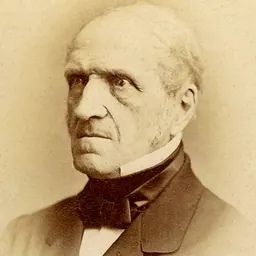
General Sir Dighton Macnaghten Probyn, (21 January 1833 – 20 June 1924) was a British Army officer and an English recipient of the Victoria Cross, the highest award for gallantry in the face of the enemy that can be awarded to British and Commonwealth forces.
Early career The son of Captain George Probyn and Alicia Workman, daughter of Sir Francis Workman Macnaghten, 1st Baronet, Dighton Probyn entered the light cavalry arm of the East India Company's Bengal Army as a cornet in 1849, being posted into the 6th Light Cavalry. In 1852, he was appointed adjutant of the newly raised 2nd Punjab Cavalry which formed part of the 11,000 strong Punjab Irregular Force responsible for policing the Trans-Indus Frontier. By now a captain, he was brevetted to major in the regular army on 24 March 1858. Probyn was brevetted to the rank of lieutenant-colonel in the Bengal Army on 15 February 1861. He was brevetted to colonel on 15 February 1866 and to major-general on 25 July 1870.
Victoria Cross 'Dighton Probyn, 2nd Punjab Cavalry, in Indian dress', 1857 (c). Probyn was 24 years old, and a captain in the 2nd Punjab Cavalry, Bengal Army during the Indian Mutiny when the following deeds took place for which he was awarded the VC:
His VC sold at auction on 24 September 2005 for £160,000.
Royal courtier On 4 March 1872, the Prince of Wales, later Edward VII, appointed him as one of his equerries. He was knighted as a Knight Commander of the Order of the Star of India (KCSI) on 7 March 1876, and was brevetted to lieutenant-general on 1 October 1877. He was promoted to the substantive rank of lieutenant-colonel in the Bengal Cavalry on 1 April 1881, and was transferred to the unemployed list on 1 July 1882. He was appointed a Knight Commander of the Order of the Bath, Civil Division (KCB) in the 1887 Golden Jubilee Honours. On 1 December 1888, he was promoted to the local rank of general in the British Indian Army while unemployed, and was promoted to the substantive rank of colonel in the Bengal Cavalry on 1 April 1893. He was appointed one of the first Knights Grand Cross of the Royal Victorian Order (GCVO) on 26 May 1896.
He was a councillor of the Oxford Military College in Cowley, Oxfordshire from 1876 to 1896, and was appointed a member of the Privy Council on 9 February 1901. He was promoted to a Knight Grand Cross of the (civil division) Order of the Bath (GCB) in the 1902 Coronation Honours list published on 26 June 1902, and was invested by King Edward VII at Buckingham Palace on 8 August 1902. He was appointed a Companion of the Imperial Service Order (ISO) on 22 July 1903. He was appointed a Knight Commander of the Order of the Bath, Military Division (KCB (Mil.)) on 20 October 1909.
He was in later life an ornament of the Victorian age, being Keeper of the Privy Purse, a court sinecure position as well as Secretary to the Prince of Wales and Comptroller of the Household. The latter two were important positions as the Prince and Princess were both profligate in spending and Probyn had a hard job to keep them solvent. Testimony to his success was that, when the Prince acceded at last in 1901, he was in credit at the bank. Probyn had difficulty hiding the King's extravagance, which the minister Charles Hobhouse refused to defend in the Commons.
Probyn continued in this role throughout the King's rule and right up to his death. He was appointed an Extra Equerry to King Edward VII in 1902.
Probyn was totally devoted to the Princess, then Queen-Empress, building gardens for her at Windsor Castle and Sandringham House. The Queen returned the devotion, carrying round a knife with her to cut open his collar when he occasionally had seizures.
In 1915 Probyn gave an engraved wristwatch to Captain Frank Beck, the officer who led the Sandringham Volunteers in the First World War. After he was killed during the Gallipoli Campaign, it was bought from a Turkish officer after the war and returned to Beck's family in 1922.
Probyn had an impressive appearance in old age with a very long white beard reaching down to his navel which concealed his VC on ceremonial occasions.
Death Probyn died on 20 June 1924.
Family Probyn married, in 1872, Letitia Maria Thellusson, daughter of Thomas Robarts Thellusson. Lady Probyn died at Park House, Sandringham, Norfolk, on 17 January 1900.
Legacy The 5th King Edward's Own Probyn's Horse popularly called Probyn's Horse, a regiment of the British Indian Army, was named after him; it is now part of the Pakistan Army and officially designated as 5 Horse.
Probynabad, a town in Punjab province of Pakistan with large farmlands owned by the regiment is also named after him.
An Iris iberica hybrid was named 'Sir Dighton Probyn' in 1909 by Professor M. Foster.
Don’t just read it —
keep it.
Full-length biographies made to live with: read them, listen on the way to work, watch them tonight.
- E-book
- Audio
- Video
Instant download · yours to keep · every purchase keeps this site free
Important facts
People in Dighton Probyn's life
Named in this biography and alive at the same time

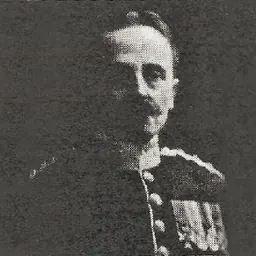
Related people
Same field, nearest in time

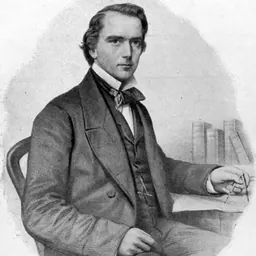

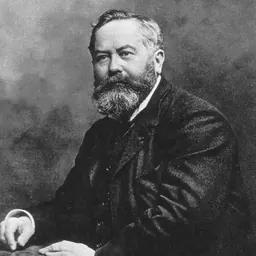

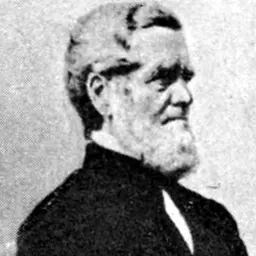
Contemporaries
People whose lives overlapped Dighton Probyn's





Frequently asked questions
Who was Dighton Probyn?
English military officer (1833–1924); recipient of the Victoria Cross
When was Dighton Probyn born?
Dighton Probyn was born on 21 January 1833 in Marylebone.
When did Dighton Probyn die?
Dighton Probyn died on 20 June 1924 in Sandringham House.
What was Dighton Probyn's occupation?
Dighton Probyn was a politician and keeper of the Privy Purse.
What nationality was Dighton Probyn?
Dighton Probyn was British.
Sources & further reading
Cite this page
APA: Biography.guide. (2026). Dighton Probyn. https://biography.guide/dighton-probyn/
MLA: "Dighton Probyn." Biography.guide, https://biography.guide/dighton-probyn/.
Chicago: "Dighton Probyn." Biography.guide. https://biography.guide/dighton-probyn/.
Data last updated: 2026-09-20 · Spot an error? Report a correction.
Page generated 2026-09-27 05:27 UTC