
About Dietrich Prinz
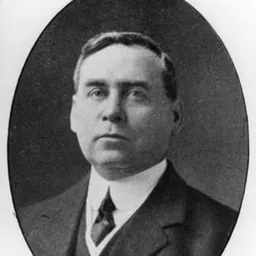
Lived 1903 – 1989 (aged 85–86). Dietrich Prinz was a German computer scientist.
Dietrich Gunther Prinz (March 29, 1903 – December 1989) was a computer science pioneer, notable for his work on early British computers at Ferranti, and in particular for developing the first limited chess program in 1951.
Biography He was born as Dietrich Günther Prinz in Berlin, Germany, in 1903. He studied physics and mathematics at the University of Berlin where Max Planck and Albert Einstein had been among his teachers. He initially went to work on electronic design at Telefunken.
He had some Jewish parentage and left Germany to join GEC in Wembley as a researcher into valve technology. During the Second World War, he was interned in Canada, Prinz became a British citizen in 1947.
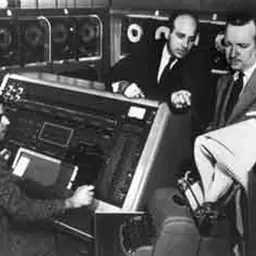
Prinz was recruited to the Ferranti factory at Moston, Manchester, in 1947 by Eric Grundy who was setting up a team to study the potential uses of electronic computers. and with J. Presper Eckert and John Mauchly who worked on UNIVAC project.
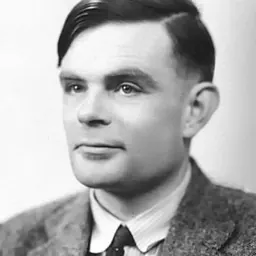
Prinz wrote a manual for the Ferranti Mark 1 which was much clearer than the notoriously opaque first manual written by Alan Turing. He remained a mainstay of the programming department for thirty years. Influenced by them, and later by other colleagues including Donald Michie, Christopher Strachey and Donald Davies, he came to see chess programming as "a clue to methods that could be used to deal with structural or logistical problems in other areas, through electronic computers". The Mark I was inadequate to play a complete game of chess and Prinz concentrated on the endgame. In November 1951, his program on the Ferranti Mark I first solved a Mate-in-two problem. A description of the program was included in the 1953 book Faster Than Thought.
He died in December 1989.
Personal life Prinz was married and had two children, Jonathan Franklin Prinz and Daniela Prinz.
Publications Dietrich Prinz (1944). Contributions to the Theory of Automatic Controllers and Followers. Journal of Scientific Instruments. Dietrich Prinz (1951). Introduction to Programming on the Manchester Electronic Digital Computer. Dietrich Prinz (1952). Robot Chess. Research, Vol. 6, reprinted 1988 in Computer Chess Compendium. Dietrich Prinz (1953). The Use of General Computers for Solving Logical Problems.
Prinz also published many patents and a number of other papers on electronics.
Don’t just read it —
keep it.
Full-length biographies made to live with: read them, listen on the way to work, watch them tonight.
- E-book
- Audio
- Video
Instant download · yours to keep · every purchase keeps this site free
Important facts
People in Dietrich Prinz's life
Named in this biography and alive at the same time





Related people
Same field, nearest in time




Contemporaries
People whose lives overlapped Dietrich Prinz's
Frequently asked questions
Who was Dietrich Prinz?
German-born physicist and computer scientist
When was Dietrich Prinz born?
Dietrich Prinz was born on 29 March 1903 in Berlin.
When did Dietrich Prinz die?
Dietrich Prinz died in 1989 in Manchester.
What was Dietrich Prinz's occupation?
Dietrich Prinz was a computer scientist.
What nationality was Dietrich Prinz?
Dietrich Prinz was German.
Sources & further reading
Cite this page
APA: Biography.guide. (2026). Dietrich Prinz. https://biography.guide/dietrich-prinz/
MLA: "Dietrich Prinz." Biography.guide, https://biography.guide/dietrich-prinz/.
Chicago: "Dietrich Prinz." Biography.guide. https://biography.guide/dietrich-prinz/.
Data last updated: 2026-09-20 · Spot an error? Report a correction.
Page generated 2026-09-27 05:31 UTC