
About Dietmar Bartsch
Born 1958. Dietmar Bartsch is a German economist, politician and general manager.
Dietmar Gerhard Bartsch (born 31 March 1958) is a German politician who has served as co-chair of The Left parliamentary group in the Bundestag since 2015. Prior, he served as federal treasurer of The Left from 2006 to 2009 and federal managing officer from 2005 to 2010. He was a prominent member of The Left's predecessor party, the PDS, of which he served as treasurer from 1991 to 1997 and federal managing officer from 1997 to 2002.
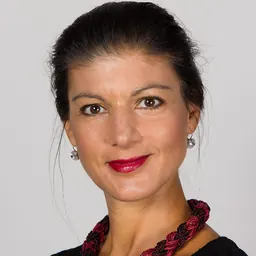
He has been a member of the Bundestag since 2005, and previously served from 1998 to 2002. In his capacity as Bundestag co-leader, he served with Sahra Wagenknecht from 2015 to 2019, and with Amira Mohamed Ali since 2019. Bartsch has served as federal co-lead candidate for his party on three occasions: 2002, 2017, and 2021.
Early life and education Bartsch was born and raised in Stralsund, East Germany, today located in the German state of Mecklenburg-Vorpommern. After completing his schooling at the EOS Franzburg in 1976, he studied political economy at the University of Economic Studies at Berlin-Karlshorst, graduating in 1983.
Following graduation, Bartsch joined the business department of the German daily paper . From 1986 until 1990, he studied at the Academy for Social Sciences at the Communist Party of the Soviet Union headquarters in Moscow, before returning to the as their business executive. The monitoring of Bundestag deputies without clear cause was ruled unconstitutional by the Federal Constitutional Court in 2013, and surveillance of The Left's deputies was discontinued.
In late 2011, Bartsch declared his intention to run for party chairman at the 2012 party congress, even after incumbent Oskar Lafontaine announced his desire to seek re-election. Lafontaine withdrew before the congress, and Bartsch was defeated by Bernd Riexinger, an ally of Lafontaine from the party's left-wing. Bartsch won 251 votes (45%) to Riexinger's 297 (53%).
Bartsch was elected co-leader of the Left's Bundestag group in 2015 alongside Sahra Wagenknecht, succeeding long-time leader Gregor Gysi. Bartsch won 91.6% of votes cast. As the Left was at the time the largest opposition party in the Bundestag, Bartsch became a prominent leader of the opposition for the remainder of the parliamentary term.
Bartsch and fellow parliamentary leader Wagenknecht were the Left's lead candidates for the 2017 federal election. The party made small gains in the election, though they fell from third to fifth place with 9.2% of votes and 69 seats. Bartsch contested the Rostock – Landkreis Rostock II constituency and placed second behind the victorious CDU candidate, winning 24.8% of votes.
Ahead of the 2021 federal election, Bartsch was once again chosen as one of The Left's two lead candidates alongside new party co-leader Janine Wissler. They were confirmed with 87% of votes by the party executive on 9 May.
After the formation of BSW—For Reason and Justice, it was predicted that the remaining MPs for The Left could split along Bartsch's supporters and the party leadership.
Political positions
Bartsch is considered a prominent leader of the moderate, reformist wing of The Left.
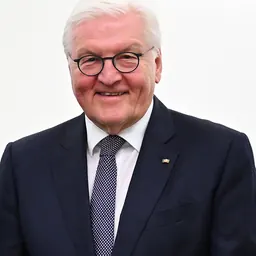
During the 2013–17 parliamentary term, Bartsch advocated for a federal coalition between the Left and the SPD. Ahead of the 2017 German presidential election, Bartsch supported the prospect of a joint centre-left candidate supported by the SPD, Left, and Greens. After the SPD rejected this proposal, the Left refused to support SPD candidate Frank-Walter Steinmeier.
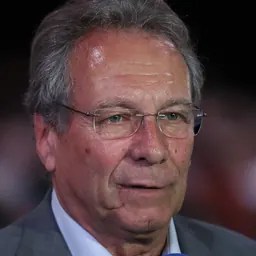
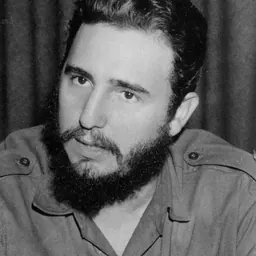
In response to a 2011 incident in which several members of The Left refused to participate in a minute of silence for victims of the Berlin Wall, Bartsch suggested that members who refused to condemn the Wall should leave the party. He also distanced himself from a congratulatory birthday letter, signed by party co-leaders Gesine Lötzsch and Klaus Ernst, sent to Fidel Castro by members of the party.
In 2017, Bartsch stated that former Stasi employees should not always be excluded from government office, believing that a critical assessment of each individual is necessary. He also argued against characterising East Germany as an injustice state (Unrechtsstaat), describing the usage of the term as a "cudgel" lacking nuance. He stated: "It is undisputed that there was serious injustice and victims of it in the GDR. It is also indisputable that there were areas of the rule of law in the GDR."
Bartsch accused the German government of delivering a weak response to the 2016 Turkish purges, and demanded that more pressure should be put the Turkish government to respect democracy and human rights.
Controversy In early January 2010, Bartsch was accused of disloyalty by Left parliamentary leader Gregor Gysi after passing information to about the retirement of party leader Oskar Lafontaine. Bartsch denied this, as well as allegations that he sought to succeed Lafontaine as chairman, and defended his record as federal managing officer. However, he announced that he would not seek re-election to the position at the party congress in May.
In September 2015, shortly before Bartsch's election as parliamentary co-leader, reported on leaked documents showing that, in 2012, he privately commissioned Thomas Westphal to draft a detailed report on the members of The Left's 44-member executive committee. The file indicated the views of each member and their position in the party. Most controversially, each was classified according to allegiance: allies were labeled Z for "reliable", others U for "independent", and rivals L for "left" or "Lafodödel", a derisive term for supporters of Lafontaine. The file was extensively researched and updated over time. Bartsch claimed that Gysi requested the creation of the file after the 2012 party congress to gauge support for Lafontaine among the new party executive, though Gysi denied this. Bartsch stated that the document represented the "relatively normal process" of categorising regional association and factions, not party opponents, and that he only used the term "Lafodödel" in a single email. He also claimed it was already public knowledge within the party in 2012, and the issue was discussed with the people involved at the time. Upon the publication of the article, prominent members Jan van Aken, Martina Renner, and Klaus Ernst expressed outrage at the existence of Bartsch's document.
Personal life Bartsch is married and has two children.
Don’t just read it —
keep it.
Full-length biographies made to live with: read them, listen on the way to work, watch them tonight.
- E-book
- Audio
- Video
Instant download · yours to keep · every purchase keeps this site free
Important facts
People in Dietmar Bartsch's life
Named in this biography and alive at the same time


Related people
Same field, nearest in time




Contemporaries
People whose lives overlapped Dietmar Bartsch's


Frequently asked questions
Who is Dietmar Bartsch?
German politician
When was Dietmar Bartsch born?
Dietmar Bartsch was born on 31 March 1958 in Stralsund.
What is Dietmar Bartsch's occupation?
Dietmar Bartsch is an economist, politician and general manager.
What nationality is Dietmar Bartsch?
Dietmar Bartsch is German.
Sources & further reading
Cite this page
APA: Biography.guide. (2026). Dietmar Bartsch. https://biography.guide/dietmar-bartsch/
MLA: "Dietmar Bartsch." Biography.guide, https://biography.guide/dietmar-bartsch/.
Chicago: "Dietmar Bartsch." Biography.guide. https://biography.guide/dietmar-bartsch/.
Data last updated: 2026-09-20 · Spot an error? Report a correction.
Page generated 2026-09-27 05:31 UTC