
Dieter Schenk
German police officer, criminologist and author (born 1937)
About Dieter Schenk
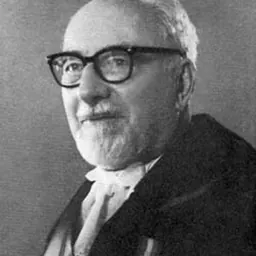
Born 1937. Dieter Schenk is a German historian of Modern Age, author, police officer, criminologist and opinion journalist.
Dieter Schenk (born March 14, 1937) is a German author, former high police officer of the Bundeskriminalamt, and a member of Amnesty International. He is best known for his work and activism which led the German court in Lübeck to overturn a 1939 verdict from World War II, regarding the defenders of the Polish Post Office in Danzig (Gdańsk), as well as his books on the widespread influence of ex-Nazis in post World War II Federal Criminal Police Office (BKA).
Schenk is a former Kriminaldirektor of Federal Criminal Police Office (Bundeskriminalamt), located in Wiesbaden, where he was the agency's contact with Interpol. He left the agency in 1989 because of what he describes as "the ignorance of the BKA concerning the violation of human rights in torturing regimes".
Work on the defense of Gdańsk post office Captured defenders of the Polish Post Office in Danzig, 1939.
During the Nazi invasion of Poland, the Germans also carried out attacks on Polish controlled building in the Free City of Danzig (Wolne Miasto Gdańsk), including the post office, which constituted extraterritorial Polish property. The Polish defense of the building, carried out by 55 lightly armed postmen against more than 200 German SS (Schutzstaffel), SA (Sturmabteilung) and police troops, lasted for 15 hours. The Poles surrendered after the German forces used automatic pumps, gasoline tanks and flamethrowers to set the building on fire. Polish casualties were 6 killed during the fighting and 2 more killed while they were trying to surrender with a white flag. Four of the defenders managed to escape and six died in a Gestapo hospital. The rest were imprisoned, tortured, tried (with a single Wehrmacht officer as defense lawyer) by a Wehrmacht court-martial and sentenced to death. 28 of the judgements were countersigned, and thus became legally valid, by General Hans Günther von Kluge, another 10 by Colonel Eduard Wagner A clemency appeal was rejected by Walther von Brauchitsch (who was to be charged after the war with crimes against humanity, but died while in custody) and carried out on September 8 and 30.
Schenk began researching the events in 1993 and published a book, Die Post von Danzig: Geschichte eines deutschen Justizmords ("The Post Office of Gdańsk: History of a German judicial murder"), which led to the revision of the verdict. He figured out that the German forces were Danzig police-, SS- and SA-men, commanded by a Danzig police officer, and only at a subsequent stage regular Wehrmacht forces did take part in the fighting. Thus a Wehrmacht court martial was not competent to convict the defenders. Instead, the Free City of Danzig's penal law would have been applicable, without the alternative of a death penalty.
His other books include Krakauer Burg: Die Machtzentrale des Generalgouverneurs Hans Frank 1939-1945 ("Krakow's Castle: The power center of the Governor General Hans Frank 1939-1945") (2010) about the Governor-General of Nazi-occupied portion of Poland called General Government, Hans Frank, Die braunen Wurzeln des BKA ("The Brown roots of the BKA") (2001), which deals with the extensive influence that ex-Nazis held in post-war German Federal criminal police, Der Lemberger Professorenmord und der Holocaust in Ostgalizien ("The Murder of Lwow professors and the Holocaust in East Galicia") (2007) and BKA - Polizeihilfe für Folterregime ("BKA - Police assistance to torture regimes") (2008).
Don’t just read it —
keep it.
Full-length biographies made to live with: read them, listen on the way to work, watch them tonight.
- E-book
- Audio
- Video
Instant download · yours to keep · every purchase keeps this site free
Important facts
People in Dieter Schenk's life
Named in this biography and alive at the same time
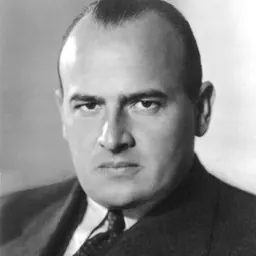
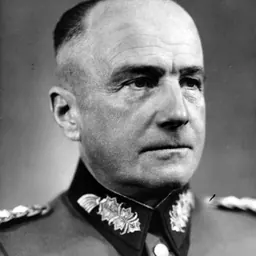



Related people
Same field, nearest in time






Contemporaries
People whose lives overlapped Dieter Schenk's


Frequently asked questions
Who is Dieter Schenk?
German police officer, criminologist and author (born 1937)
When was Dieter Schenk born?
Dieter Schenk was born on 14 March 1937 in Frankfurt.
What is Dieter Schenk's occupation?
Dieter Schenk is a historian of Modern Age, author, police officer, criminologist and opinion journalist.
What nationality is Dieter Schenk?
Dieter Schenk is German.
Sources & further reading
Cite this page
APA: Biography.guide. (2026). Dieter Schenk. https://biography.guide/dieter-schenk/
MLA: "Dieter Schenk." Biography.guide, https://biography.guide/dieter-schenk/.
Chicago: "Dieter Schenk." Biography.guide. https://biography.guide/dieter-schenk/.
Data last updated: 2026-09-22 · Spot an error? Report a correction.
Page generated 2026-09-27 05:24 UTC