
About Diego de Urrea
Lived 1559 – 1616 (aged 56–57). Diego de Urrea was an Italian translator.
Diego de Urrea Conca ( – 1616), also known as Morato or Morato Aga, was a 16th-century linguist, translator, and diplomat. He served as the official interpreter and translator of Arabic (both classical and vernacular), Turkish, Tatar (likely a variant of Turkish spoken by Crimean Tatars), and Persian languages for the Spanish Crown during the reigns of Philip II and Philip III.
Early life and captivity Diego de Urrea was born around 1559 in Tropea, in the region of Calabria, part of the Spanish-controlled Kingdom of Naples. His birth name was Diego Conca, son of Giovanni Ludovico Conca. He had an elder brother named César Conca (b. 1546) and a younger brother who was a cleric. His family had military connections, and some sources identify his uncle as the “Captain Moreto,” a soldier who served under the Duke of Alba during the Italian Wars.
At a very young age—either as a 14-month-old infant or a boy of five or six—Diego was captured by North African corsairs and taken to Tlemcen in Algeria. He was adopted by a Muslim family and received a thorough education in Islamic sciences at the city's madrasas alongside Muley Xeque. He mastered Arabic, Turkish, and Persian, and became proficient in Arabic grammar, philosophy, logic, and Islamic theology. He assumed the name Murad (Morato). Upon the death of his adoptive father, he became free and inherited his estate.
Due to his linguistic and administrative skills, Urrea was appointed secretary and functionary in several Ottoman provinces, including Algiers, Tripoli, Tunis, and Constantinople. He worked under prominent Ottoman officials, including the kapudan pasha Uluç Ali and Hasan Pasha (governor of Algiers from 1577 to 1580 and 1582–1588). By his own account, he had achieved "much revenue and command" in this position. As secretary to Uluç, he was sent to Morocco to analyze the possibility of a Turkish conquest of the kingdom of Fez, apparently after Abd al-Malik, who had fled from his brother, Abdallah al-Ghalib (1557–74), and had taken refuge in Constantinople, had informed the Turks of the possibilities that the region offered for galley production.
During his tenure, he amassed considerable wealth and influence, reportedly managing revenues of 25,000 to 30,000 escudos annually, and even wielded Hasan Pasha's seal.
Return to Christianity After thirteen years of service to the Ottomans, Urrea claimed to have experienced a religious awakening triggered by his mother's prayers. He fled Ottoman service and, according to one account, was captured when Hasan Pasha's ship wrecked near Pantelleria en route to Constantinople. Taken to Palermo in Sicily, he was received under the protection of the Viceroy Diego Enríquez de Guzmán. Urrea reconciled with the Catholic Church in 1589, with María de Urrea, wife of the Viceroy serving as his godmother. The Spanish Inquisition oversaw his formal reconciliation. He adopted the name Diego de Urrea, apparently drawing from his godmother's surname. the brothers Bartolomé and Lupercio Leonardo de Argensola, later prominent literary figures. He occasionally worked as an Arabic interpreter for the Inquisition Court in Cuenca. His service in the Inquisition Court was praised by Sebastián de Covarrubias, who regarded him as more academic. Having many positions in addition to being professor, his students complained about his frequent absences and being bad at teaching overall.
In August 1596, Urrea was called upon to assist in the controversial translation of Lead Books of Granada, texts of supposed Christian origin discovered in Arabic. His translations, which conflicted with the agendas of church authorities such as Archbishop Pedro de Castro, sparked tensions. Urrea later confessed to having modified translations under pressure to make them conform to Catholic orthodoxy. Urrea himself began compiling a history of Muslims in Spain based on Arabic sources. Although the work was completed by 1596 and submitted to royal secretary Francisco de Idiáquez for publication, it was never printed and is now lost. He created a bilingual Arabic–Castilian catalogue and compiled a now-lost Arabic dictionary.
Urrea was increasingly employed in Spain's diplomatic and intelligence efforts concerning North Africa and the Ottoman world. He provided crucial information on Ottoman plans to conquer Fez and Morocco, drawing on earlier contacts in Barbary corsairs. His familiarity with Arabic-speaking elites and religious scholars made him an effective analyst of Islamic states' internal politics. From 1607, at Philip III's recommendation, Urrea entered service to Alonso de Guzmán y Sotomayor, 7th Duke of Medina Sidonia in Málaga, where he used his network of informants in Africa and Turkey for diplomatic purposes. and was one of its four members, alongside Filesio Constanzo della Porta, Nicola Antonio Stigliola, and Fabio Colonna.
He was introduced to Galileo Galilei by Federico Cesi, describing Urrea as "a noble knight and of uncommon learning," since, "besides philosophy and a good understanding of other sciences, he fully commands the Arabic, Persian, and Turkish languages." Urrea's stay in Naples did not last long. As a result of a serious illness that struck him, the doctors advised him to return to Spain, "because the climate of Naples was so contrary to his constitution." Urrea requested leave to return, which Philip III granted in February 1616. Urrea returned to Spain seriously ill in the summer of 1616 and died shortly thereafter. A document dated October 22, 1616, shows his wife Maria signing as a widow in a petition for assistance.
Works
Don’t just read it —
keep it.
Full-length biographies made to live with: read them, listen on the way to work, watch them tonight.
- E-book
- Audio
- Video
Instant download · yours to keep · every purchase keeps this site free
Important facts
People in Diego de Urrea's life
Named in this biography and alive at the same time



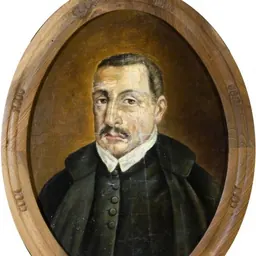


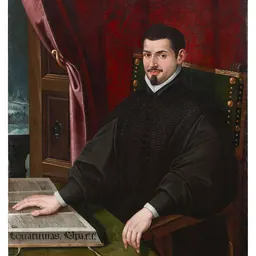
Related people
Same field, nearest in time


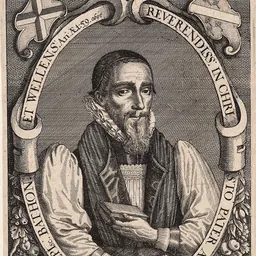
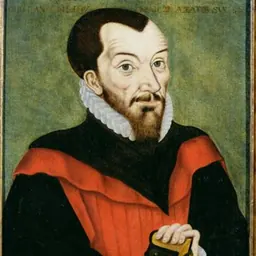
Contemporaries
People whose lives overlapped Diego de Urrea's



Frequently asked questions
Who was Diego de Urrea?
16th-century linguist, translator, and diplomat
When was Diego de Urrea born?
Diego de Urrea was born in 1559 in Tropea.
When did Diego de Urrea die?
Diego de Urrea died in 1616.
What was Diego de Urrea's occupation?
Diego de Urrea was a translator.
What nationality was Diego de Urrea?
Diego de Urrea was Italian.
Sources & further reading
Cite this page
APA: Biography.guide. (2026). Diego de Urrea. https://biography.guide/diego-de-urrea/
MLA: "Diego de Urrea." Biography.guide, https://biography.guide/diego-de-urrea/.
Chicago: "Diego de Urrea." Biography.guide. https://biography.guide/diego-de-urrea/.
Data last updated: 2026-09-20 · Spot an error? Report a correction.
Page generated 2026-09-27 05:03 UTC