
About Diego Angioletti
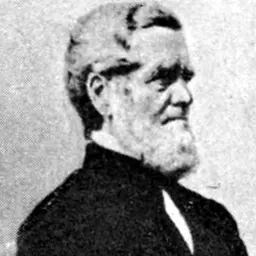
Lived 1822 – 1905 (aged 83). Diego Angioletti was an Italian politician and military officer.
Diego Angioletti (Rio nell'Elba, 18 January 1822 – Cascina, 29 January 1905) was an Italian general and politician. As Minister of the Navy he was responsible for preparations for the Third Italian War of Independence.
Early life and career Diego was the son of Giuseppe Angioletti and his wife Giuseppa Bigeschi. He attended the artillery school in Livorno from which he graduated in October. 1845 with the rank of second lieutenant. During the First Italian War of Independence fought with the Tuscan troops, distinguishing himself at the Battles of Curtatone and Goito and earning promotion to captain from the provisional Tuscan government. However, in July 1849, when Grand Duke Leopold returned, all the ranks granted by the provisional Tuscan government were abolished, so Angioletti was demoted again to lieutenant and regained the rank of captain only in 1854.
In 1859 he was promoted to major and given command of an infantry battalion. With the new provisional government of Tuscany, he was promoted to lieutenant colonel, and placed in charge of the 50th regiment of the Tuscan division, which arrived on the Mincio at the end of June, too late to actively participate in the Second Italian War of Independence. Promoted to colonel, he entered the Italian army, where, in 1860, he became major general commanding the Livorno brigade. He was then aide-de-camp to King Vittorio Emanuele II and later commander of the territorial division of Bari. He was promoted to Lieutenant general in 1864. The government faced the political challenge of the September Convention and the transfer of the capital from Turin to Florence; it also faced a severe financial crisis and Longo refused, leaving La Marmora to fill the post himself on an interim basis and begin a programme of cuts of up to a third across the navy - the naval budget for 1864 was 55,175,000 lire while the budget for 1865 was 13,418,000 less.
Angioletti eventually agreed to take the portfolio despite his lack of knowledge of naval matters. He was not universally welcomed. One commentator described him as “coming from the army of the Grand Duke [of Tuscany], unknown and incompetent”. Another noted that while Angioletti issued an order of the day describing himself as “unfamiliar with life at sea and not bringing any technical knowledge to the navy”, it would have been more honest to simply say that he knew absolutely nothing about the navy.”
He sought to strengthen for the navy with modern ships, and in April 1865 presented to parliament a budget for two armoured frigates, two propeller corvettes and four armoured gunboats, all to be built in Italy to reduce dependency on foreign shipyards.
Third Italian War of Independence As war with Austria approached, various ships that had been mothballed were hastily rearmed, and naval manoeuvres and gunnery exercises were carried out. Only at the beginning of December 1865 did Angioletti set up a three-member commission, chaired by Rear Admiral :it:Amilcare Anguissola to study potential operations in the Adriatic. In mid-April 1866, he instructed the same commission to compile a regulation for the embarkation and disembarkation of artillery, horses and troops.
On 3 May 1866 Angioletti appointed Admiral Carlo Pellion di Persano as commander of the Adriatic fleet. The appointment was against Persano's own wishes and there was nothing in his service history to suggest that he was especially well suited to the role. Persano's message of 21 May to Angioletti read “It is my duty to submit to your Excellency that the ships which join the fleet from day to day are incompletely manned, especially in regard to their petty officers, and, which is of more consequence, are without trained gunners… the fleet is not ready for war. Help me, I earnestly entreat you.” As the correspondence continued, Angioletti, courteous but exasperated, wrote “I can assure you that the Austrian [forces] are in a worse condition than ours. When we are doubling or tripling our forces all at once, it is impossible to get everything perfect.”
On 20 June Prime Minister La Marmora handed the cabinet over to Bettino Ricasoli and resigned in order to fight at the front and Angioletti joined him, assuming command of the 10th division, in the II Army Corps under General :it: Domenico Cucchiari. Prime Minister Ricasoli immediately declared war on Austria. Although he had no opportunity to fight against Austria, he distinguished himself shortly afterwards, in repressing the Seven and a Half Days Revolt in Palermo. For this operation he was awarded the military order of Savoy.
Persano blamed Angioletti for failing to equip and prepare the navy properly
On 25 July 1866 the Gazzetta del Popolo commented that “The indignation over Persano, over Angioletti, over La Marmora is extremely animated, profound and enduring all over Italy.”
Liberation of Rome and later life In 1870 Angioletti assumed command of one of the five divisions (the 9th), which advanced towards Rome under General Raffaele Cadorna. He was ordered to move against Porta San Giovanni and Porta San Sebastiano, although the main action in seizing the city took place between Porta Pia and Porta Salaria. This was to be the last time Angioletti saw active service. In 1873, in Naples, he worked to eradicate cholera, which had broken out in the army. He was then appointed president of the Infantry and Cavalry Weapons Committee in 1877. In May 1877 he was one of many generals whom War Minister Luigi Mezzacapo compulsorily retired, and he went to live in his villa in Sant'Anna near Cascina with his wife Emilia Tonci. There he died on 29 January 1905.
Honours Diego Angioletti received a number of Italian and foreign honours:
Don’t just read it —
keep it.
Full-length biographies made to live with: read them, listen on the way to work, watch them tonight.
- E-book
- Audio
- Video
Instant download · yours to keep · every purchase keeps this site free
Important facts
People in Diego Angioletti's life
Named in this biography and alive at the same time

Related people
Same field, nearest in time




Contemporaries
People whose lives overlapped Diego Angioletti's





Frequently asked questions
Who was Diego Angioletti?
Italian politician and officer (1822-1905)
When was Diego Angioletti born?
Diego Angioletti was born on 18 January 1822 in Rio nell'Elba.
When did Diego Angioletti die?
Diego Angioletti died on 29 January 1905 in Cascina.
What was Diego Angioletti's occupation?
Diego Angioletti was a politician and military officer.
What nationality was Diego Angioletti?
Diego Angioletti was Italian.
Sources & further reading
Cite this page
APA: Biography.guide. (2026). Diego Angioletti. https://biography.guide/diego-angioletti/
MLA: "Diego Angioletti." Biography.guide, https://biography.guide/diego-angioletti/.
Chicago: "Diego Angioletti." Biography.guide. https://biography.guide/diego-angioletti/.
Data last updated: 2026-09-27 · Spot an error? Report a correction.
Page generated 2026-09-27 05:16 UTC