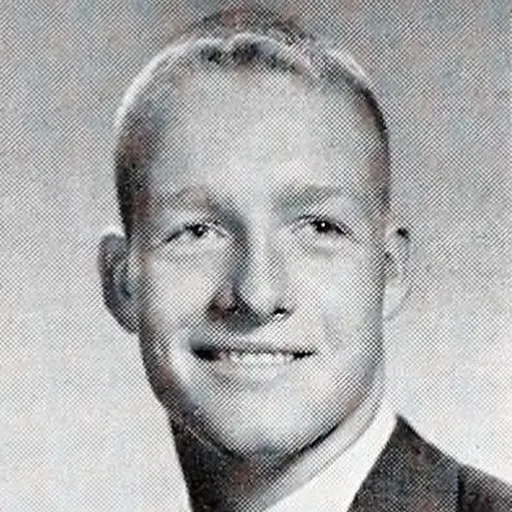
Dick Van Arsdale
American basketball player, coach, executive
About Dick Van Arsdale
Lived 1943 – 2024 (aged 81). Dick Van Arsdale was an American basketball coach, basketball player and writer.
Richard Albert Van Arsdale (February 22, 1943 – December 16, 2024) was an American professional basketball player in the National Basketball Association (NBA) for the New York Knicks and Phoenix Suns. A three-time NBA All-Star selection with the Suns, his 5 jersey was retired by the Phoenix Suns and he is a member of the Suns Ring of Honor. Jerry Colangelo, who was the Suns' first general manager, interim coach (twice), and part owner called Van Arsdale "the pillar of the Phoenix Suns franchise" upon Van Arsdale's retirement in 1977. An All-Star in each of his first three seasons with Phoenix, Van Arsdale remains known as "the Original Sun".
Van Arsdale played college basketball for the Indiana Hoosiers, along with his identical twin brother, Tom. In high school, Van Arsdale and his brother were jointly named Indiana Mr. Basketball in 1961. The New York Knicks selected Van Arsdale in the second round of the 1965 NBA draft. He and Tom were both named to the NBA All-Rookie First Team. Van Arsdale played three seasons for the Knicks before being selected by the Suns with their first pick of the 1968 NBA expansion draft. He played with the Suns for the next nine seasons, retiring after the 1976–77 season (during which his brother Tom was a Suns' teammate). From 1977 to 2005, he remained with the Suns' franchise as a radio and television color commentator, interim coach (1987), and team executive; until suffering a stroke in 2005.
Early life Van Arsdale was born on February 22, 1943, in Indianapolis, along with his identical twin brother, Tom, to Raymond and Hilda (Thomas) Van Arsdale. The family lived in Greenwood, Indiana. The brothers attended Emmerich Manual High School in Indianapolis (Indianapolis Manual), where their father Raymond taught mathematics and coached the track team, and their mother Hilda worked in the school's office. Academically, as graduating seniors in 1961 Dick was ranked first and Tom third in a class of 412 students. The brothers were members of the basketball, football, baseball, and track and field teams at Indianapolis Manual.
In 1961, the brothers were jointly awarded the Indiana Mr. Basketball award. They were also awarded the Arthur L. Trester Award for Mental Attitude in March 1961. This was the first time that Indiana's Mr. Basketball award, and the Trester Award (established in 1917), had been shared. The brothers had been avid fans of Indiana and McCracken since they were children, and wanted to attend Indiana, without the need for anyone to recruit them. As a junior (1963–64), he averaged 22.3 points and 12.4 rebounds per game. UPI named him first-team All-Big Ten. In a December 4, 1963 win over Notre Dame, Van Arsdale scored his Indiana career high of 42 points and Tom Van Arsdale scored his Indiana career high of 34 points. As a senior (1964–65), Van Arsdale averaged 17.2 points and 8.7 rebounds per game. The Associated Press (AP) named him (and Tom) second-team All–Big Ten.
In three years with the Hoosiers, Van Arsdale scored 1,240 points with 719 rebounds (while his brother scored 1,252 points with 723 rebounds). He averaged a double-double for the Hoosiers over his career, with 17.2 points per game and 10.0 rebounds per game. Van Arsdale was a member of the U.S. team that won the gold medal in the 1965 Summer Universiade.
Professional career
New York Knicks Van Arsdale was selected by the New York Knicks in the second round of the 1965 NBA draft with the 13th overall pick, immediately ahead of his brother Tom who was selected by the Detroit Pistons. Among the picks counted as being ahead of him were three territorial selections, in addition to players chosen in the normal selection process. Although he started as a small forward very early in his career, he was moved to shooting guard. Van Arsdale started 69 games for the Knicks as a rookie, principally at shooting guard. He averaged 29 minutes, 12.3 points, 4.8 rebounds, and 2.3 assists per game. Van Arsdale was named to the NBA All-Rookie Team in 1966, together with Tom. They were the first pair of identical twins to play in the league. The Knicks were 36–45, but reached the first round of the 1967 Eastern Division playoffs, losing to the Boston Celtics in four games. Van Arsdale averaged 38.3 minutes, 11.5 points, 6.3 rebounds, and five assists against the Celtics. Van Arsdale played in 78 games in 1967–68 for the Knicks, starting 50. He was used at guard and small forward, but was not physically at full strength throughout the season. He still averaged 30.1 minutes, 11 points, 5.4 rebounds, and 2.9 assists per game. The Knicks lost the 1968 Eastern Conference semifinals to the Philadelphia 76ers in six games, with Van Arsdale playing in four of those games, averaging 22 minutes in those games.
Among other players, the 1967–68 Knicks included all-star and future Hall of Fame shooting guard Dick Barnett, future Hall of Fame point guard Walt Frazier, future Hall of Fame small forward Bill Bradley (who was used at shooting guard that season), and small forward Cazzie Russell.
In three seasons with the Knicks, Van Arsdale averaged 31.9 minutes, 12.8 points, 5.7 rebounds, and 2.8 assists per game. Van Arsdale eventually became known as "the Original Sun", and was connected with the franchise as a player, executive, coach, and sportscaster over a period of decades. Van Arsdale started 80 games, led the Suns in minutes per game (42.4), and his 21 points per game was second to Goodrich (23.8). Although the Suns went 16–66 in the team's first season, both Van Arsdale and Goodrich were selected to play for the West team in the 1969 NBA All-Star Game.
The Suns improved to 39–43 the following season (1969–70). Forwards Connie Hawkins (a future Hall of Famer) and Paul Silas joined the team that season, and Goodrich remained the starting point guard. Van Arsdale's 21.3 points per game was second on the team to Hawkins. Jerry West, and Bailey Howell, and three-time all-star and Rookie of the Year Terry Dischinger ). This was the first time in NBA history two brothers had played in the same NBA All-Star Game. In only their second season, the Suns made it to the NBA playoffs. They took a three-games-to-one lead over the Los Angeles Lakers in the Western Division semifinals, but ultimately lost that series in seven games. Over seven games, Van Arsdale averaged 36.4 minutes, 16.4 points, 2.6 rebounds, and 4.1 assists per game against the Lakers.
In 1970–71, Van Arsdale was the Suns' team captain. He was selected to play for the West team in the 1971 NBA All-Star Game for a third consecutive season; with his brother Tom once again selected to play for the East team. Van Arsdale led the Suns in minutes per game (39) and points per game (21.9) that season. Under new head coach Cotton Fitzsimmons, the Suns finished the 1970–71 season 48–34. However, the Suns played in the NBA's most competitive division, the Midwest Division of the Western Conference, finishing third and missing the playoffs.
The Suns were 49–33 in 1971–72, but again ended in third place in the Midwest Division. Van Arsdale played in all 82 games, averaging nearly 38 minutes per game. He averaged 19.7 points, 4.1 rebounds, and 3.6 assists per game. He played in 81 games the following season, averaging 36.8 minutes, 18.4 points, four rebounds, and 3.3 assists per game; but the Suns fell to 38–44. The next season (1973–74), now playing under head coach John McLeod and still team captain, Van Arsdale averaged 17.8 points, 2.8 rebounds, and 4.2 assists per game. He was selected to the second-team of the NBA All-Defensive Team in 1974.
Over the next two seasons (1974–75, 1975–76) Van Arsdale remained the starting shooting guard, though his minutes were reducing, in part because of injury. Respectively, he averaged 34.6 and 32.2 minutes, 16.1 and 12.9 points, 2.7 and 2.4 rebounds, and 2.8 and 2.4 assists per game. Van Arsdale was the Suns' team captain in 1975–76. He was the starting shooting guard that season until suffering a fractured wrist in his left arm in February.
The Suns were only 42–40 in 1975–76, but returned to the playoffs after five years, and reached the 1976 NBA Finals, losing in six games to the Boston Celtics. In Game 3 against the Sonics, playing with a splint on his left wrist, Van Arsdale came off of the bench to lead the Suns to a 103–91 win. He scored 15 points in 27 minutes, and defensively held Sonics' guard Fred Brown to 16 points, after Brown had scored 34 and 45 points in the previous two games. Van Arsdale's play on both offense and defense in the Suns' Game 6 105–104 win was a key to the Suns tying the series against the Warriors, before going on to win Game 7. In 33 minutes off the bench, Van Arsdale had 10 points, six assists, and four steals; and he "took Warrior all-pro guard Phil Smith out of the game in the second half". In the finals against the Celtics, Van Arsdale averaged 28.5 minutes, 6.7 points, 1.7 rebounds, and 1.8 assists per game.
Tom Van Arsdale was traded to the Suns for a second-round draft choice and cash in August 1976. In his final NBA season, Van Arsdale averaged 19.7 minutes and 7.7 points per game. At the time Van Arsdale retired, he was the last of the original Phoenix Suns.
Van Arsdale played with the Suns for nine seasons, averaging 35.4 minutes, 17.6 points, 4.1 rebounds, and 3.3 assists per game. He had a .471 field goal percentage and .813 free throw percentage. He was the Suns all-time leader in total points scored (12,070) until January 1986, when he was surpassed by Alvan Adams. Starting in 1969–70 with the Suns, he became one of the better free throw shooters in the league, averaging near or over 80% from 1969 to 1977. and in the top 10 in 1972–73.
Over his NBA career, Van Arsdale averaged 16.4 points per game, 4.1 rebounds per game, and 3.3 assists per game. He is remembered in Phoenix basketball lore as "the Original Sun"; The original lockers of both Tom and Dick Van Arsdale remain in the display case in the lobby of the Emmerich Manual High School (now Christel House Watanabe Manual High School) gymnasium. Associated Press Sportswriter Mike Recht wrote in April 1971 for the magazine Sports Today that the brothers did not like playing against each other in the NBA.
Media and executive career with the Suns In 1977, after retiring as a player, Van Arsdale became a color commentator on radio and television for the Suns over the ensuing 10 years. This included working alongside Al McCoy.
Following the firing of head coach John MacLeod in February 1987 (with a record of 22–36), the Suns made Van Arsdale the team's interim head coach for that season's final 26 games. He received a standing ovation from Suns' fans when he came out to coach his first game in Phoenix. The Suns were 14–12 under Van Arsdale,
In 1987, Jerry Colangelo – who had been the Suns' general manager since the team's inception, had selected Van Arsdale for the Suns in the 1968 expansion draft, and coached Van Arsdale twice –formed a group that purchased the Suns. The new owners hired Van Arsdale as vice president of player personnel in 1987. He was promoted to senior vice president in 2004. In 2005, Van Arsdale suffered a massive stroke, but made a physical recovery, though with some speech difficulties. Through diligent effort and therapy after his stroke, Van Arsdale became "an accomplished pen-and-ink artist".
At some point early in their NBA careers, the brothers observed that Tom Van Arsdale had become ½ inch taller than his brother. A book about the Van Arsdale brothers was published in 1992, Two of a Kind: The Tom and Dick Van Arsdale Story, with a forward by former NBA coach Cotton Fitzsimmons.
Van Arsdale died of kidney failure in Phoenix, Arizona, on December 16, 2024, at the age of 81. Career playing statistics
NBA Source
Regular season Year Team GP GS MPG FG% FT% RPG APG SPG BPG PPG
Playoffs Year Team GP MPG FG% FT% RPG APG SPG BPG PPG
College Source
Head coaching record
Source
Don’t just read it —
keep it.
Full-length biographies made to live with: read them, listen on the way to work, watch them tonight.
- E-book
- Audio
- Video
Instant download · yours to keep · every purchase keeps this site free
Important facts
People in Dick Van Arsdale's life
Named in this biography and alive at the same time







Related people
Same field, nearest in time

Contemporaries
People whose lives overlapped Dick Van Arsdale's



Frequently asked questions
Who was Dick Van Arsdale?
American basketball player, coach, executive (1943–2024)
When was Dick Van Arsdale born?
Dick Van Arsdale was born on 22 February 1943 in Indianapolis.
When did Dick Van Arsdale die?
Dick Van Arsdale died on 16 December 2024 in Phoenix.
What was Dick Van Arsdale's occupation?
Dick Van Arsdale was a basketball coach, basketball player and writer.
What nationality was Dick Van Arsdale?
Dick Van Arsdale was American.
Sources & further reading
Cite this page
APA: Biography.guide. (2026). Dick Van Arsdale. https://biography.guide/dick-van-arsdale/
MLA: "Dick Van Arsdale." Biography.guide, https://biography.guide/dick-van-arsdale/.
Chicago: "Dick Van Arsdale." Biography.guide. https://biography.guide/dick-van-arsdale/.
Data last updated: 2026-09-22 · Spot an error? Report a correction.
Portrait: Wikimedia Commons · author & licence
Page generated 2026-09-27 05:03 UTC