
About Dianna Ortiz
Lived 1958 – 2021 (aged 62). Dianna Ortiz was an American human rights defender, christian nun, nun and roman Catholic.
Dianna Mae Ortiz (September 2, 1958 – February 19, 2021) was an American Roman Catholic sister of the Ursuline order. While serving as a missionary in Guatemala, during its civil war, she was abducted on November 2, 1989 by members of the Guatemalan military, detained, raped, and tortured for 24 hours before being released. After her release, Ortiz reported that an American was among her captors. This part of her account could not be confirmed.
Ortiz pursued her case in a Guatemalan court and in a United States civil court. In the latter, she was the first to seek civil damages under the Torture Victim Protection Act passed in 1992. the middle of eight children born to Ambrosia and Pilar Ortiz, a homemaker and uranium miner, respectively. Wanting the religious life from the time she was a child, Dianna entered the novitiate at age 17 at the Ursuline Sisters of Mount St. Joseph in Maple Mount, western Kentucky.
Dianna attended San Jose Elementary School and Sierra Vista Elementary School. For high school, she spent her freshman, sophomore, and junior years at Grants High School in New Mexico, while ending her senior year at Mount Saint Joseph Academy.
Before being abducted and following her transfer from the Ursuline convent to Guatemala, Ortiz started getting death threats. In addition to being raped, and tortured repeatedly, Ortiz was forced to torture and stab another victim to death with a machete.
She said a man named Alejandro was among her torturers, and that she heard him speak English with a North American accent. She wrote in her memoir that her torture stopped
when a man with an American accent entered the room and said in English, "Shit." Then he said, in Spanish, to the torturers, "You idiots! Leave her alone. She's a North American, and it's all over the news." To Ortiz he said, "You have to forgive those guys... they made a mistake. She returned to the U.S. from Guatemala within 48 hours of her escape.
After being released, Ortiz later said:
The nightmare I lived was nothing out of the ordinary. In 1989, under Guatemala's first civilian president in years, nearly two hundred people were abducted. Unlike me, they were "disappeared, gone forever". The only uncommon element of my ordeal was that I survived, probably because I was a U.S. citizen, and phone calls poured into Congress when I was reported missing. As a U.S. citizen, I had another advantage: I could, in relative safety, reveal afterwards the details of what happened to me in those twenty-four hours. One of those details: an American was in charge of my torturers. Under psychiatric care, she would become friends with another patient who would be influential in her recovery. Individuals and villages from socioeconomic backgrounds were also wiped out due to large massacres that were a result of government repression.
The United States intervened on behalf of Guatemala when the military forces there were abusing a number of human rights at the time of Ortiz's kidnapping. The United States trained "officers in counterinsurgency techniques and assisted the national intelligence apparatus".
U.S. and Guatemala official denials of involvement
According to a Salon reviewer of Ortiz's 2002 memoir, "federal investigators and State Department officials made an active effort to cover up her ordeal and to discredit her – understandably, as the United States is the major source of funding for the Guatemalan military."
The U.S government claimed that the allegations were false, stating that "items which were later found were intentionally placed in the garden to provide greater realism to the story of the kidnapping". Ortiz also explicitly mentions that General Héctor Gramajo, and General Carlos Morales told press that her abduction was a hoax. General Héctor Gramajo, the Chief of Staff of the Army, oversaw the troops who tortured and kidnapped Ortiz. In order to obscure their actions, they reported that Ortiz's injuries were caused by a "lesbian love tryst".
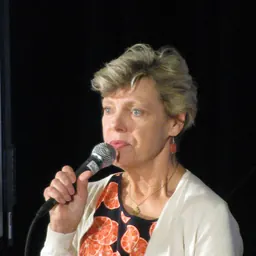
Guatemalan media lobby In a 1996 widely recounted interview with Ortiz on the TV news program Nightline, American journalist Cokie Roberts contested Ortiz's claim that an American was among her captors. Roberts implied that Ortiz was lying about the entire episode, despite the fact that Ortiz later won a lawsuit against a Guatemalan general she accused in the case. It was later revealed that Patton Boggs, the law firm of Roberts' brother Tom Boggs, was paid by the Guatemalan government to promote a more positive image of the regime, which was widely criticized internationally for human rights abuses. Patton Boggs ran a smear campaign against Ortiz.
According to an article on Pamela Brogan's report The Torturers' Lobby (1993), published by the Center for Public Integrity (CPI), Guatemala was among several nations known to commit torture and human rights abuses and that had paid U.S. lobbying firms high fees to help keep U.S. funds going to it and "to gloss over its wretched human rights reputation". For instance, in 1991, the major lobbying firm of Patton, Boggs, & Blow in Washington, DC, was paid $220,000 by Guatemala.
As a result of revelations, Clinton ordered the United States Intelligence Oversight Board to conduct a year-long review of operations of the CIA in Guatemala. Its 1996 report included a review of Ortiz's case but reserved its conclusions: he IOB believes that Sister Dianna was subjected to horrific abuse on November 2, 1989, but U.S. intelligence reports provide little insight into the details of her plight. Because the Department of Justice is still conducting an extensive reinvestigation of the incident, we do not draw any conclusions on the case at this time.
Despite the lack of compliance from government officials, the First Lady Hillary Clinton, had sympathy for Ortiz and greatly assisted in providing official documents and identification related to her case. Richard Nuccio, a State Department analyst, told a Congressional contact that the CIA had been funding Guatemala military operations, despite the 1990 prohibition. As a result, Clinton ordered declassification of records going back to 1954 (when a CIA-sponsored military coup overthrew the government). Analysis has revealed longstanding U.S. support for the Guatemala military through its years of state terrorism and civil war.
Prosecution of her case
Sister Dianna filed a case with the Inter-American Commission on Human Rights in 1990 based on her abduction and torture by agents of the Guatemalan government in 1989. The commission ruled in 1997 that the state of Guatemala had violated Articles 1, 5, 7, 8, 11, 12, 16 and 25 of the American Convention on Human Rights. It found that Ortiz had been placed under surveillance, was threatened, then kidnapped and tortured. It made a judgment against the state of Guatemala, with remedies suggested. It noted that a domestic case had quickly been filed with the National Police in the department where the sisters were working, and that Ortiz had cooperated with the investigation, but in six years the government had made no progress on it. The commission noted that high-ranking officials of the National Police, Ministry of Interior and Ministry of Defense had immediately denied Ortiz's statement and tried to denigrate her account before any investigation was done.
The Center for Constitutional Rights filed against Gramajo when he was in Massachusetts doing graduate work at the Harvard Kennedy School of Government. The ATCA "allows Americans and foreigners to file suit for violations of international law while the defendant is in the United States". The court agreed with the plaintiffs on Gramajo's responsibility, saying the former general "devised and directed the implementation of an indiscriminate campaign of terror against civilians", including the nine plaintiffs.
Ortiz recounted her experience in formal testimony several times.
Raul Molina Mejía in his article, "The Struggle against Impunity in Guatemala", Journal of Social Justice, vol. 26 (1999), describes Ortiz's abduction and treatment as an example of state-sponsored terrorism based on impunity. He writes: "impunity as concrete legal or 'de facto' actions taken by powerful sectors to prevent investigation or prosecution, such as amnesty laws, pardons, thwarting investigations, the hiding of documents, and tampering with legal samples were abundant in Guatemala." the El Aguacate massacre, and the 1990 surge of killings at the National University of San Carlos. Molina Mejía writes that the "political/psychological" aspect of this impunity, is "a dimension resulting from state terrorism, by which political options in a polity are restricted and controlled through the state's manipulation of fear".
Human rights work In 1994, Dianna Ortiz began working at the Guatemala Human Rights Commission/USA (GHRC). GHRC's director, Sister Alice Zachmann, had advocated for her release from clandestine detention in 1989 and had invited Dianna to give the keynote address at GHRC's 1992 International Conference on Torture in Guatemala. Dianna's work at GHRC involved advocacy work, public speaking, and help with all aspects of the small organization. While at GHRC, Dianna conducted her hunger strike and vigil in front of the White House.
In 1998, while working at the Guatemala Human Rights Commission/USA, Ortiz founded the Torture Abolition and Survivors Support Coalition International (TASSC) as a project of GHRC/USA. TASSC received its 501(c)3 status in 2002, becoming the only organization in the U.S. founded by and for survivors of torture. It provides support particularly to survivors living in the U.S., as many refugees had come from nations in Central and South America where states had sponsored terrorism against citizens.
TASSC was founded as a pledge from Ortiz to the public that she would work to stop others from going through similar challenging circumstances. Her experiences prompted her to seek justice for herself and others in the midst of the political violence.
"TASSC is unique in the United States as the only organization led by torture survivors themselves, operating from the core belief that survivors understand their needs best and must be at the core of decisions about the healing process". After speaking with and interviewing torture victims all across the world, Ortiz was inspired and felt driven to start an advocacy organization. TASSC increased the access of resources for survivors despite the increasing number of torture survivors across Latin America and the United States.
Death Dianna Ortiz died of cancer on February 19, 2021, while under hospice care in Washington, D.C.
Don’t just read it —
keep it.
Full-length biographies made to live with: read them, listen on the way to work, watch them tonight.
- E-book
- Audio
- Video
Instant download · yours to keep · every purchase keeps this site free
Important facts
People in Dianna Ortiz's life
Named in this biography and alive at the same time


Related people
Same field, nearest in time





Contemporaries
People whose lives overlapped Dianna Ortiz's



Frequently asked questions
Who was Dianna Ortiz?
American nun and missionary (1958-2021)
When was Dianna Ortiz born?
Dianna Ortiz was born on 2 September 1958 in New Mexico.
When did Dianna Ortiz die?
Dianna Ortiz died on 19 February 2021 in Washington, D.C..
What was Dianna Ortiz's occupation?
Dianna Ortiz was a human rights defender, christian nun, nun and roman Catholic.
What nationality was Dianna Ortiz?
Dianna Ortiz was American.
Sources & further reading
Cite this page
APA: Biography.guide. (2026). Dianna Ortiz. https://biography.guide/dianna-ortiz/
MLA: "Dianna Ortiz." Biography.guide, https://biography.guide/dianna-ortiz/.
Chicago: "Dianna Ortiz." Biography.guide. https://biography.guide/dianna-ortiz/.
Data last updated: 2026-09-22 · Spot an error? Report a correction.
Page generated 2026-09-27 05:14 UTC