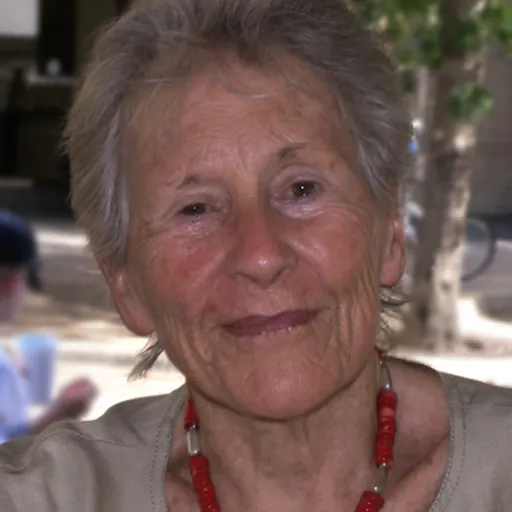
About Diana Kennedy
Lived 1923 – 2022 (aged 99). Diana Kennedy was a British chef and cook.
Diana Kennedy (; 3 March 1923 – 24 July 2022) was a British food writer. The preeminent English-language authority on Mexican cuisine, Kennedy was known for her nine books on the subject, including The Cuisines of Mexico, which changed how Americans view Mexican cuisine. Kennedy received numerous awards for her work, including the Order of the Aztec Eagle from the Mexican government, and was appointed a Member of the Order of the British Empire.
Life Kennedy was born Diana Southwood in Loughton, Essex, in the southeast of England, on 3 March 1923. Her father was a salesman, and her mother a schoolteacher.
Kennedy attended South Hampstead High School. She did not go on to university because of World War II and instead, at age 19, joined the Women's Timber Corps: a civilian organisation that took over forestry duties from men who had gone off to fight.
On a last-minute decision, Kennedy decided to visit Haiti in 1957. There she met Paul P. Kennedy, a correspondent for The New York Times in Mexico, Central America and the Caribbean. The two moved to Mexico in 1957, and there they married some time later, remaining together until his death from cancer in 1967, aged 62. Kennedy had no children, When she was not teaching, she was either writing or working in the kitchen on recipes.
She visited every state in Mexico, and used diverse forms of transportation, from buses, to donkeys to her Nissan pickup truck with no power steering (and a shovel to dig it out of the mud). She travelled to isolated areas of Mexico to visit markets and cooks to ask about cooking ingredients and methods.
First exposure to Mexican cuisine During her first years in Mexico City with her husband in the late 1950s, often sleeping in her old Nissan truck. She regularly interviewed and cooked with a variety of cooks, but especially those from rural areas, cooking for family and friends. She even apprenticed in a bakery in Mexico City to learn the all-male trade. However, Kennedy dismissed most chefs doing Mexican food during her time because they had not done the travelling and research that she had and innovated rather than preserved original methods.
Her influence was not limited to the United States as her work was very well received in Mexico. She received numerous awards in this country including the Order of the Aztec Eagle,
Quinta Diana/Diana Kennedy Center Kennedy permanently returned to Mexico in 1976, initially living in Mexico City. In 1980, she moved to eastern Michoacán, about three hours west of the capital, after a friend introduced her to the area. There she bought property which she initially called "Quinta Diana" near the small village of San Francisco Coatepec de Morelos (colloquially known as San Pancho), in the municipality of Zitácuaro.
Her homestead was on a forested hill at the end of a long dirt road, and could be reached only by pickup or four-wheel drive. However, this did not stop a steady stream of visitors from arriving at her cobblestone driveway.
Quinta Diana is an ecologically minded establishment. Kennedy stated in My Mexico (1998) that she wanted a house built of local materials and a lifestyle similar to that of her neighbors. The nearly three hectares are almost off the grid; the house is made of adobe. It was built by local architect, Armando Cuevas, and is centered on a large boulder, almost the size of a Volkswagen Beetle, which Kennedy decided not to remove from the site. Around the boulder is an atrium adjacent to the open living room, from which stairways lead to various parts of the house. In her home Kennedy tested recipes dictated by the seasons, working often with what grew on her property. Her cooking spaces consist of an outdoor space with wood-fired grills and adobe beehive-shaped ovens, and an indoor kitchen, which she called her "laboratory". The latter centers on a long cement counter, which is covered in blue and white tiles, with inlaid gas burners. This kitchen is filled with various ingredients and implements including burnished copper and clay pots on the walls, herbs and vegetables in wicker baskets, various varieties of dried chili peppers, and her own condiments, including a pineapple vinegar similar to balsamic. For her table, she has authentic Talavera pottery from Puebla, and near the kitchen window, there are binoculars and a bird book.
Her bedroom is upstairs, which opens to her study, filled with books and papers about, and with windows on three sides to look out over the gardens towards the mountains.
Kennedy grew much of her own food organically. She had a greenhouse to grow various edible plants, such as herbs and even coffee. The gardens include grapefruit, apricot and fig trees, chayote vines from Veracruz, and a section dedicated to the corn she used for masa. Manure is the fertilizer. All the water used on the property is from tanks that collect wastewater, with a patch of land serving as a filter for wastewater. Much of the energy is solar.
Since 1980, money from her books and speaking engagements have funded the property and its operations. However, Kennedy established the Diana Kennedy Foundation to have tax-free status with the Mexican government, and to work on projects focusing on the environment as well as food. Her interest in the environment was related to food in the sense that when the environment is destroyed, foods disappear. It also had roots in her mother's love for nature and experience with scarcity in wartime England. She argued against the use of genetically modified seeds, excessive use of packaging and use of bleach for white linens in hotels and restaurants. The Foundation is also geared toward preservation, not only of Mexico's food heritage, but of Quinta Diana, with its immense collection of Mexican cookbooks, other publications and pottery, along with the gardens.
Publications
The Cuisines of Mexico, Harper & Row, 1972, revised HarperCollins, New York, 1986 Spanish translation: Las Cocinas de México, 1991 The Tortilla Book, Harper & Row 1975, revised Harper Collins, New York, 1991 Recipes from the Regional Cooks of Mexico, Harper & Row 1978, revised as Mexican Regional Cooking, Harper Collins, New York, 1990 Spanish translation: Cocina regional mexicana, 1990 Nothing Fancy (a book of personal recipes) Dial Press 1984, paperback North Point Press, 1989, Ten-Speed Press, Berkeley, 1999 , revised University of Texas Press, Austin, 2016 Spanish translation: Recetas del Alma, 2006 The Art of Mexican Cooking, Bantam Books, 1989/ re-issued by Clarkson Potter, 2008 Spanish translation: El Arte de la Cocina Mexicana, 1993 My Mexico, Clarkson Potter, New York, 1998 , reissued University of Texas Press, Austin, 2013 Spanish translation: México—Una Odisea Culinaria, 2001 The Essential Cuisines of Mexico (a compilation of the first three books), Clarkson Potter, New York, 2000 Spanish translation: Lo Esencial de las Cocinas Mexicanas, 2003 From My Mexican Kitchen—Techniques and Ingredients, Clarkson Potter, New York, 2003 Oaxaca al Gusto: An Infinite Gastronomy, University of Texas Press, Austin, 2010 Spanish translation: Oaxaca al gusto: El mundo infinito de su gastronomía, 2008
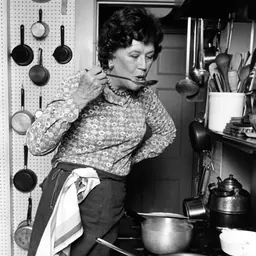
Recognition Kennedy was called the "grand dame of Mexican cooking", with comparisons to Julia Child in the United States and Elizabeth David in the UK, and a "dogged, obsessive pop anthropologist." Her comparison to Julia Child comes from her promotion of Mexican cuisine, much the way that Child did for French cuisine; however, while flattered, she dismissed it. She was a common name among foodies in the United States for decades, but did not receive notice in her native England until Prince Charles came to Quinta Diana in 2002, to eat and to appoint her a Member of the Order of the British Empire.
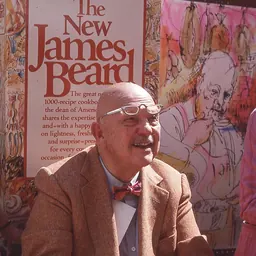
1971: Silver Medal from the Tourism Secretariat for the promotion of Mexican culture through its foods. 1980: Amando Farga Font special award from the Mexican Food Writers Association 1981: Decorated with The Order of the Aztec Eagle by Mexican Government. 1984: Award of The Jade Molcajete from Tourism Secretariat and the Holiday Inn hotel chain 1991: Amando Farga Font special award from the Mexican Restaurant Association 1992: Named Academic Researcher by the Mexican Society of Gastronomy 1995: Recognition by the Domecq Cultural Institute 1999: Recognition by the Mexican Restaurant Association 2000: A special Gold Medal Award from the Mexican Restaurant Association 2001: Special recognition in La Feria de Puebla by the state Secretariat of Culture and Tourism 2001: A silver medal from the National Chamber of the Food and Restaurant Industry (CANIRAC) 2002: Appointed a Member of the Order of the British Empire (MBE) by the British Government for furthering cultural relations between the UK and Mexico 2003: Life Achievement Award from the International Association of Cooking Professionals 2003: Recognition for work in sustainable foods by the Monterey Bay Aquarium 2011: James Beard Foundation Award—Cookbook of the Year for Oaxaca al Gusto 2012: Gold Medal from the Vatel Club of Mexico 2013: Silver Molcajete Award from the Mexican Gastronomic Association, Brotherhood of Zona Rosa Gourmets and the Industrialists' Club 2014: James Beard Cookbook Hall of Fame
Don’t just read it —
keep it.
Full-length biographies made to live with: read them, listen on the way to work, watch them tonight.
- E-book
- Audio
- Video
Instant download · yours to keep · every purchase keeps this site free
Important facts
People in Diana Kennedy's life
Named in this biography and alive at the same time

Related people
Same field, nearest in time





Contemporaries
People whose lives overlapped Diana Kennedy's
Frequently asked questions
Who was Diana Kennedy?
British food writer (1923–2022)
When was Diana Kennedy born?
Diana Kennedy was born on 3 March 1923 in Loughton.
When did Diana Kennedy die?
Diana Kennedy died on 24 July 2022 in Zitácuaro.
What was Diana Kennedy's occupation?
Diana Kennedy was a chef and cook.
What nationality was Diana Kennedy?
Diana Kennedy was British.
Sources & further reading
Cite this page
APA: Biography.guide. (2026). Diana Kennedy. https://biography.guide/diana-kennedy/
MLA: "Diana Kennedy." Biography.guide, https://biography.guide/diana-kennedy/.
Chicago: "Diana Kennedy." Biography.guide. https://biography.guide/diana-kennedy/.
Data last updated: 2026-09-23 · Spot an error? Report a correction.
Portrait: Wikimedia Commons · author & licence
Page generated 2026-09-27 05:05 UTC