
About Diana Cooper
Born 1964. Diana Cooper is an American painter, photographer and installation artist.
Diana Cooper, Orange Alert UK, acetate, acrylic, felt, neoprene, paper, foam core, corrugated plastic and map pins, dimensions variable, 2003–8. MOCA Cleveland/Postmasters Gallery.
Diana Cooper (born 1964) is an American visual artist, known for largely abstract, improvised hybrid constructions that combine drawing, painting, sculpture, installation and photography. Her art has evolved from canvas works centered on proliferating doodles to sprawling installations of multiplying elements and architectonic structures. Critics have described her earlier work—primarily made with craft supplies such as markers, pens, foamcore, pushpins, felt, pipe cleaners, tape and pompoms—as humble-looking yet labor-intensive, provisional and precarious, and "a high-wire act attempting to balance order and pandemonium." Lilly Wei, however, identifies an "absurdist playfulness and Orwellian intimations" in Cooper's work that occupy a unique place in contemporary abstraction. a Guggenheim Fellowship, and awards from the Anonymous Was A Woman, Pollock-Krasner and Joan Mitchell foundations. She has been commissioned to create public artworks for New York City and the Moss Arts Center at Virginia Tech, and her work has been acquired by the Museum of Fine Arts Boston, the British Museum and the Pinakothek der Moderne (Munich). Cooper is based in Brooklyn, New York and is married to the scholar and essayist Mark Lilla. MoMA PS1, The Drawing Room (London), SculptureCenter, Contemporary Arts Center (Cincinnati), Sharjah Art Museum (United Arab Emirates), and He Xiangning Art Museum (China), among others.
Work and reception Cooper is known for her ability to extend two-dimensional sensibilities and geometries into three dimensional "hybrid constructions" and installations. Critic David Cohen has distinguished her from the latter group, identifying a "divided sensibility" that maintains both a handmade, casually obsessive mode and a systematizing one committed to taxonomies of form and function. He wrote that all of her work—regardless of format or scale—remains in the orbit of drawing, poised between doodle and collage and operating "as a way of being in the world." In these works, tiny lines and circles (generally red, yellow, blue or black) accumulated to form dense networks, grids and mazes. New York Times critic Ken Johnson wrote, "Cooper's additive process is not uncontrolled. Out of the tension between structures of order and containment and impulses of transgression and expansion, grows a ramshackle architecture or a kind of schematic model of the mind at play." Speedway (2000–3) was a freestanding, De Stijl-styled foamcore structure, consisting on one side of a cutaway that Nancy Princenthal described as "a Las Vegas marquee of pulsing concentric and parallel lines, punctuated by seedily alluring little niches," and on the other, a dollhouse-like grid of cubbyholes, suggesting a Mondrian/Donald Judd-influenced "mini-museum."
Photo-derived work Digital photography and themes involving the built environment play a greater role in Cooper's later work, which has employed fewer elements and sometimes taken on a frieze-like appearance (e.g., the illusionistic wall-piece, Undercover, 2010–3). She uses photography to create sketchbook-like collections of abstract forms taken from everyday experience—details of airport tarmacs, subway seats, grass, refuse, construction fencing, or gallery architecture—which she re-presents out of context, revealing neglected qualities of beauty and strangeness or to create hyperreal spatial illusions (e.g., Skylight I, 2012–3). Situated along a slow-curving, 107-foot-long wall in an Ennead Architects-designed building, the work employed more durable materials than past work—glass (inserted into pre-existing windows), fiberboard, metal hardware, and acrylic paint—and received an Americans for the Arts public art award. Her design marries geometric forms found in the location's ventilation building, the Queensboro Bridge and other surrounding structures with fluid hand-drawn and organic forms reflecting the natural setting and backdrop of the East River.
Awards and public collections Cooper has been recognized with a Guggenheim Fellowship (2000), Joan Mitchell Foundation (2013), New York Foundation for the Arts (2013, 2000), Bogliasco Foundation (2011), and Marie Walsh Sharpe Foundation Space Program (2004–5). She has received artist residencies from the Atlantic Center for the Arts, Institute for Electronic Arts, La Cite Internationales des Arts (Paris), and Virginia Tech. Herbert F. Johnson Museum of Art, Katzen Arts Center, Museum of Fine Arts Boston,
Don’t just read it —
keep it.
Full-length biographies made to live with: read them, listen on the way to work, watch them tonight.
- E-book
- Audio
- Video
Instant download · yours to keep · every purchase keeps this site free
Important facts
Family & relationships
People in Diana Cooper's life
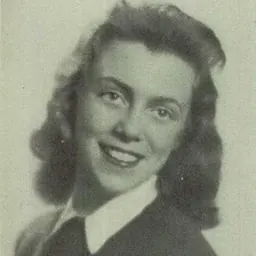
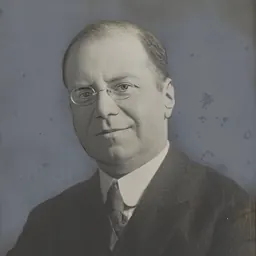
Named in this biography and alive at the same time



Related people
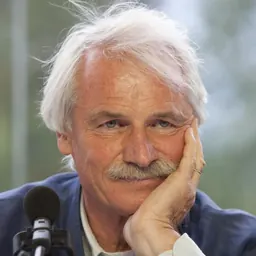
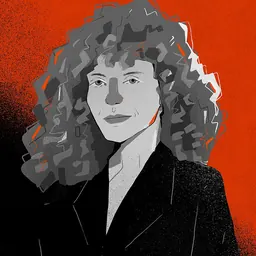
Same field, nearest in time

Contemporaries
People whose lives overlapped Diana Cooper's


Frequently asked questions
Who is Diana Cooper?
American artist (born 1964)
When was Diana Cooper born?
Diana Cooper was born in 1964 in Greenwich.
What is Diana Cooper's occupation?
Diana Cooper is a painter, photographer and installation artist.
What nationality is Diana Cooper?
Diana Cooper is American.
Sources & further reading
· DBpedia: Diana Cooper (artist)
Cite this page
APA: Biography.guide. (2026). Diana Cooper. https://biography.guide/diana-cooper/
MLA: "Diana Cooper." Biography.guide, https://biography.guide/diana-cooper/.
Chicago: "Diana Cooper." Biography.guide. https://biography.guide/diana-cooper/.
Data last updated: 2026-09-26 · Spot an error? Report a correction.
Page generated 2026-09-27 05:13 UTC