
About Denison Kitchel
Lived 1908 – 2002 (aged 94). Denison Kitchel was an American lawyer.
Denison Kitchel (March 1, 1908 – October 10, 2002) was a lawyer from Phoenix, Arizona, who was an advisor to and the campaign manager of Republican Barry M. Goldwater in the 1964 U.S. presidential campaign against the Democrat Lyndon B. Johnson.
Background
Kitchel was born in Bronxville in suburban Westchester County north of New York City, New York. Kitchel was the son of Connecticut native William Lloyd Kitchel (born 1869) and the former Grace Welch Wheeler (born 1872). His sister, Alice Lloyd Kitchel, was the namesake of his paternal grandmother. The older of his two paternal uncles, Cornelius P. Kitchel, was mayor of Englewood, New Jersey, from 1930 to 1933.
In 1930, Denison Kitchel graduated from Yale University in New Haven, Connecticut. In 1933 Kitchel completed Harvard Law School in Cambridge, Massachusetts, where he studied under Felix Frankfurter, who became an associate justice of the United States Supreme Court during the administration of U.S. President Franklin D. Roosevelt. After law school, Kitchel headed west to join the Phoenix firm of Ellinwood & Ross, which became Evans, Kitchel & Jenckes. The couple had two sons, James Douglas Kitchel of Scottsdale and Harvey Denison Kitchel (namesake of his great-great-grandfather) of Jamul in San Diego County, California, and four grandchildren. He served for three years in England in the United States Army Air Corps during World War II and was discharged as a lieutenant colonel. He encouraged Goldwater's enthusiasm for the NATO and convinced the presidential candidate to support the unanimous 1954 United States Supreme Court decision Brown v. Board of Education, which led to the use of federal troops in 1957 in a test case to compel school desegregation in Little Rock, Arkansas.
Kitchel's judicious manner contrasted with Goldwater's early tendency to make controversial statements, to shoot from the hip. It was often said that Kitchel was the only man who could oppose Goldwater and still survive the conformity of the candidate's inner circle. Goldwater named Kitchel as campaign manager in January 1964. In doing so, he bypassed the key figures in the Draft Goldwater Committee, Goldwater's Senate campaign manager Stephen Shadegg, F. Clifton White and William A. Rusher. From the start, party leaders pressured Goldwater to replace Kitchel with a more experienced national figure. Some Republican financial contributors wanted Leonard W. Hall of New York, the chairman of the Republican National Committee from 1953 to 1957, for the top campaign position, but Goldwater stood behind is longtime friend.
Kitchel once said that he had an active distaste for campaigning, or "kissing babies", as he called such demands. However, Kitchel exerted leadership regarding issues, strategies, and drafting policy statements. Kitchel wrote Goldwater's Senate speech, which explained his then opposition to the Civil Rights Act of 1964, on constitutional and libertarian grounds. Goldwater believed that a business, engaged in interstate commerce, and otherwise open to the public, had a constitutional right and a liberty interest to turn someone way merely because his race, creed, color, or national origin. Then, Governor Mark O. Hatfield of Oregon, a moderate Republican and later a Senate colleague of Goldwater, who was the keynoter of the 1964 Republican National Convention in San Francisco, introduced Kitchel at a caucus of the Oregon delegation as
a man of little background in national politics.... Just as voters this year have been confounding the pollsters, this man has confounded the professional politicians.
Legacy
From 1957 to 1963, Kitchel was general counsel for the Arizona Republican Party. In 1958, when Goldwater was first reelected to the Senate, Kitchel wrote the state party platform in which he defined his conservative philosophy in eight short paragraphs, one of which reads:
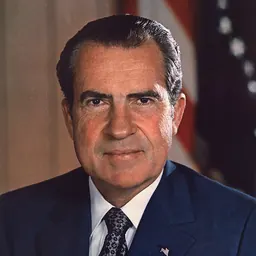
Years later Kitchel revealed that he and Goldwater spent little time discussing a potential Goldwater Cabinet, considering the odds against the Republican nominee. "But there was a tentative agreement [that] the secretary of state was to be Richard Nixon, the secretary of the treasury [retired General Electric board chairman] Ralph Cordiner, and I was to be the attorney general."
Kitchel penned two books, Too Grave a Risk (1963), an examination of the International Court of Justice and the chasm in the justice systems of most member nations compared to the United States, Kitchel's papers from 1947 to 1980 can be accessed at Online Archive of California.
Don’t just read it —
keep it.
Full-length biographies made to live with: read them, listen on the way to work, watch them tonight.
- E-book
- Audio
- Video
Instant download · yours to keep · every purchase keeps this site free
Important facts
People in Denison Kitchel's life
Named in this biography and alive at the same time






Related people
Same field, nearest in time


Contemporaries
People whose lives overlapped Denison Kitchel's

Frequently asked questions
Who was Denison Kitchel?
Arizona lawyer and politician
When was Denison Kitchel born?
Denison Kitchel was born on 1 March 1908 in Bronxville.
When did Denison Kitchel die?
Denison Kitchel died on 10 October 2002 in Scottsdale.
What was Denison Kitchel's occupation?
Denison Kitchel was a lawyer.
What nationality was Denison Kitchel?
Denison Kitchel was American.
Sources & further reading
Cite this page
APA: Biography.guide. (2026). Denison Kitchel. https://biography.guide/denison-kitchel/
MLA: "Denison Kitchel." Biography.guide, https://biography.guide/denison-kitchel/.
Chicago: "Denison Kitchel." Biography.guide. https://biography.guide/denison-kitchel/.
Data last updated: 2026-09-20 · Spot an error? Report a correction.
Page generated 2026-09-27 05:19 UTC