
About Delhy Tejero
Lived 1904 – 1968 (aged 63–64). Delhy Tejero was a Spanish female painter, draftsperson, muralist, illustrator, art and drawing teacher and painter.
Adela Tejero Bedate (later known as Delhy Tejero, 1904 – October 10, 1968) was a Spanish painter. Her work is held in the permanent collections of Museo Nacional Centro de Arte Reina Sofía and Museo ABC.
Biography
Born in Toro, Tejero was the second of three daughters, whom, after the early death of their mother, were educated and looked after by their father, Agustín Tejero, the City Council secretary. She took drawing classes at the González Allende Foundation, which was an institute affiliated to the Institución Libre de Enseñanza (ILE, English: The Free Institution of Education), and published her first illustrations in the local newspaper, El Noticiero de Toro. In 1925, her father sent her to Madrid to the school San Luis de los Franceses to study French, shorthand and dressmaking. The day after her arrival, she had her entrance exam for the School of Arts and Crafts. Her intention was to enter the School of Fine Arts, which she achieved in 1926. She was granted two scholarships for the first four years of her studies. She presented her drawings to various journals, offering to collaborate, and began her professional career as an illustrator for journals such as Estampa, Crónica, Blanco y Negro, Nuevo Mundo and La Esfera. During the sixties, Tejero continued to publish her illustrations, including self-authored short stories in newspapers such as ABC and Ya.
Tejero had her first studio in 1932, on Miguel Moya Street in Madrid. During the month of December, she held her first individual exhibit with mural projects, oil paintings in large formats and a collection of drawings with experimental techniques such as decalcomania for her witches series, a creation which was later attributed, in 1939, to Oscar Domínguez.
Avant-garde period
In 1934, she painted the work “Mercado Zamorano” (English: Zamoran Market), which she presented in the National Exhibit dedicated to regional dresses. That same year, she obtained a scholarship from the Board of the Extension of Studies and left for Paris to study mural painting.
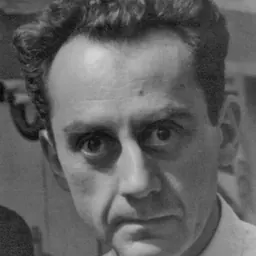
In 1936, she spent her holidays in Morocco. She managed to return to Spain despite the outbreak of civil war, but it was not possible for her to reach Madrid and continue giving classes. She stayed in Toro, where she worked as a drawing teacher at the local high school. In 1937, she was appointed to paint the murals for lunch rooms in schools in Salamanca, and for the Condestable Hotel in Burgos. When she finished these commissions, she asked to travel to Florence where she would stay for two years. In 1939, she returned to Paris where she encountered the surrealist movement, especially with Oscar Domínguez and André Bréton. She took a painting course at the University of Sorbonne and a course in theosophy. She participated in the exhibition “Le Rêve dans l’art et la litterature” alongside Miró, Domínguez, Man Ray, Chagall, and others.
Spiritualist and transitional period In August 1939 Tejero returned to Spain. She installed herself in a studio in La Prensa, the building on Plaza del Callao in Madrid, and painted the ceiling of a cinema installed in the building.
In 1943 she was awarded third place in the painting section of the National Exhibit. That same year, her father died. Through the religious circles led by Father César Vaca, who followed the Christian doctrines of Teilhard de Chardin, and by her contact with aristocrats such as Lilí Álvarez, Tejero went through what she called her “second mysticism”. During this time, her work lost all of its innovative quality and she destroyed the works she had created in Paris.
In 1947, following a group show organized by the Spanish government in Buenos Aires, she progressively abandoned her mystic lines of work. She returned to painting the human figure but added her own personal style by fusing them together creating one form out of two, or two forms out of three. In 1948, she won the contest organized by the City Council of Zamora with her mural project El Amanecer jurídico Zamorano (English: The Legal Dawn of Zamora).
After 1951, she experienced a renaissance of the avant-garde tendencies towards abstraction. In 1953, she was the only woman to participate in the first abstract exhibition of Santander. The following exhibit was collective, in the Habana, in 1954. Her last exhibition was a solo show in the rooms of the Direction of Fine Arts in Madrid.
Death In 1959 she suffered a myocardium heart attack. During the following years, she painted murals by commission and continued to paint and illustrate until October 10, 1968, when she died from a heart attack in Madrid.
Awards and Recognitions
1930 Award of Appreciation in the National Exhibit of Fine Arts 1932 Third medal in Decorative Arts for her work “Castilla” in the National Exhibit 1934 Scholarship from the Board of the Extension of Studies 1943: Awarded the third medal in the Painting Section of the National Exhibit 1948: Won the contest organized by the City Council of Zamora 2019 Predilect Daughter of the city of Toro.
In 2005 the exhibition Delhy Tejero, 111 Drawings was presented by the Museo Municipal de Arte Contemporáneo Conde Duque de Madrid. In 2006, the Municipal Museum of Contemporary Art in Madrid presented an exhibition in Palencia of her work. In 2019 her work was included in the collective exhibit “Dibujantas, pioneras de la Ilustración” (English: Draughtswomen, pioneers of Illustration) at Museo ABC.
Don’t just read it —
keep it.
Full-length biographies made to live with: read them, listen on the way to work, watch them tonight.
- E-book
- Audio
- Video
Instant download · yours to keep · every purchase keeps this site free
Important facts
People in Delhy Tejero's life
Named in this biography and alive at the same time
Related people
Same field, nearest in time


Contemporaries
People whose lives overlapped Delhy Tejero's




Frequently asked questions
Who was Delhy Tejero?
Spanish painter (1904-1968)
When was Delhy Tejero born?
Delhy Tejero was born in 1904 in Toro.
When did Delhy Tejero die?
Delhy Tejero died on 10 October 1968 in Madrid.
What was Delhy Tejero's occupation?
Delhy Tejero was a female painter, draftsperson, muralist, illustrator, art and drawing teacher and painter.
What nationality was Delhy Tejero?
Delhy Tejero was Spanish.
Sources & further reading
Cite this page
APA: Biography.guide. (2026). Delhy Tejero. https://biography.guide/delhy-tejero/
MLA: "Delhy Tejero." Biography.guide, https://biography.guide/delhy-tejero/.
Chicago: "Delhy Tejero." Biography.guide. https://biography.guide/delhy-tejero/.
Data last updated: 2026-09-20 · Spot an error? Report a correction.
Page generated 2026-09-27 05:14 UTC