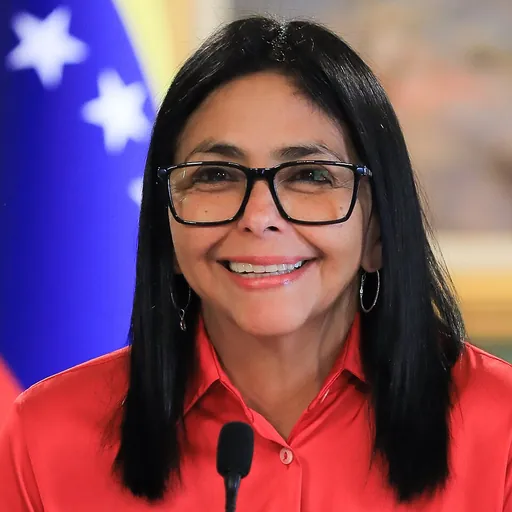
About Delcy Rodriguez
Born 1969. Delcy Rodriguez is a Venezuelan politician, lawyer, diplomat, authority and jurist.
Delcy Eloína Rodríguez Gómez (born 18 May 1969) is a Venezuelan lawyer, politician, and diplomat who has been interim president of Venezuela since 2026, following the United States intervention in Venezuela. She is the first woman in Venezuelan history to perform the duties of the presidency. A member of the United Socialist Party of Venezuela (PSUV), Rodríguez served as the 24th vice president under Nicolás Maduro's government since 2018.
The daughter of guerilla leader and politician Jorge Antonio Rodríguez, Rodríguez was born and raised in Caracas. When she was seven years old, her father was murdered while in custody of the DISIP. In 1993, Rodríguez graduated from the Central University of Venezuela (UCV) with a Bachelor of Laws' degree. During her time there, Rodríguez was a student leader and activist. She then studied labor law in Sorbonne University in Paris and social policy in Birkbeck, University of London, but did not graduate from either of them.
In 2002, following the failed coup attempt against then-president Hugo Chávez, Rodriguez along with her elder brother Jorge entered politics. In 2006, President Chávez appointed Rodríguez Minister for Presidential Affairs, serving in this post for around six months. In 2013, following the death of Chávez, Nicolás Maduro became president and appointed Rodríguez Minister of Popular Power for Communication and Information. In 2014, Rodríguez was appointed Minister of Foreign Affairs and served in this role until 2017, where she was appointed President of the Constituent National Assembly of Venezuela following the Constituent Assembly election. In June of the following year, President Maduro appointed Rodríguez vice president. During her tenure in the role, Rodríguez also served as Minister of Economy and Finance from 2020 to 2024, and as Minister of Petroleum and Hydrocarbons from 2024.
On 3 January 2026, the United States carried out strikes in Venezuela and captured President Maduro. Rodríguez was officially sworn in as acting president on 5 January, thus becoming the first woman to exercise the powers of the presidency in Venezuelan history. Despite Maduro's de facto removal from power, both he and Rodríguez claim that he remains the legal officeholder.
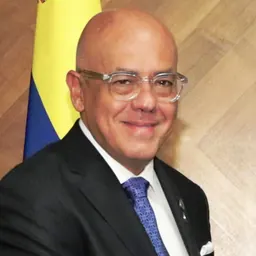
Early life Rodríguez, born on 18 May 1969, is the sister of Jorge Rodríguez Gómez, a psychiatrist serving as President of the National Assembly of Venezuela since 2021. Her father, Jorge Antonio Rodríguez, was a founder of the Socialist League, a Marxist political party in Venezuela. Her mother is Delcy Gómez. Rodríguez's father was murdered in 1976, while he was incarcerated and being tortured by the Directorate of Intelligence and Prevention Services (DISIP) for his leadership role in the kidnapping of American executive and alleged CIA spy William Niehous.
According to The Washington Post, a person who had held repeated conversations with Rodríguez stated that Rodríguez had lived in Santa Monica, California during her college years. Rodríguez graduated with a law degree from the Central University of Venezuela (UCV) in 1993. During her time at UCV, Rodríguez was active as a student leader. She then studied labor law at Sorbonne University in Paris, She has stated that her decision to enter politics was motivated by revenge for the death of her father while in the custody of pro-American intelligence agents. While in London during the crisis, she and her mother symbolically took over the Venezuelan Embassy in London to protest the de facto government of Pedro Carmona. She subsequently became Director of International Affairs at the Ministry of Energy and Mines. In 2005, Rodríguez was appointed Vice-minister for European Affairs.
From February to August 2006, Rodríguez was the Minister for Presidential Affairs. Her tenure was short-lived due to reported tensions with president Hugo Chávez. She reportedly refused to show the "personal homage" expected by the president. Travelling to an official visit to Moscow in 2006, it was reported that Rodríguez engaged in a heated argument with Chávez and swore at him; In August 2013, President Nicolás Maduro appointed her as the Minister of Popular Power for Communication and Information of Venezuela, a position in which she was reaffirmed in 2014 and maintained until October 2014.
Minister of Foreign Affairs In December 2014, President Maduro appointed Rodríguez as the Minister of Popular Power for Foreign Relations, also known as Chancellor, succeeding Rafael Ramírez Carreño. Rodríguez became the first woman to hold this position in Venezuela's history. Rodríguez accused Macri of meddling in Venezuelan internal affairs, of endorsing political violence against Chavismo, and of criticizing Hebe de Bonafini, the head of Madres de Plaza de Mayo, for advocating peaceful protests against his government. Rodríguez accused Macri of releasing officials responsible for torture during Argentina's last military dictatorship and vetoing human rights laws, claims that the newspaper Clarín characterized as factual errors. President Maduro later praised Rodríguez publicly for metaphorically "sending Macri to the showers" during the summit.
During the same summit, Rodríguez presented photographs depicting Leopoldo López and opposition protestors attacking public buildings. She said the images, sourced from news agencies, evidenced López's responsibility for "attacks against essential public services and Venezuelan universities". Rodríguez alleged Macri had released prisoners who were responsible for repression during the last military dictatorship in Argentina and had vetoed laws aimed at addressing unfair treatment, torture, and forced disappearances. These allegations were denied by the Argentine Foreign Minister, Susana Malcorra, during a press conference. Malcorra stated that Rodríguez's accusations were incorrect and that President Macri deemed a response unnecessary. She criticized Rodríguez's remarks as overly aggressive and based on inaccurate information.
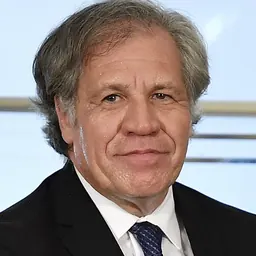
In 2016, Rodríguez accused Luis Almagro, the Secretary General of the Organization of American States (OAS) of "international bullying" because of his attempt to suspend Venezuela from the OAS. In March 2016, within the framework of an Organization of American States (OAS) assembly, Rodríguez denounced a report published by Luis Almagro. She characterized the report as part of a "complex intervention strategy with medium and long-term consequences". Rodríguez informed the assembly that over 70% of Almagro's tweets were focused on criticizing the Venezuelan government and its citizens.
In June 2016, during the commemoration of the 195th anniversary of the Battle of Carabobo, President Maduro awarded Rodríguez the Military Order of National Defense, Commander Degree, First Class. This honor was bestowed upon her for "defending the interests of the nation in the face of attacks from the right". At the XXV Ibero-American Summit of Heads of State and Government, which took place in Cartagena de Indias, Colombia, Rodríguez addressed the President of Peru, Pedro Pablo Kuczynski. In criticism, she asked for the president to "see more of the reality of the people of Latin America".
Brazil, Argentina, and Paraguay convened to deliberate on the suspension of Venezuela from Mercosur. The trio expressed reservations regarding Venezuela's compliance with the prerequisites for full membership within the bloc, emphasizing the need for adherence to Mercosur's stipulations, particularly in the areas of trade, politics, democracy, and human rights. Concurrently, Argentina assumed the pro tempore presidency of Mercosur. Despite this, Venezuela did not acknowledge its suspension from the trade bloc and sought to continue its exercise of the pro tempore presidency until 30 December 2016.
In December 2016, after Venezuela was suspended from Mercosur, Rodríguez attempted to force her entry into a bloc meeting in Buenos Aires to which she had not been invited. Accompanied by Bolivian foreign minister David Choquehuanca, she tried to enter the San Martín Palace but was blocked by riot police.
In June 2017, Rodríguez vacated her role as Chancellor to stand as a candidate in the National Constituent Assembly elections held that year. Prior to her candidacy, she had been designated a member of the Presidential Commission for the Constituent Assembly. Before she left her position, President Maduro honored her on 22 June with the Saber Order of the Liberator Simón Bolívar of the Battle of Carabobo. She was succeeded by Samuel Moncada.
President of the Constituent Assembly In July 2017, Rodríguez was elected as a deputy for Caracas to the National Constituent Assembly (ANC). Upon the ANC's establishment in August 2017, in the Federal Legislative Palace, she was chosen as its president. In January 2018, President Maduro announced Rodríguez as the president of a then-to-be-legalized political entity, the Somos Venezuela Movement (MSV). In February 2018, Rodríguez resigned from the United Socialist Party of Venezuela (PSUV) and joined the ranks of the MSV, adhering to statutes prohibiting dual membership in political organizations within the country. In October 2018, she re-entered the PSUV as a member.
Vice President
On 14 June 2018, President Maduro appointed Rodríguez as the Vice President of Venezuela, succeeding Tareck El Aissami. She also became the head official of the Bolivarian Intelligence Service (SEBIN), Venezuela's intelligence agency, as it is dependent on the office of the vice presidency. During Rodríguez's time as head of SEBIN, the United Nations found the agency had committed crimes against humanity with the intent of crushing political dissent. In December 2018, Rodríguez welcomed the President of Turkey, Recep Tayyip Erdoğan, during his official visit to Venezuela. In November 2022, she visited the Sheikh Zayed Grand Mosque in Abu Dhabi.
Reporting from late 2025 suggests she established private communication channels with international intermediaries. Analysts point to a clandestine meeting on the island of Bonaire in November 2025 as a pivotal moment where she reportedly discussed "stabilization protocols" for Venezuela's energy sector in the event of a power vacuum.
Minister of Economy and Finance From 10 September 2020 to 27 August 2024, Rodríguez served as the Minister of Economy and Finance, having been appointed to this position by President Maduro. In July 2021, Rodríguez participated in the Annual Assembly of Fedecámaras, marking the first instance in two decades that a high-ranking official from the national executive attended this event, which convenes leaders from the country's main corporations. Rodríguez highlighted the significance of private sector engagement in unlocking Venezuela's productive capacity but urged the business community in attendance to refrain from political involvement. Fedecámaras has historically been viewed by Chavismo as part of the opposition, often being described as the "parasitic bourgeoisie".
Capture of Nicolás Maduro and aftermath
On 3 January 2026, at approximately 2:00 AM VET, the United States carried out several strikes in Venezuela, including the capital of Caracas, and detained President Maduro and transported him to New York City. Vice President Rodríguez was granted presidential powers under Article 233 of the Venezuelan Constitution, which states that the vice president takes charge if there is a presidential vacancy. Rodríguez initially demanded proof that Maduro was still alive.
According to The New York Times, Vice President Rodríguez had earned the respect of American officials due to increasing Venezuela's oil production and stabilizing its economy, despite harsher US sanctions. Rodríguez has also gained a reputation among both Venezuelan and foreign business leaders as a technocrat. The Venezuelan military announced it would recognize Rodríguez as acting president and called for a return to normalcy. She also received a pledge of loyalty from Assemblyman Nicolás Maduro Guerra, the president's son.
On 3 January 2026, the day of Maduro's capture, the Venezuelan government declared a state of emergency (estado de conmoción) that suspended constitutional guarantees and authorized the detention without judicial warrant of individuals expressing support for the military operation.
Acting president of Venezuela (since 2026)
On 3 January, the Constitutional Chamber of the Supreme Tribunal of Justice ordered Rodríguez to "assume and exercise, as acting president, all the powers, duties, and faculties inherent to the office of President of the Bolivarian Republic of Venezuela, in order to guarantee administrative continuity and the comprehensive defense of the nation." According to the ruling, the capture of President Nicolás Maduro constituted an extraordinary situation that could not immediately be considered an absolute absence from office, as it did not involve resignation, death, removal, or a declaration of permanent incapacity.
The court held that there was a temporary inability to exercise the office of president, that the state had to preserve its regular functioning, and that the executive vice president was the highest-ranking administrative official available to assume executive authority on a provisional basis. Consequently, the court authorized Rodríguez, in her capacity as executive vice president, to assume the functions of acting president without initially establishing a fixed term for the exercise of the office.
Speaking at the European Commission, spokesperson Anitta Hipper announced on 5 January 2026 that the European Union does not recognize the legitimacy of Rodríguez as the country's acting head of government.
First speech and inauguration Appearing on Venezolana de Televisión, Rodríguez described Maduro as Venezuela's "only president" in contrast to Trump's statements. During the broadcast she called for calm and unity to defend the country while Maduro remained under US detention, and stated that Venezuela would never be the colony of any nation. Rodríguez also stated that "governments around the world are shocked that the Bolivarian Republic of Venezuela has become the victim and target of an attack of this nature, which undoubtedly has Zionist undertones".
Rodríguez was sworn in as acting president on 5 January 2026 by her brother, Jorge Rodríguez, the president of the National Assembly of Venezuela. She announced a week of national mourning for the people killed during the American strike.
On the day of the presidential inauguration, armed colectivos were deployed in the streets. Fourteen journalists were detained during the events. They were later released without being formally presented before a court, while journalist Stefano Pozzebon of CNN was deported from Venezuela.
Restart of diplomatic relations with the United States On 8 January, her government released nine foreign and Venezuelan political prisoners. Donald Trump announced that he had cancelled a second wave of attacks due to this gesture of cooperation. The United States and the Rodríguez government have begun discussions to restart diplomatic relations and to possibly reopen the U.S. embassy in Venezuela, closed since 2019.
On 16 January, Rodríguez met with the U.S. Central Intelligence Agency (CIA) director John Ratcliffe in Caracas to discuss intelligence cooperation, economic stability and actions against drug traffickers. On 13 February, she met with a delegation led by the U.S. Energy Secretary Chris Wright, and the two sides discussed cooperation in the energy sector.
On 12 March, the United States formally recognized Rodríguez's authority.
Missions In early 2026, Rodríguez also issued decrees eliminating or restructuring several Bolivarian social programs created under Hugo Chávez and Nicolás Maduro. At least seven missions and foundations, including the New Frontier for Peace Socialist Mission Foundation, were dismantled or reorganized.
Amnesty law and release of political prisoners
On 30 January 2026, Rodríguez announced and signed the Amnesty Law for Democratic Coexistence, granting amnesty for political offenses and politically motivated acts of violence committed since 1999. With the law in place, Venezuela has effectively acknowledged that the government has held political prisoners.
Energy policy On 6 January 2026, U.S. President stated that Venezuela's "interim authorities" would deliver between 30 and 50 million barrels of oil to the United States and that the proceeds from the operation would remain under U.S. control, presenting it as part of the post-transition energy framework. On 7 January, PDVSA confirmed that it was "conducting negotiations with the United States for the sale of oil volumes" and stated that the arrangement would be a "strictly commercial" transaction conducted under legal criteria, without publicly confirming the specific figure mentioned by Trump.
On 20 January 2026, Rodríguez announced that $300 million had been received from the first U.S.-facilitated sales of Venezuelan crude oil. The payment was part of a $500 million oil export agreement between Venezuela and the United States.
On 29 January 2026, Rodríguez signed a reform to the Organic Law on Hydrocarbons, approved by the National Assembly, that liberalized the regulatory framework governing Venezuela's oil sector. The reform ended the monopoly of the state oil company PDVSA over oil production and sales, allowing private domestic and foreign companies to manage production and commercialization activities, facilitating greater foreign participation and investment in the sector. It reduced certain fiscal and administrative burdens on operating companies and granted expanded powers to the Ministry of Petroleum to authorize partnership arrangements and contracts with international firms. The government presented the measure as part of a strategy to accelerate the recovery of oil production, attract foreign investment, and revive Venezuela's energy industry after years of declining output.
Health policy On 14 January 2026, Rodríguez launched the Plan por la Salud y la Vida ("Health and Life Plan") to strengthen primary health care services.
Education policy On 7 April 2026, the government implemented a plan that restored 1,700 schools throughout the country.
Ease of sanctions
In early 2026, the United States Department of the Treasury partially eased sanctions on Venezuela’s energy sector through new OFAC general licenses (including GL 46). These measures allowed certain transactions involving Venezuelan oil and coincided with the country’s oil-sector reforms.
Foreign visits As acting president, Rodríguez undertook her first overseas visits to Grenada on 9-10 April 2026 and Barbados on 27 April 2026.
Sanctions Rodríguez has been sanctioned by several countries. The government of neighboring Colombia included her on a list of people banned from entering Colombia, along with (as of 2019) approximately 200 other Maduro government supporters and associates. In September 2017, Canada sanctioned Rodríguez for her role in Venezuela's constitutional crisis. In June 2018, shortly after being named Vice President of Venezuela, Rodríguez was one of eleven Venezuelan officials sanctioned by the European Union, with her assets frozen and a travel ban issued against her for "undermin[ing] democracy and the rule of law in Venezuela".
In April 2018, the Mexican Senate approved a Point of Agreement that, among other things, rejected the presidential elections scheduled for 20 May. The Senate froze the assets of officials of the Maduro administration, including Rodríguez, and prohibited them from entering Mexico. In July 2018, Switzerland sanctioned Rodríguez, freezing her assets and imposing a travel ban, citing the same reasons as the European Union. In September 2018, the United States sanctioned Rodríguez for "corruption and humanitarian issues" by including her in OFAC's Specially Designated Nationals and Blocked Persons List.
After her ascension to the interim presidency, her cabinet contacted the European Commission to request the lifting of sanctions placed on her by the European Union for allegedly persecuting the opposition and undermining the rule of law. The Commission has yet to respond.
In February 2026, EU foreign policy chief Kaja Kallas, stated that she had accepted Spain's request and would propose lifting sanctions against Delcy Rodríguez, who was serving as the interim leader of Venezuela.
Delcygate
In January 2020, a controversy emerged in Spain surrounding Rodríguez's presence at Madrid–Barajas Airport in Spain, where she was purported to have met with Spanish politician José Luis Ábalos. This incident sparked significant attention because, since November 2017, Rodríguez has been prohibited from entering the territory of the European Union. Ábalos denied having met Rodríguez.
The incident took place on 20 January, when the aircraft bearing the registration TC-AKE and flying the Turkish flag arrived at the terminal. Upon recognizing Rodríguez among the passengers, Spanish authorities decided to prevent her entry into the country. Accompanying Rodríguez on the flight were Kenny Antonio Díaz, Alejandra Carolina Bastidas, Yussef Abou Nassif Smaili (her partner), Jorge Andrés Giménez (the president of the Venezuelan Football Federation), and minister Félix Plasencia.
The scandal originated from a covert visit by Delcy Rodríguez to Spain, during which she allegedly facilitated the fraudulent sale of 104 bars of Venezuelan gold to Spanish businessmen for $68.5 million. This transaction was purportedly conducted through the Spanish Ministry of Transport, with the involvement of then-Transport Minister José Luis Ábalos, who is under investigation as part of the Koldo Case. According to reports by El Confidencial, Rodríguez offered these gold bars to Spanish entrepreneurs during meetings arranged with Ábalos, with the approval of Spanish Prime Minister Pedro Sánchez.
According to the Diario de Cuba, this connection underscored the alleged lack of commitment by the Spanish government to support a democratic transition in Venezuela. A 2020 U.S. government official said Spain was a significant barrier within the European Union in confronting the Venezuelan government. The scandal also involved a strategic omission of the gold transaction details in the official invitation sent by Ábalos to Rodríguez, which instead focused on humanitarian aid and support for Spanish businesses in Venezuela. In response, the opposition Partido Popular accused Sánchez of deceit regarding the true purpose of Rodríguez's visit and declared intentions to launch a comprehensive political, judicial, and international campaign to uncover the truth behind Delcygate.
Personal life Rodríguez was the romantic partner of the Venezuelan actor and model Fernando Carrillo until 2007.
Rodríguez is a follower of Indian guru Sathya Sai Baba.
Don’t just read it —
keep it.
Full-length biographies made to live with: read them, listen on the way to work, watch them tonight.
- E-book
- Audio
- Video
Instant download · yours to keep · every purchase keeps this site free
Important facts
Family & relationships
People in Delcy Rodriguez's life
Named in this biography and alive at the same time


Related people
Same field, nearest in time




Contemporaries
People whose lives overlapped Delcy Rodriguez's



Frequently asked questions
Who is Delcy Rodriguez?
Acting President of Venezuela since 2026
When was Delcy Rodriguez born?
Delcy Rodriguez was born on 18 May 1969 in Caracas.
What is Delcy Rodriguez's occupation?
Delcy Rodriguez is a politician, lawyer, diplomat, authority and jurist.
What nationality is Delcy Rodriguez?
Delcy Rodriguez is Venezuelan.
Sources & further reading
Cite this page
APA: Biography.guide. (2026). Delcy Rodriguez. https://biography.guide/delcy-rodriguez/
MLA: "Delcy Rodriguez." Biography.guide, https://biography.guide/delcy-rodriguez/.
Chicago: "Delcy Rodriguez." Biography.guide. https://biography.guide/delcy-rodriguez/.
Data last updated: 2026-09-22 · Spot an error? Report a correction.
Portrait: Wikimedia Commons · author & licence
Page generated 2026-09-27 05:04 UTC