
About Deborah Blando
Born 1969. Deborah Blando is a Brazilian and Italian singer, composer and musician.
Deborah Salvatrice Blando (born 3 March 1969) is an Italian-Brazilian singer, songwriter, and producer. Having sold more than 6 million records worldwide, she is considered one of the most successful Brazilian pop music artists. Referred to as the "Queen of the soundtracks", she holds the record of having most songs on soundtracks of Globo soap operas. Aside from Portuguese, Blando also sung in English and Italian, and became known in Europe in 1992 with the pop ballad "Innocence", which was followed by a string of successful records in Brazil and Portugal.
Throughout her career, she has collaborated with multiple world-renowned songwriters and producers, including David Foster, Patrick Leonard, Andres Levin, Camus Celli, Carl Sturken, and Evan Rogers.
Early life and career beginnings Blando was born on March 3, 1969, in Sant'Agata di Militello, Sicily, to an Italian father, Pietro Carmelo Blando, and Leoni (née Harmatiuk), a Brazilian mother of Ukrainian descent. From an early age, she liked to sing, and joined the Zecchino d'Oro children's song competition at age 2, in which she won the best children's singer category. Throughout the 1970s, she was invited to sing in various TV shows on the Italian TV broadcaster RAI.
In 1975, after relocating with her family to the city of Florianópolis, Brazil, she started singing in children's choirs. At age 12, she was invited to record her first Italian album under the pseudonym Giovanna, entitled Alegria da Gente, which performed on major television shows in Italy and Brazil. Her parents, however, did not want her to pursue a music career, as it would disrupt her studies, and forced her to stop.
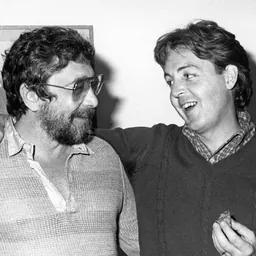
After graduating high school, in 1986, she was discovered by singer and composer Oswaldo Montenegro during a talent scout trip to Florianópolis. Montenegro invited her to record vocals for the soundtrack of the theatre play Os Menestréis. "Innocence" would later be re-recorded and released as a single. After arriving New York City, she performed "Innocence" to Walter Yetnikoff, then-president of CBS Records, who signed her to the Epic Records label. reaching number 1 on the Brazilian charts (where it remained on that position for 13 weeks), number 13 on Norwegian airplay charts, number on 20 on Swedish airplay charts, and number 31 on the Australian singles chart.
"Shame" was released as a single in Europe, and "Other People's Houses" was released as a promotional single in Australia. "Decadence avec Elegance" was released as a single in Brazil and Europe (where it was retitled as "Decadance").
Following the astounding success of "Innocence" and "Decadence Avec Elegance" in Brazil, the album was re-released in 1993 in that market, as A Different Story: Special Edition, where it spawned two additional promotional singles, "Merry-Go-Round", and a cover of the song "A Maçã" by Raul Seixas.
Unicamente and Deborah Blando After heavily promoting her debut album in Brazil, Blando parted ways with Epic Records and signed to Atlantic Records for the release of her sophomore international album. She collaborated with David Foster, Patrick Leonard, Carl Sturken and Evan Rogers on the album, which was originally planned for release sometime in 1995 or 1996. She was also invited by Coca-Cola to record a cover of the song "Descobridor dos Sete Mares" by Tim Maia for a promotional campaign. The accompanying single sold one million copies in Brazil.
Due to health problems in her family, she returned to Brazil and renegotiated her deal with Atlantic Records to release the album through another label.
In 1997, Blando released Unicamente through Virgin Records, and found immediate success with the first single, "Unicamente". A follow-up single, "Gata", was released, followed by a third promotional single, "Ultima Estória". The album received a Gold certification by Pro-Musica Brasil.
In 1998, Blando released her third album, Deborah Blando, which became her most successful album in Europe, receiving a Gold certification in Portugal. The album spawned two singles, "Somente o Sol (I'm Not in Love)" and "Águias". Almost two years after its release, the song "Próprias Mentiras" also found commercial success due to its inclusion in the soundtrack of the Brazilian soap opera Laços de Família.
Salvatrice and A Luz Que Acende o Olhar After the release of Deborah Blando, Blando moved to the United States to record new songs, but faced a major crisis with her record label. She returned to Brazil to release her fourth album Salvatrice, an album featuring covers of Italian songs.
She also recorded the Brazilian theme from the Walt Disney movie Atlantis: The Lost Empire, "Junto Com Teu Sonho (Where the Dream Takes You)".
In 2002, Universal Music released a greatest hits collection called A Luz Que Acende o Olhar, containing five previously unreleased tracks. The title track became a success on Brazilian radio stations.
In 2003, she recorded a bilingual version of "When You Say Nothing at All" with Irish singer Ronan Keating.
Career hiatus In 2003, Blando was suffering from panic attacks, and was diagnosed with depression and bipolar disorder. Even though she was going through a personal crisis, Blando recorded an electronic music album, combining house, psy-trance, and ballads with the influence of trip hop, Polares, which was originally set for release in September 2006. The album was not released at the time, and she took a career hiatus, which lasted until 2011.
Return to music and In Your Eyes At the end of 2011, Blando announced via her official website that she would be touring again.
In 2012, she recorded two new songs for the Brazilian soap opera Guerra dos Sexos, "Anjo" and "In Your Eyes". In 2013, she released her sixth album, In Your Eyes.
One Truth and Heart of Gold In 2018, Blando released a new single, "One Truth", and went on a tour to promote her new record. In 2019, she released an EP, Heart of Gold.
In 2019, Blando released a new song independently, "We Fly". In 2020, she released another song, "I Will Never Forget You".
Polares In 2020, Blando released her 2007 unreleased album Polares as a gift to her fans, 14 years after it was recorded.
Discography Albums Format: LP; cassette; CD1997Unicamente Release: 19 January 1997 Format: cassette; CDPMB: Gold 1998Deborah BlandoRelease: 16 April 1998 Format: CD2013In Your Eyes Release: March 2013 Format: CD2020Polares Release: 17 July 2020 Digital download
Greatest hits albums 10 May 2002 CD50,000
Singles
Soundtrack
Tours A Different Story (1992) M200 Summer Concerts (1994) Unicamente Tour (1997) Self-titled Album "Deborah Blando" Tour (1998) A Luz Que Acende O Olhar (2002) Acústico Deborah Blando (2011) Remember Tour (2012)
Don’t just read it —
keep it.
Full-length biographies made to live with: read them, listen on the way to work, watch them tonight.
- E-book
- Audio
- Video
Instant download · yours to keep · every purchase keeps this site free
Important facts
People in Deborah Blando's life
Named in this biography and alive at the same time







Related people
Same field, nearest in time






Contemporaries
People whose lives overlapped Deborah Blando's





Frequently asked questions
Who is Deborah Blando?
Brazilian singer
When was Deborah Blando born?
Deborah Blando was born on 3 March 1969 in Sant'Agata di Militello.
What is Deborah Blando's occupation?
Deborah Blando is a singer, composer and musician.
What nationality is Deborah Blando?
Deborah Blando is Brazilian and Italian.
Sources & further reading
Cite this page
APA: Biography.guide. (2026). Deborah Blando. https://biography.guide/deborah-blando/
MLA: "Deborah Blando." Biography.guide, https://biography.guide/deborah-blando/.
Chicago: "Deborah Blando." Biography.guide. https://biography.guide/deborah-blando/.
Data last updated: 2026-09-22 · Spot an error? Report a correction.
Page generated 2026-09-27 05:18 UTC