
About Dawon Kahng
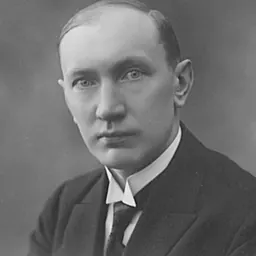
Lived 1931 – 1992 (aged 61). Dawon Kahng was a South Korean engineer and electrical engineer, known for EPROM, Floating-gate MOSFET and MOSFET.
Dawon Kahng (; May 4, 1931 – May 13, 1992) was a Korean-American electrical engineer and inventor, known for his work in solid-state electronics. He is best known for inventing the MOSFET (metal–oxide–semiconductor field-effect transistor, or MOS transistor), along with his colleague Mohamed Atalla, in 1959. Kahng and Atalla developed both the PMOS and NMOS processes for MOSFET semiconductor device fabrication. The MOSFET is the most widely used type of transistor, and the basic element in most modern electronic equipment.
Kahng and Atalla later proposed the concept of the MOS integrated circuit, and they did pioneering work on Schottky diodes and nanolayer-base transistors in the early 1960s. Kahng then invented the floating-gate MOSFET (FGMOS) with Simon Min Sze in 1967. Kahng and Sze proposed that FGMOS could be used as floating-gate memory cells for non-volatile memory (NVM) and reprogrammable read-only memory (ROM), which became the basis for EPROM (erasable programmable ROM), EEPROM (electrically erasable programmable ROM) and flash memory technologies. Kahng was inducted into the National Inventors Hall of Fame in 2009.
Biography Dawon Kahng was born on May 4, 1931, in Keijō, Keiki-dō, Korea, Empire of Japan (now Seoul, South Korea). He studied physics at Seoul National University in South Korea, and immigrated to the United States in 1955 to attend Ohio State University, where he received a doctorate in electrical engineering in 1959. The MOSFET was invented by Kahng along with his colleague Mohamed Atalla at Bell Labs in 1959.
He was a researcher at Bell Telephone Laboratories in Murray Hill, New Jersey, and he invented MOSFET (metal–oxide–semiconductor field-effect transistor), which is the basic element in most of today's electronic equipment, with Mohamed Atalla in 1959. They fabricated both PMOS and NMOS devices with a 20μm process.
Extending their work on MOS technology, Kahng and Atalla next did pioneering work on hot carrier devices, which used what would later be called a Schottky barrier. The Schottky diode, also known as the Schottky-barrier diode, was theorized for years, but was first practically realized as a result of the work of Kahng and Atalla during 19601961. They published their results in 1962 and called their device the "hot electron" triode structure with semiconductor-metal emitter. The Schottky diode went on to assume a prominent role in mixer applications.
Along with his colleague Simon Min Sze, he invented the floating-gate MOSFET, which they first reported in 1967. They also invented the floating-gate memory cell, the foundation for many forms of semiconductor memory devices. He invented floating-gate non-volatile memory in 1967, and proposed that the floating gate of an MOS semiconductor device could be used for the cell of a reprogrammable ROM, which became the basis for EPROM (erasable programmable ROM), EEPROM (electrically erasable programmable ROM) and flash memory technologies. He also conducted research on ferro-electric semiconductors and luminous materials, and made important contributions to the field of electroluminescence.
After retiring from Bell Laboratories, he became the founding president of the NEC Research Institute in New Jersey. He was a fellow of the IEEE and a fellow of the Bell Laboratories. He was also a recipient of the Stuart Ballantine Medal of the Franklin Institute and the Distinguished Alumnus Award of the Ohio State University College of Engineering. He died of complications following emergency surgery for a ruptured aortic aneurysm in 1992.
Awards and honors Kahng and Mohamed Atalla were awarded the Stuart Ballantine Medal at the 1975 Franklin Institute Awards, for their invention of the MOSFET. In 2009, Kahng was inducted into the National Inventors Hall of Fame. In 2014, the 1959 invention of the MOSFET was included on the list of IEEE milestones in electronics.
Don’t just read it —
keep it.
Full-length biographies made to live with: read them, listen on the way to work, watch them tonight.
- E-book
- Audio
- Video
Instant download · yours to keep · every purchase keeps this site free
Important facts
more
PMOS logic, Schottky diodePeople in Dawon Kahng's life
Named in this biography and alive at the same time

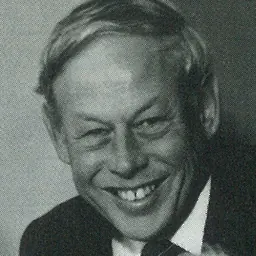
Related people
Same field, nearest in time


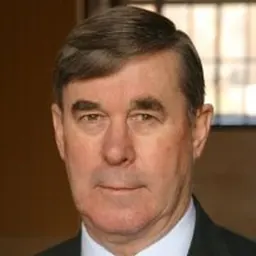
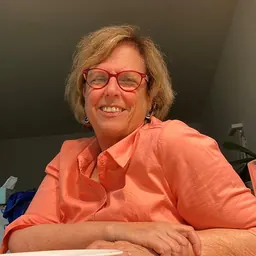
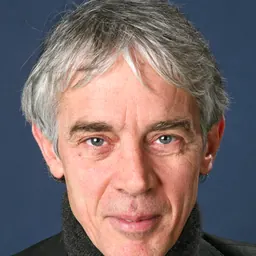
Contemporaries
People whose lives overlapped Dawon Kahng's

Frequently asked questions
Who was Dawon Kahng?
South Korean engineer
When was Dawon Kahng born?
Dawon Kahng was born on 4 May 1931 in Seoul.
When did Dawon Kahng die?
Dawon Kahng died on 13 May 1992 in New Brunswick.
What was Dawon Kahng's occupation?
Dawon Kahng was an engineer and electrical engineer.
What was Dawon Kahng known for?
Dawon Kahng was known for EPROM, Floating-gate MOSFET, MOSFET, NMOS logic, Nanoelectronics and Non-volatile memory.
What nationality was Dawon Kahng?
Dawon Kahng was South Korean.
Sources & further reading
Cite this page
APA: Biography.guide. (2026). Dawon Kahng. https://biography.guide/dawon-kahng/
MLA: "Dawon Kahng." Biography.guide, https://biography.guide/dawon-kahng/.
Chicago: "Dawon Kahng." Biography.guide. https://biography.guide/dawon-kahng/.
Data last updated: 2026-09-22 · Spot an error? Report a correction.
Page generated 2026-09-27 05:32 UTC