
About Dawid Ajzensztadt
Lived 1890 – 1942 (aged 51–52). Dawid Ajzensztadt was a Polish composer, conductor, music arranger and pedagogue.
David Eisenstadt (, ; 1890 in Nasielsk – 1942 in Treblinka) was a Polish Jewish conductor, composer, music educator and music critic. He served as choirmaster of the Great Synagogue on Tłomackie Street in Warsaw for nearly twenty years (1921–1939) and was regarded as one of the most outstanding figures in choral art in pre-war Poland. He was the father of Maria Ajzensztadt, known as the "nightingale of the ghetto".
Early life and education Eisenstadt was born in Nasielsk, a town with centuries-old Jewish traditions. His father was a shochet (ritual slaughterer) who also occasionally served as a cantor. He moved to Nowy Dwór Mazowiecki to study music theory, singing and cantorial traditions under Eliezer Boruchowicz, then continued his vocal education in Berlin.
Career before Warsaw From 1909 Eisenstadt served as synagogue choir conductor in Gomel. Three years later he moved to Riga, then toured Belarus and Ukraine with a travelling theatre. In 1918 he settled in Rostov-on-Don as choirmaster of the city's Great Synagogue.
In 1935 the choir participated in the premiere of Lodovico Rocca's opera Il Dibuk (The Dybbuk). According to accounts, the composer attended a Sabbath service at the Great Synagogue upon arriving in Warsaw and, impressed by the singers, proposed their inclusion in the new work.
Other compositions include the cantata Iz awek cum krig der melech (And the King Went to War), set to a poem by Maria Konopnicka translated by Abraham Reisen; the orchestral Hebrew Suite; music for Halpern Leivick's drama Golem (premiered 1928); and choral songs in Yiddish.
In May 1941, when German authorities permitted the opening of three synagogues in the ghetto, Eisenstadt served as choir conductor.
Rediscovery of the Chad Gadya manuscript In the 1920s Eisenstadt sent the manuscript of the cantata to cantor Froim Spektor, who in 1928 emigrated to Cape Town to become chief cantor of the New Hebrew Congregation, taking the score with him.
Family Wife — Fajga Goldman (d. 1942, Treblinka) Daughter — Marysia (Maria, Miriam) Ajzensztadt (1921–1942), singer, "nightingale of the ghetto"
Don’t just read it —
keep it.
Full-length biographies made to live with: read them, listen on the way to work, watch them tonight.
- E-book
- Audio
- Video
Instant download · yours to keep · every purchase keeps this site free
Important facts
People in Dawid Ajzensztadt's life
Named in this biography and alive at the same time
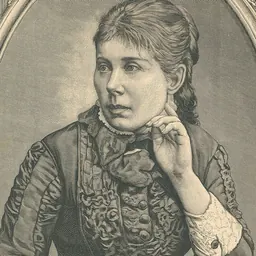


Related people
Same field, nearest in time

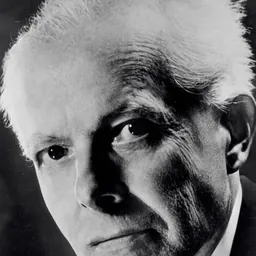

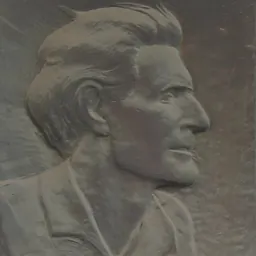


Contemporaries
People whose lives overlapped Dawid Ajzensztadt's
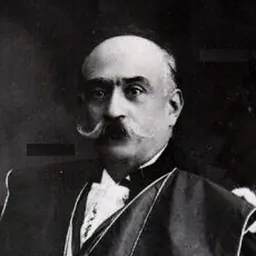



Frequently asked questions
Who was Dawid Ajzensztadt?
Polish composer
When was Dawid Ajzensztadt born?
Dawid Ajzensztadt was born in 1890.
When did Dawid Ajzensztadt die?
Dawid Ajzensztadt died in 1942.
What was Dawid Ajzensztadt's occupation?
Dawid Ajzensztadt was a composer, conductor, music arranger and pedagogue.
What nationality was Dawid Ajzensztadt?
Dawid Ajzensztadt was Polish.
Sources & further reading
· Wikipedia: Dawid Ajzensztadt
Cite this page
APA: Biography.guide. (2026). Dawid Ajzensztadt. https://biography.guide/dawid-ajzensztadt/
MLA: "Dawid Ajzensztadt." Biography.guide, https://biography.guide/dawid-ajzensztadt/.
Chicago: "Dawid Ajzensztadt." Biography.guide. https://biography.guide/dawid-ajzensztadt/.
Data last updated: 2026-09-20 · Spot an error? Report a correction.
Page generated 2026-09-27 05:10 UTC