
About David Zuckerman
Born 1971. David Zuckerman is an American politician.
David E. Zuckerman (born August 16, 1971) is an American politician who was the 82nd and 84th lieutenant governor of Vermont from 2017 to 2021 and again from 2023 to 2025. A member of the Vermont Progressive Party, he previously served in the Vermont House of Representatives for seven terms (1997–2011), and the Vermont Senate for two (2013–2017). In 2020, Zuckerman was a candidate for governor of Vermont. He ran with the support of both the Progressive Party and the Democratic Party, but lost to incumbent governor Phil Scott in the general election.
In 2016, Zuckerman ran for lieutenant governor as a Progressive, and also received the nomination of the Democratic Party by defeating Speaker of the Vermont House of Representatives Shap Smith and Representative Kesha Ram in the Democratic primary. He defeated Republican State Senator Randy Brock in the 2016 general election. Zuckerman was reelected in 2018 and again in 2022 following a two-year hiatus from elected office, during which he unsuccessfully ran for governor. He ran for re-election in 2024, but was defeated by Republican challenger John S. Rodgers.
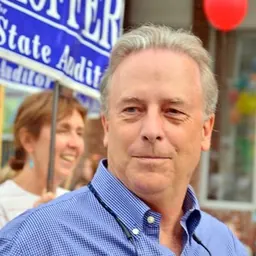
Zuckerman was the first Progressive Party candidate to win statewide office in Vermont and the only third party candidate to win a statewide election in the 2022 United States elections. Other Progressive-endorsed candidates who have won statewide-office elections, including Doug Hoffer for Vermont state auditor, were primarily affiliated with the Vermont Democratic Party.
Early life and education Born in Boston on August 16, 1971, Zuckerman grew up in Brookline, Massachusetts and graduated from Brookline High School in 1989. His father is Jewish. In 1995, he graduated from the University of Vermont with a Bachelor of Arts degree in environmental studies and a minor in chemistry.
Career State House of Representatives
Prior to serving in the House, he served on the Burlington Electric Commission. He ran again two years later and become the fourth Progressive Party member to serve in the Vermont House, a seat that he held through 2011.
While in the House, he served for six years on the Natural Resources and Energy Committee as well as six years on the Agriculture Committee, including four as the chairperson. Zuckerman eventually decided not to run in order to continue serving as Agriculture chairman in the Vermont House.
State Senate Zuckerman ran for Vermont State Senate from Chittenden County in the 2012 elections and won a seat in this six-member, at-large district. In the Senate, Zuckerman served on the Agriculture and Education committees; he was vice chairperson of Agriculture, and clerk of Education.
In his time in the legislature, Zuckerman was involved in the passage of Vermont's civil union and marriage equality laws, workers' rights legislation, increasing the minimum wage, sustainable (economic and environmental) agricultural policy, cannabis policy reform, election law reform, many renewable energy initiatives, progressive taxation policy as well as universal healthcare.
In January 2014, Zuckerman introduced legislation that would allow for recreational sale and use of cannabis. If passed it would allow for possession of up to two ounces of cannabis, and the cultivation of up to three plants for anyone 21 and over. It would also have the penalty for underage consumption of cannabis be the same as the current penalty for underage drinking.
Lieutenant governor
In 2016, Zuckerman ran for lieutenant governor as a Progressive candidate, earning the endorsement of Bernie Sanders before the August 9 primary. He ran unopposed in the Progressive primary, while simultaneously defeating Vermont House Speaker Shap Smith and Representative Kesha Ram to win the Democratic nomination, and went on to defeat Republican Randy Brock in the general election. Because the Constitution of Vermont requires a majority vote for election as lieutenant governor, the Vermont General Assembly voted on January 9, 2025 to determine the winner. Zuckerman conceded the election on November 7, 2024, but did not declare whether he would contest the January legislative election. On January 9, Rodgers was officially elected as the 85th lieutenant governor of Vermont by a vote of 158 to 18.
Agriculture Beginning in 1999, Zuckerman and his wife, Rachel Nevitt, built a successful organic farm in Burlington's Intervale, a network of a dozen farms located in and serving the city. Their produce is almost exclusively sold within Chittenden County. They operate a summer community-supported agriculture (CSA) with 275 members and a winter CSA with 125 members, and sell year round at the local Burlington farmers market.
Political positions
Labor Zuckerman has been an advocate of labor protections such as raising the minimum wage, paid family leave, and increasing protections for workers.
Opposition to Bush administration On April 25, 2006, Zuckerman introduced a resolution for the Vermont State Legislature to ask the United States Congress to impeach President George W. Bush. The motion failed 87–60 in a roll call vote on April 25, 2007.
Property tax reform Zuckerman supported a bill to lower property tax rates for households earning less than $200,000 in the 2015–16 session. He also helped pass legislation to model this reform in time for the 2017 session.
Equal pay Zuckerman was a sponsor of H.440 in 2001, a bill which would require equal pay for equal work.
GMO labeling In 2014, Zuckerman was the lead Senate author of Vermont's first-in-the-nation GMO food-labeling law.
Vaccines Zuckerman is critical of the philosophy of mandatory vaccinations, a view that led to scrutiny during the coronavirus pandemic. He has said that he is skeptical about the CDC's position on vaccines due to its purported connections to the pharmaceutical industry, but believes the science of vaccination is sound. He said that some of his constituents had said that vaccines gave their children allergic reactions.
Zuckerman expressed disappointment over the legislature's failure to pass a proposed bill that would have allocated between US $70 million and US $100 million annually for affordable housing. He emphasized the importance of addressing economic inequality and called for reforms such as district consolidation and efficiency improvements within the Vermont Agency of Human Services and the Vermont Department of Education to reduce property taxes and improve service delivery.
Zuckerman's involvement with WDEV came amid broader changes at the station following its acquisition by Myers Mermel, a former Republican Senate candidate and president of the conservative Ethan Allen Institute. Under Mermel’s leadership, WDEV expanded its programming to include a more progressive and youth-oriented direction, forming partnerships with The Nation magazine and adding new hosts such as Zuckerman.
Zuckerman's show has become a platform for grassroots discourse and civic participation, continuing his commitment to progressive advocacy and public engagement beyond elected office.
Social media engagement In addition to his radio work, Zuckerman has remained active in Vermont political circles through social media. He regularly uses platforms such as X (formerly Twitter) and Facebook to share commentary on legislative developments, promote progressive causes, and engage with constituents and activists. His posts often highlight issues including housing, education, labor rights, and climate policy, and he has used these platforms to amplify grassroots campaigns and mobilize support for local initiatives.
Personal life Zuckerman and his wife Rachel live in Hinesburg, Vermont with their one child, and continue to operate Full Moon Farm.
In 2025, after leaving office, Zuckerman began hosting a segment of WDEV's Vermont Viewpoint.
Electoral history
Vermont General Assembly
Vermont governor and lieutenant governor
Don’t just read it —
keep it.
Full-length biographies made to live with: read them, listen on the way to work, watch them tonight.
- E-book
- Audio
- Video
Instant download · yours to keep · every purchase keeps this site free
Important facts
People in David Zuckerman's life
Named in this biography and alive at the same time



Related people
Same field, nearest in time



Contemporaries
People whose lives overlapped David Zuckerman's




Frequently asked questions
Who is David Zuckerman?
American politician
When was David Zuckerman born?
David Zuckerman was born on 16 August 1971 in Boston.
What is David Zuckerman's occupation?
David Zuckerman is a politician.
What nationality is David Zuckerman?
David Zuckerman is American.
Sources & further reading
· DBpedia: David Zuckerman (politician)
Cite this page
APA: Biography.guide. (2026). David Zuckerman. https://biography.guide/david-zuckerman-politician/
MLA: "David Zuckerman." Biography.guide, https://biography.guide/david-zuckerman-politician/.
Chicago: "David Zuckerman." Biography.guide. https://biography.guide/david-zuckerman-politician/.
Data last updated: 2026-09-20 · Spot an error? Report a correction.
Page generated 2026-09-27 05:24 UTC