
About David Wynne
Lived 1900 – 1983 (aged 82). David Wynne was a British composer.
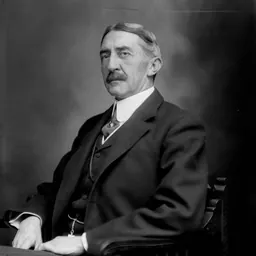
David Wynne (2 June 1900 – 23 March 1983) was a prolific Welsh composer, who taught for many years at Cardiff University and wrote much of his best-known music in retirement. The following year, the family moved to Llanfabon, near Cilfynydd, where he attended the local school until the age of 12. For the next two years he worked at a local grocer's shop, He continued to work there until the age of 25, even after beginning lessons with a local music teacher and organist, Tom Llewellyn Jenkins, himself a minor composer. In 1925 he was awarded a Glamorgan Scholarship to University College, Cardiff, becoming a pupil of Professor David Evans and John Morgan Lloyd; he obtained a B.Mus. degree in 1928. In 1933, he married Eirwen Evans and they settled in Maesycwmmer. In 1938 the University of Wales awarded him a D.Mus. In 1944 he was awarded the Clements Memorial Prize for his First String Quartet, and this effectively launched his career as a leading composer; thereafter he received regular commissions. At the same time, he began using the name David Wynne for professional purposes. He retired from school teaching in 1960. From 1961 to 1971 he taught composition at Cardiff College of Music and Drama (now the Royal Welsh College of Music & Drama), and from 1970 to 1979 in the Department of Music at Cardiff University. In 1983, he died suddenly at his home in Pencoed, whilst working on his Fourth Symphony.
Compositions Wynne's first symphony, written in 1952, was never performed. His second, in 1956, was only the second work ever commissioned by the Welsh Music Guild. One of his best-known orchestral works, the Third Symphony, was written in 1963 for the Caerffili Festival, and inspired by Caerphilly Castle, its structure based on the castle's concentric design; it was premièred by the Bournemouth Symphony Orchestra, conducted by Sir Michael Tippett.
The Welsh language had an influence on his composition that was both subtle and profound. The speech rhythms of Welsh poetry permeate his instrumental music, its melodic inflections often consciously influenced by the hwyl of the Welsh preachers that he heard in his youth. Many of his vocal works are settings of early and mediaeval Welsh poetry for which he seems to have had an especial affinity. In Owain ab Urien, a cantata for male voice choir with brass and percussion, he set some of the earliest Welsh poetry, written in the 6th century. This work was also commissioned by the Welsh Music Guild, whose president at the time was Sir Michael Tippett, in memory of its founder, John Edwards; and first performed at the Festival Hall in London in 1967 by the Pendyrus Male Voice Choir under its late director Glynne Jones and the Philip Jones brass ensemble. It was performed again by Risca Male Voice Choir in 2000, as part of Wynne's centenary celebrations.
The David Wynne and Eirwen Thomas Memorial Award was launched in 2006, in association with the Welsh Music Guild, under the terms of David Wynne's will, to advance the careers of student composers, the first recipient being Gareth Churchill.
Orchestral Symphony No.1 (1952); unperformed Elegy for string orchestra (1953) Berceuse for string orchestra (1954) Prelude, Air and Dance (1955) Symphony No.6 (1955) Symphony No.2 (1956); commissioned by the Guild for the Promotion of Welsh Music Fantasia No.1 (1957); commissioned by the National Youth Orchestra of Wales Sinfonietta for string orchestra (1958) A Welsh Suite (1961) Symphony No.3 (1963); premiered at the Caerphilly Festival Symphony No.4; incomplete Cymric Rhapsody No.1 (1965) Prelude (1968) Cymric Rhapsody No.2 (1969) Divertimento for string orchestra (1974) Octad (1977) Songs for string orchestra Three Pieces for Orchestra
Concertante Rhapsody No.1 for violin and orchestra (1957) Fantasia Concerto for viola and orchestra (1961) Fantasia Concerto for 2 pianos (3 hands) and orchestra (1962); unperformed Fantasia for piano and orchestra (1972)
Chamber music String Quartet No.1 (1944) String Trio (1945) Piano Trio No.1 (1946) Sonatina for viola and piano (1946) Sonata No.1 for violin and piano (1948) Sonata for viola and piano (1951) Five Short Pieces for clarinet and piano (1956) Sonata for trombone and piano (1956) Sonata for trumpet and piano (1956) Sonata No.2 for violin and piano (1957) Quintet for clarinet and string quartet (1959) Septet for flute, clarinet, bassoon and string quartet (1961) String Quartet No.3 (1966) Suite of Three Pieces Variations and Capriccio for 2 pianos (1965) Sonata No.3 (1966) Sonata No.4 (1966) Six Studies (1973) Four Welsh Folk Tunes Six Miniatures
Vocal Songs of Solitude for high voice and string orchestra with piano (1941) Two Songs from a Child's Garden for high voice and piano (1941) Y môr ynghwsg (The Sleeping Sea) for high voice and piano (1941) 6 Chân i denor a thelyn (6 Songs) for tenor and harp (1950) Ebb and Flow for high voice and chamber ensemble (1960) Coming Forth by Day for voice and piano (1964) Evening Shadows for voice and piano (1971) Night-Music for soprano, string quartet and piano (1974) Aubade for voice and piano A Cradle Song for voice and piano Hwiangerdd Wyddelig (Irish Lullaby) for high voice and piano Nocturne for low voice and piano O rosyn, dos (Go, Lovely Rose) for tenor and piano To Music for low voice and piano
Choral Night Watch formixed chorus and orchestra (1957) Four Songs from the Chinese for female chorus (1963) Y gelynnen (The Holly) for female chorus and piano (1963) Great Is the Lord for mixed chorus and organ (1967) Stafell Gynddylan for mixed chorus (1967) Gwirebau (Axioms) for chorus and piano (1969) Suite of Six Songs for youth choir and piano (1972) A Gwent Symphony "Wentwood Thorn" for female chorus and orchestra (1973) The Traveller for tenor and mixed chorus (1973) Geni Crist for mixed chorus and organ (1979) Two settings of Poems by William Blake for mixed chorus and harp (1980) Owain ab Urien, Cantata for male chorus and chamber ensemble
Don’t just read it —
keep it.
Full-length biographies made to live with: read them, listen on the way to work, watch them tonight.
- E-book
- Audio
- Video
Instant download · yours to keep · every purchase keeps this site free
Important facts
People in David Wynne's life
Named in this biography and alive at the same time



Related people
Same field, nearest in time




Contemporaries
People whose lives overlapped David Wynne's


Frequently asked questions
Who was David Wynne?
Welsh composer
When was David Wynne born?
David Wynne was born on 2 June 1900 in Pencoed.
When did David Wynne die?
David Wynne died on 23 March 1983.
What was David Wynne's occupation?
David Wynne was a composer.
What nationality was David Wynne?
David Wynne was British.
Sources & further reading
· DBpedia: David Wynne (composer)
Cite this page
APA: Biography.guide. (2026). David Wynne. https://biography.guide/david-wynne/
MLA: "David Wynne." Biography.guide, https://biography.guide/david-wynne/.
Chicago: "David Wynne." Biography.guide. https://biography.guide/david-wynne/.
Data last updated: 2026-09-20 · Spot an error? Report a correction.
Page generated 2026-09-27 05:12 UTC