
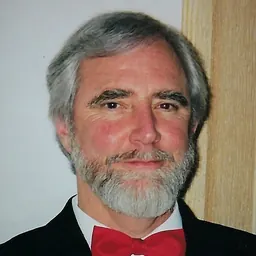
David Woods
American safety systems researcher
About David Woods
David Woods was a systems engineer.
David Defourneaux Woods is an American safety systems researcher who studies human coordination and automation issues in a wide range of safety-critical fields such as nuclear power, aviation, space operations, critical care medicine, and software services. He is one of the founding researchers of the fields of cognitive systems engineering and resilience engineering.
Biography In 1974, Woods received his BA in psychology at Canisius College. In 1977, he received his MS in cognitive psychology at Purdue University. In 1979, he received his PhD at Purdue University in cognitive psychology, where he studied human perception and attention.
From 1979 to 1988, Woods worked as a senior engineer at the Westinghouse Research and Development Center
Awards Woods has previously been president of the Resilience Engineering Association (2011-2013), and the Human Factors and Ergonomics Society (1998-1999). He is a fellow of the Human Factors and Ergonomics Society.
National advisory committees and testimony
Advisor to Columbia Accident Investigation Board, 2003 Testimony on Future of NASA to the United States Senate Committee on Commerce, Science, and Transportation, 2003. National Research Council committees on Dependable Software, 2006 Defense Science Board Task Force on Autonomy, 2012 FAA Human Factors and Cockpit Automation Team, 2013 Autonomy in Civil Aviation, 2014
Work
Resilience engineering
Woods is one of the founders of the field of resilience engineering.
Cognitive systems engineering
In the wake of the Three Mile Island accident, Woods and Erik Hollnagel proposed a new approach to thinking about human-computer interaction (HCI) in the domain of supervisory control, Cognitive Systems Engineering (CSE) that focuses on the interaction between people, technological artifacts, and work. In this approach, a set of interacting human and software agents are viewed as a joint cognitive system, where the overall system itself is seen as performing cognitive tasks.
Theory of graceful extensibility The theory of graceful extensibility is a theory proposed by Woods to explain how some systems are able to continually adapt over time to face new challenges (sustained adaptability) where other systems fail to do so. This work was motivated by study of event-driven tasks, where events occur that operators must respond to (e.g., pilots, space flight controllers, nuclear plant operators, physicians).
Woods argued that it is easy to get lost in such user interfaces. Effective operator interfaces should help figure out where to look next, and that navigating a virtual space of information could be improved by leveraging the human perceptual system has already been optimized to do, such as pattern recognition.
Woods proposed a number of concepts for improving the design of such interfaces by increasing the visual momentum:
Provide a long shot view that acts a global map to assist an operator in stepping back from the specific details. Provide perceptual landmarks to help operators orient themselves within the virtual data space. Use display overlap when moving between data views: have some common subset of the data on both the current and the next view so that the transition between views is not jarring. Use spatial representation: encode information spatially to leverage the perceptual system.
Dynamic fault management Woods studied the nature of operations work involved in identifying and mitigating faults in a supervisory context, such as controlling a power plant or operating a software service. He found that this work was qualitatively different from traditional offline troubleshooting that had previously been studied. In particular, because of the dynamic nature of the underlying component, the nature and severity of the problem can potentially change over time. In addition, because of the safety-critical nature of the process, the operator must work to limit possible harms in addition to addressing the underlying problem.
How complex, adaptive systems break down Woods's research found three recurring patterns in the failure modes of complex adaptive systems:
Decompensation Working at cross-purposes Getting stuck in outdated behaviors
Adaptive universe The adaptive universe is a model proposed by Woods for the constraints that all complex adaptive systems are bound by. The model contains two assumptions:
The amount of resources available to a system are always finite. The environment that a system is embedded within is always dynamic: change never stops.
Selected publications Books A Tale of Two Stories: Contrasting Views of Patient Safety (1988) Joint Cognitive Systems: Foundations of Cognitive Systems Engineering (2005) Joint Cognitive Systems: Patterns in Cognitive Systems Engineering (2006) Resilience Engineering: Concepts and Precepts (2006) Behind Human Error (2012)
Don’t just read it —
keep it.
Full-length biographies made to live with: read them, listen on the way to work, watch them tonight.
- E-book
- Audio
- Video
Instant download · yours to keep · every purchase keeps this site free
Important facts
Related people
Same field, nearest in time





Frequently asked questions
Who was David Woods?
American safety systems researcher
What was David Woods's occupation?
David Woods was a systems engineer.
Sources & further reading
· DBpedia: David Woods (safety researcher)
Cite this page
APA: Biography.guide. (2026). David Woods. https://biography.guide/david-woods-systems-engineer/
MLA: "David Woods." Biography.guide, https://biography.guide/david-woods-systems-engineer/.
Chicago: "David Woods." Biography.guide. https://biography.guide/david-woods-systems-engineer/.
Data last updated: 2026-09-20 · Spot an error? Report a correction.
Page generated 2026-09-27 05:13 UTC