
About David Rolf
Born 1969. David Rolf is a trade unionist and politician.
David Rolf (born 1969) is an American labor leader, writer, and speaker. He was the Founding President of Seattle-based Local 775 of the Service Employees International Union (SEIU), which represents health care workers, and formerly served as international vice president of SEIU. He is the author of The Fight for Fifteen: The Right Wage for a Working America (New Press, 2016) about the movement by low-wage workers to earn a higher minimum wage, and A Roadmap to Rebuilding Worker Power (The Century Foundation, 2018). Rolf was a founder of the Fair Work Center in Seattle, Working Washington, The Workers Lab in Oakland, and the SEIU 775 Benefits Group.
Rolf stepped down as president of SEIU 775 on September 30, 2018, after publishing a blog post on Medium about the importance of term limits for union officers as a way to encourage innovation in the labor movement.
Rolf has been credited for helping to pass the November 2013 ballot measure in SeaTac, Washington known as Proposition 1, which set a $15-per-hour minimum wage for airport and hotel workers. He has also been credited for helping to lead the campaign for a $15-per-hour minimum wage. Following Ed Murray's successful bid for Mayor of Seattle, Rolf served as co-chair of the mayor's Income Inequality Advisory Committee.
Rolf advocates for innovation within the labor union movement, including calling for labor to use its existing resources to reinvent itself by developing organizations that "have economic power to improve lives," that can "scale" to ultimately help millions of workers and that are financially sustainable so they can survive without relying on foundation grants. Rolf has also recently supported new responses to the rise of contingent and on-demand work, including portable benefits and a basic income.
Early life and education Rolf was born in 1969 and grew up in Cincinnati. His father, a lawyer, and mother, a unionized teacher with a blue-collar background, held liberal values and taught him to abide by the Golden Rule.
He was also influenced by other family members. Rolf's maternal grandfather, described as "hardscrabble",
Career
Early work While attending college, Rolf interned at a local chapter of Service Employees International Union (SEIU), a labor union focused on organizing workers in three sectors: health care, including hospital, home care and nursing home workers; local and state government employees; and property services, including janitors, security officers and food service workers. Rolf helped an SEIU local to organize campus janitors at Bard. accepting an entry-level position as an organizer for the Atlanta chapter of SEIU. Rolf partnered with the Los Angeles County Board of Supervisors in an attempt to organize home care workers. He led the home care campaign for the last four years of the 12-year effort, emphasizing direct outreach to educate home care workers on issues important to working people, mobilize them to vote, and encourage them to walk precincts talking with other voters.
To implement these strategies, Rolf led the union's organizing staff into communities they hadn't worked in before, and hired organizers that reflected those areas demographically. A neighborhood-based group meeting structure was developed for home care workers to share stories, identify common challenges, and activate around the need for collective action. Rolf noted that through these meetings, home care workers "found out for the first time that they weren't alone." The local collected more signatures than any other group. Referring to the vote to unionize county workers, Rolf said it was "Simply one for the history books".
SEIU 775
Rolf was the founding president of the Seattle-based Local 775 of SEIU, a union of 43,000 members. Established in 2001, the chapter has become one of the largest political voices and one of the most powerful unions in Washington. After lawmakers denied workers collective bargaining rights, SEIU invested $1 million on Initiative 775, which was approved by 63% of the voters in 2001.
In 2004, SEIU was successful in securing a contract between Washington State and 26,000 health care workers. The House and Senate approved the contract unanimously, which raised wages from $7.18 to $8.93 and also included health insurance benefits and workers' compensation for the first time. at one point saying: "For too long the labor movement has been considered the lap dog of one party rather than the watchdog for both parties. The time has passed where we can allow one party to write us off and the other to take us for granted." Furthermore, he told The Seattle Times in 2006 that members are not concerned with affiliating themselves with any political party.
In 2008, SEIU 775 sued Governor Chris Gregoire over her budget, claiming it failed to fund wage increases for state home-care workers. An arbitrator had ordered a 47-cents-per-hour wage increase over two years, following failed contract negotiations. The Washington Federation of State Employees had also sued Gregoire, alleging breach of contract for workers. The union clashed with Gregoire again in 2010 when she canceled several collective bargaining agreements and requested that state workers return to negotiations. Rolf claimed that health workers in the state would lose $100 million in overtime and benefits that had been ordered by an arbitrator.
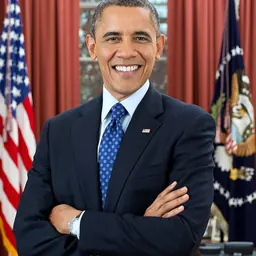
Washington State voters approved I-1029 in 2008, which required additional training and certification requirements for home care workers. At that time, Rolf became the founder and chair of the SEIU Healthcare Training Partnership, a 501(c)(3) school that offers education programs leading to Certified Home Care Aide credentials as well as more advanced apprenticeship programs. The school, which enrolls 40,000 students annually, is the first and largest institution for developing long-term home care workers in the United States. The school was created and sponsored by a labor-management partnership with input from healthcare purchasers and systems, home care providers, SEIU, and the State of Washington. In 2014, the Training Partnership's program was recognized by President Barack Obama and Vice President Joe Biden as part of the White House's initiative to invest in job training.
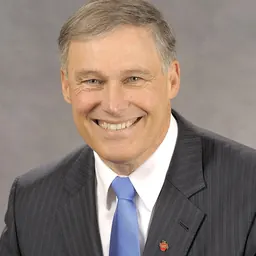
In October 2011, SEIU formally endorsed the Occupy movement and Rolf began speaking at Occupy Seattle rallies. In 2012, Rolf was appointed to then Governor-elect Jay Inslee's transition team, helping him to draft a legislative agenda during his time in office. Rolf also serves as international vice president of SEIU. He has also been credited for making a $15-per-hour minimum wage part of Ed Murray's agenda. which addresses minimum wage and other social issues. In late December 2013, Murray announced plans to increase the minimum wage to $15 per hour, which he had pledged to do during his election campaign, earning him an endorsement from Local 775 of SEIU. Simultaneously, Rolf was working alongside newly elected Seattle City Council member Kshama Sawant, who had also advocated for a $15-per-hour minimum wage, to bring the issue into the mainstream and attract support for the policy from both Seattle Mayors Michael McGinn and Murray. In order to bring their agendas to fruition, both politicians sought to earn the support of Rolf and Local 775 of SEIU.
Building the next American labor movement Rolf is critical of American labor leaders' reliance on the "now-failed American system of enterprise-based exclusive representation that Congress assigned to us in 1935." He has written extensively about the need for unions to innovate in order to maintain relevance in the 21st Century, including co-authoring an op-ed with Eli Lehrer of the libertarian R Street Institute in the wake of the Supreme Court's ruling in Janus v. AFSCME.
In 2018, the Century Foundation published Rolf's e-book, A Roadmap to Rebuilding Worker Power. In it, Rolf outlines strategies to build worker organizations that have power, scale, and sustainability, which he argues are critical for building a labor movement with lasting impact.
Rolf is working with entrepreneur and venture capitalist Nick Hanauer on an unnamed project to rebuild the middle class in the United States.
Portable benefits and universal basic income Rolf has advocated for testing of alternative ways to help modern American workers.
Hanauer and Rolf support a "portable benefits" system in which workers are assigned "individual security accounts" into which employers contribute "safety-net fees" relative to the number of hours an employee works. These funds could then be used to pay for a worker's safety net. In 2015, the duo discussed portable benefits in an article they co-authored called "Shared Security, Shared Growth", which was published by Democracy. In November 2015, Rolf was one of nearly forty signatories of a letter on portable benefits published by Medium. Rolf was selected as a 2016 Future for Good fellow at the Institute for the Future, and has been a featured speaker there on the topic of portable benefits. In January 2018, Rolf co-authored an open letter with Hanauer and Uber CEO Dara Khosrowshahi urging business, labor, and government leaders to commit to developing a flexible, proportional, and universal system of worker benefits.
In a December 2016 post on Medium, Rolf announced that he was a founding signatory to the Economic Security Project, a new group that intends to research a basic income system. In the Medium post, Rolf wrote that "the labor movement’s job has always been to ensure that workers get a fair slice of the economic pie" and that "a basic income is an end-run around the failings of modern economies to provide a decent life for their citizens."
Work for other organizations Rolf serves as chairman of Carina, the SEIU 775 Secure Retirement Trust, the Fair Work Center, and Working Washington. He is on the advisory boards of the Aspen Institute's Future of Work Initiative and the MIT Work of the Future project, and is part of the Clean Slate Project at Harvard Law School, which aims to build a policy agenda to reconstruct labor law. He advises a number of organizations on matters relating to labor and economic justice.
Rolf helped found the Fair Work Center, Working Washington, and the Workers Lab. The Fair Work Center is a Seattle-based hub that assists in enforcing labor law and helps workers understand and exercise their legal rights. Working Washington is a Seattle-based fast-food workers nonprofit advocacy group composed of civil rights and immigrant activists, labor advocates, neighborhood associations, and religions leaders. Working Washington, an initiative of SEIU and an affiliated organization of the AFL-CIO, advocates for benefits and fair wages, as well as the right to establish unions. is the first accelerator and business incubator offering "new models of worker voice".
Political positions and public image Having recognized the declining influence of unions in the United States, Rolf now advocates for change within the labor movement. In 2012, he wrote an article for The American Prospect, in which he said:
We need new strategies that are responsive to a changed work environment and our information and service economy. But too many unions continue to pursue the same strategies, under the same laws that we've followed for the past 80 years. It's time to seed an era of innovation and organizing that comports with our changing economy and can advocate powerfully on behalf of a 21st-century workforce... America's unions and our allies must have the courage to acknowledge that the crisis we face cannot be met with old models and old tools. We must imagine an alternative future, even if we do not yet know what form it will take. We must embrace risk and failure as necessary elements of a long-term strategy for success. Rolf believes that minimum wage increases help local and small businesses.
Rolf has been described as "not your father's union leader", with the appearance of a "gung-ho, young corporate executive". According to The Seattle Times, he succeeded in growing SEIU 775 with a "tell it like it is" personality, using the union's influence to push legislation and bargaining with the Washington State Legislature on issues related to worker's compensation and benefits. He is also known for challenging "insufficiently union-friendly" politicians, including "generally sympathetic Democrats", and for working with academics, business leaders, and "people who've built other successful organizations".
Works
Don’t just read it —
keep it.
Full-length biographies made to live with: read them, listen on the way to work, watch them tonight.
- E-book
- Audio
- Video
Instant download · yours to keep · every purchase keeps this site free
Important facts
People in David Rolf's life
Named in this biography and alive at the same time






Related people
Same field, nearest in time




Contemporaries
People whose lives overlapped David Rolf's


Frequently asked questions
Who is David Rolf?
American labor leader
When was David Rolf born?
David Rolf was born in 1969.
What is David Rolf's occupation?
David Rolf is a trade unionist and politician.
Sources & further reading
Cite this page
APA: Biography.guide. (2026). David Rolf. https://biography.guide/david-rolf/
MLA: "David Rolf." Biography.guide, https://biography.guide/david-rolf/.
Chicago: "David Rolf." Biography.guide. https://biography.guide/david-rolf/.
Data last updated: 2026-09-20 · Spot an error? Report a correction.
Page generated 2026-09-27 05:19 UTC