
About David Niño de Guzmán
Lived 1969 – 2011 (aged 41). David Niño de Guzmán was a Bolivian journalist.
Personal David Niño de Guzmán was born on 30 December 1969 in Uncía, Potosí, Bolivia. He studied communications at the University of San Francisco Xavier de Chuquisaca. He was a resident of La Paz, Bolivia. He married Sandra Flores. The couple had two children and were separated at the time of his death.
Career David Niño de Guzmán had spent 16 years in journalism. He had previously worked as a journalist for the newspapers La Razón, El Diario, Última Hora, and the widely circulated Presencia. He also once worked in television for Cadena A-Canal 36. He assumed the position of chief editor in March 2010 after working for Fides News Agency (ANF) for 4 years.
Investigation Press freedom NGOs and the five Bolivian press associations were quick to call for an investigation into his death. The Office of the Special Rapporteur urged an investigation to determine whether his murder may have had a possible connection to his work as a journalist. President Evo Morales ordered the investigation of Guzmán's death, as many believed it to be a murder.
While authorities ruled his death a suicide, his colleagues, family, and friends, believe it was a homicide.
A full investigation led to the Public Prosecutor's Office ruled Guzmán's death a suicide. Their findings showed Guzmán had held the bomb to his chest before detonation and his hands had no injuries from resistance. There was also no evidence of his arms or hands being tied. Blasting caps and dynamite were found in his apartment. Psychological assessments had shown Guzmán to be emotionally disturbed leading up to the incident. He also was found to have suffered from obsessive–compulsive disorder (OCD).
The Miraflores neighborhood of La Paz, Bolivia.His wife, however, holds the opinion that he was murdered. The couple had been separated for five years. She argues that Guzmán didn't like explosive weapons. She also noted that he had become anxious leading up to the day of his death and there was no suicide note. She believes he received threats over the phone. She suggested that information he published had something to do with his death. His colleagues said he was not robbed. They believed he had been dragged some distance. His body showed signs of torture and his shirt torn. His stomach had damage, as well as his left arm. The case remained closed for over one year with no new evidence. His colleagues also believe his case was closed under pressure by someone in justice.
Context In 2011, David Niño de Guzmán's death was the only instance of a fatality associated with journalism in Bolivia. Long after his case was closed, journalists continued to raise his name as a victim of violence against journalists in Bolivia. While the Committee to Protect Journalists still have not confirmed Guzmán as a work-related death, it has confirmed two other Bolivian journalists, Carlos Quispe Quispe of Radio Municipal killed 29 March 2008 in Pucarani and Juan Carlos Encinas, a freelance journalist, killed 29 July 2001 in Catavi.
Impact A march was held in honour of David Niño de Guzmán on 27 April 2011. Demonstrators urged authorities to hold a full investigation into his death and for life insurance for media workers. Additionally, the government was looking into low salaries, the long working days of journalists, arbitrary layoffs, medical insurance, and mistreatment of media workers by their employers.
Irina Bokova, director-general of UNESCO, said, "I urge the Bolivian authorities to thoroughly investigate the brutal death of David Niño de Guzmán. Bringing to light the circumstances, and punishing those responsible, sends an important signal that freedom of expression is an inviolable right, and that the existence of a diverse and independent media is vital for informed public debate."
Media workers urged the government for a full investigation, life insurance, and other improvements to their working conditions. While authorities ruled David Niño de Guzmán's death a suicide, however, many still believe it was a homicide, José Luis Columba, head of the Asociación Nacional de la Prensa (National Press Association) in Bolivia, pointed to the violent nature of his death as an indicator of murder.
Don’t just read it —
keep it.
Full-length biographies made to live with: read them, listen on the way to work, watch them tonight.
- E-book
- Audio
- Video
Instant download · yours to keep · every purchase keeps this site free
Important facts
People in David Niño de Guzmán's life
Named in this biography and alive at the same time
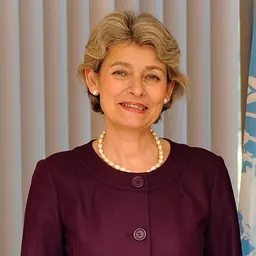

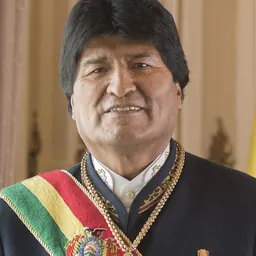



Related people
Same field, nearest in time





Contemporaries
People whose lives overlapped David Niño de Guzmán's



Frequently asked questions
Who was David Niño de Guzmán?
Bolivian journalist and editor (1969-2011)
When was David Niño de Guzmán born?
David Niño de Guzmán was born on 30 December 1969 in Bolivia, Potosí.
When did David Niño de Guzmán die?
David Niño de Guzmán died on 19 April 2011 in Bolivia, La Paz.
What was David Niño de Guzmán's occupation?
David Niño de Guzmán was a journalist.
What nationality was David Niño de Guzmán?
David Niño de Guzmán was Bolivian.
Sources & further reading
· Wikipedia: David Niño de Guzmán
· DBpedia: David Niño de Guzmán
Cite this page
APA: Biography.guide. (2026). David Niño de Guzmán. https://biography.guide/david-nino-de-guzman/
MLA: "David Niño de Guzmán." Biography.guide, https://biography.guide/david-nino-de-guzman/.
Chicago: "David Niño de Guzmán." Biography.guide. https://biography.guide/david-nino-de-guzman/.
Data last updated: 2026-09-22 · Spot an error? Report a correction.
Page generated 2026-09-27 05:13 UTC