
About David Navara
Born 1985. David Navara is a Czech chess player.
David Navara (born 27 March 1985) is a Czech chess grandmaster. Awarded the title of Grandmaster by FIDE in 2002, he is a 14-time national champion (in 2004, 2005, 2010, 2012, 2013, 2014, 2015, 2017, 2019, 2020, 2022, 2023, 2024 and 2026).
Early life and grandmaster title
Navara's career progressed very quickly under coaches like Miloslav Vanka, IM Josef Přibyl, and GMs Luděk Pachman and Vlastimil Jansa, as he won several world medals in youth categories. In 2001, aged 16, he made his debut on the Czech national team in the European Team Chess Championships, where he scored 7/9 points. He received the title Grandmaster one year later, three days before his 17th birthday. In 2003, he won the open section of the Rubinstein Memorial.
Adult career
Ranked 14th, he finished sixth in the 2004 European Individual Chess Championship in Antalya scoring 7½ points (+5−2=5), including a draw against the eventual champion Vassily Ivanchuk. This result qualified Navara for the 2005 FIDE World Cup, where he was eliminated by Predrag Nikolić in the first round.
In 2006, at the 37th Chess Olympiad he scored 8½ points from 12 games against world-class competition. The next year, Navara was invited for the first time into the supertournament in Wijk aan Zee, where he replaced Alexander Morozevich. Navara, nicknamed Navara Express by organizers, gained 6½ points in 13 games (+3−3=7), including wins against Ruslan Ponomariov and Magnus Carlsen (and draws with black pieces against Vladimir Kramnik, Viswanathan Anand and Veselin Topalov), and finished in 7th place.
In August 2007 Navara finished first in the Ordix Open, a rapid tournament part of the Chess Classic Mainz festival, with a score of 9½/11 on progressive score tiebreak. The following month, he played in the Czech Coal Carlsbad tournament in Karlovy Vary, where he finished third, scoring half a point behind the winners, Ruslan Ponomariov and Sergei Movsesian. Two months later, Navara participated in the FIDE World Cup. He beat Alexander Ivanov of US in the first round and was defeated by Sergei Rublevsky in the second round after tie-breaks.
In 2007–2008 Navara played in the "Torneo di Capodanno" in Reggio Emilia, Italy, scoring 3/8 (+1−3=4). He played in the FIDE Grand Prix tournament in Baku in 2008, scoring 5½/13 (+2−4=7).
At the 2011 Tata Steel Tournament in Wijk aan Zee, Navara competed in the "B" group against other strong GMs like Wesley So, Lê Quang Liêm, Luke McShane, Vladislav Tkachiev, Zahar Efimenko, and others. Navara tied for first place with Luke McShane by finishing with 8½/13. While McShane finished ahead on tie-breaks, both players received invitations to the top "A" group next year. Later in the same year, Navara also took part in the FIDE World Cup; he lost to Alexander Grischuk in the quarterfinals of the competition. The following year Navara won the individual gold medal on board two at the 40th Chess Olympiad in Istanbul playing for the Czech team.
He won the European Blitz Chess Championship in 2014. In April 2018, he participated in the fifth edition of Shamkir Chess, finishing tenth with a score of 2½/9 (+0−4=5).
Navara won 9 national blitz chess championships, most recently the 2019 Czech Blitz Championship with a score of 14/15. Navara became European blitz chess champion for the second time in 2022, finishing with 17½/22 in Katowice. He defended his European blitz title a year later in Zagreb with 11½/13.
ČEZ Chess Trophy
Since 2003, Navara has played several matches against top players in Prague at the ČEZ Chess Trophy festival.
2024 controversy and Kramnik lawsuit In May 2024, Navara became a central figure in a major chess controversy initiated by former world chess champion Vladimir Kramnik. Kramnik published a list on social media insinuating cheating in online Titled Tuesday events, on which Navara was prominently featured.
Shortly after, Navara announced that he would file a formal complaint with FIDE regarding Kramnik's behavior. He later clarified that his complaint was not based on a personal grievance alone, and mentioning that the complaint stated, "I am not sure whether he is accusing me", but on broader principles, citing four key objections: Kramnik's own recent fair-play violation, a pattern of unfounded public accusations by Kramnik, flawed statistical analysis, and the tweet's offensive framing.
A year later, in a detailed blog post from May 2025, Navara recounted the full story and the severe psychological impact it had on him for which he had to seek professional help. He wrote that the public insinuation, compounded by FIDE's months-long silence, induced suicidal thoughts, and that there was a "real danger" he could have taken his own life in mid-June 2024, providing context by mentioning he had struggled with mental health issues since childhood. Navara further revealed that after receiving a formal response from FIDE in December 2024, which he found dismissive, he planned to commit suicide in mid-January 2025 but ultimately abandoned the idea.
The dispute escalated further when Kramnik announced his intention to sue Navara for defamation, demanding a public retraction and apology.
Notable games
Below is an excerpt from an article by Lubomir Kavalek in The Washington Post on August 3, 2009:
In the following game, played in the Ordix Open, the Czech grandmaster David Navara defeats former top Armenian grandmaster Rafael Vaganian. Navara decides to test a powerful pawn sacrifice in the Tarrasch variation of the French defense. It was introduced into tournament play more than 60 years ago by the Australian Cecil Purdy, the first correspondence world champion, and it still carries plenty of punch today. Vaganian's problems began after he lost the battle of the only open file and allowed the Czech GM to claim victory with neat tactical play.
Other notable games include: David Navara vs. Zdenko Kozul, 37th Chess Olympiad 2006, Sicilian, Richter–Rauzer Attack, 7...a6 Defense, 8...Bd7 (B67), 1–0 Both sides are attacking, but Navara is the first to mate. David Navara vs. Peter Svidler, 37th Chess Olympiad 2006, Queen's Gambit Declined Slav (D16), 1–0 A typical breakthrough 19.d5! and a nice mating combination ending the game. Ivan Cheparinov vs. David Navara, European Team Chess Championship, Ruy Lopez A spectacular and unexpected queen sac 27...Qf2 Alexander Moiseenko vs. David Navara, World Cup 2011, Queen's Indian Defense After a long struggle, Navara offered a draw in a winning position. Earlier in the game, Navara accidentally touched a piece, but Moiseenko did not insist on the "touch-move" rule that would have lost him the game. Moiseenko was subsequently outplayed by the Czech GM, who with a forced mate on the board offered him a draw. David Navara vs. Radoslaw Wojtaszek, Biel 2015, Sicilian, Najdorf Variation, English Attack An extraordinary home preparation by Navara that resulted in his white king heading to the h8-square during the middlegame, as the righteous leader of the commanding white forces.
Don’t just read it —
keep it.
Full-length biographies made to live with: read them, listen on the way to work, watch them tonight.
- E-book
- Audio
- Video
Instant download · yours to keep · every purchase keeps this site free
Important facts
People in David Navara's life
Named in this biography and alive at the same time


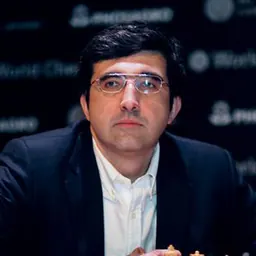


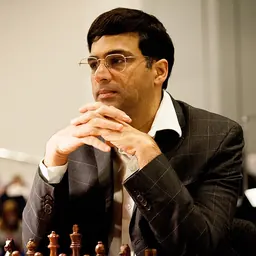
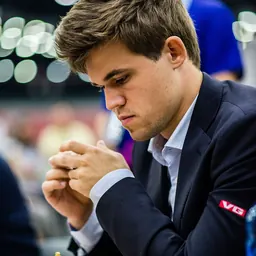
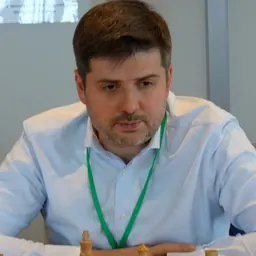
Related people
Same field, nearest in time


Contemporaries
People whose lives overlapped David Navara's




Frequently asked questions
Who is David Navara?
Czech chess player
When was David Navara born?
David Navara was born on 27 March 1985 in Prague.
What is David Navara's occupation?
David Navara is a chess player.
What nationality is David Navara?
David Navara is Czech.
Sources & further reading
Cite this page
APA: Biography.guide. (2026). David Navara. https://biography.guide/david-navara/
MLA: "David Navara." Biography.guide, https://biography.guide/david-navara/.
Chicago: "David Navara." Biography.guide. https://biography.guide/david-navara/.
Data last updated: 2026-09-20 · Spot an error? Report a correction.
Page generated 2026-09-27 05:18 UTC