
About David Mitrany
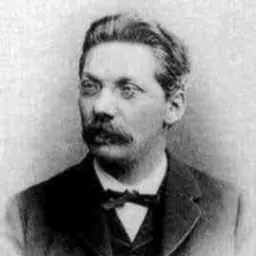
Lived 1888 – 1975 (aged 86–87). David Mitrany was a British journalist and political scientist.
David Mitrany (1888–1975) was a Romanian-born, naturalized British scholar, historian and political theorist. The richest source of information concerning Mitrany’s life and intellectual activity are the memoirs he published in 1975 in The Functional Theory of Politics.
Professional life On 1 September 1933 Mitrany joined the original faculty of the School of Economics and Politics at the Institute for Advanced Study (IAS) in Princeton, New Jersey where he served along with Edward M. Earle, Winfield W. Riefler, Walter W. Stewart, and Robert B. Warren. He left the IAS in 1953.
Mitrany worked on international relations and on issues of the Danube region. He is considered as the creator of the theory of functionalism in international relations, also classified as a part of liberal institutionalism (see Liberalism).
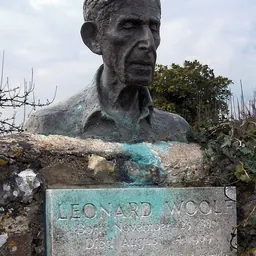
Mitrany pioneered modern integrative theory. This discipline is the third main liberal approach to international relations (along with international liberalism and idealism). Its basic principle maintains that international (not only economical) cooperation is the best means of softening antagonism in the international environment. The idea of this international cooperation was elaborated upon by Leonard Hobhouse, and then by Leonard Woolf and G. D. H. Cole. The main rationale behind it was that “peace is more than the absence of violence”. Cornelia Navari wrote that the British pluralist doctrine had become the lifeblood of Mitrany’s theory.
Following a series of conferences held at Harvard and Yale, he published two of his theoretical studies concerning the international system, The Political Consequences of Economic Planning and The Progress of International Government. The first public presentation of his functionalist approach to international relations occurred during a series of conferences held at Yale University in 1932. Mitrany got famous eventually with his pamphlet A Working Peace System of 1943.
Anti-Federalism: Mitrany controverted illusionary federation projects according to Coudenhove-Kalergi and others, which could hinder a quick and effective re-establishment of peace.
The “European” federalists have been so fascinated by a readily convenient formula that they have neither asked how it works where it exists, nor whether its origins bear any relation to the problem of uniting a group of states in the present social ambience.
Claim for functional agencies: Instead of those federation projects Mitrany recommended lean functional agencies for the execution of international cooperation on all issue-related, mainly technical and economic sectors. But Mitrany’s functionalism also referred to intrastate combinations: to special-purpose associations like the Tennessee Valley Authority or the London Transport Board, in which partly independent union states or co-equal municipal authorities coordinated their interests. And Mitrany listed private cartels, e.g. the former rationalization cartels of the British shipping, cotton and steel industry, among his functional agencies. In his argumentation it can be noticed the presence of elements inspired by his liberal pluralist contemporaries.
The working peace system was built around international agencies. They had functional responsibilities in managing those problems for which there was a consensus to cooperate. These international agencies were to assume some of the attributions of nation-states, within the so-called ramification process which involved a constant transfer of functions and authority from states to agencies. The phenomenon in question made no distinction between protagonists. The consequence of ramification was a domino effect, as cooperation in one field could lead to a new cooperation in another field.
The best known tenet of political functionalism form follows function does actually not originate from Mitrany, but from the functionalism of industrial design. It was just used to popularize Mitrany’s concept.
Don’t just read it —
keep it.
Full-length biographies made to live with: read them, listen on the way to work, watch them tonight.
- E-book
- Audio
- Video
Instant download · yours to keep · every purchase keeps this site free
Important facts
People in David Mitrany's life
Named in this biography and alive at the same time
Related people
Same field, nearest in time




Contemporaries
People whose lives overlapped David Mitrany's




Frequently asked questions
Who was David Mitrany?
British scholar (1888–1975)
When was David Mitrany born?
David Mitrany was born in 1888 in Bucharest.
When did David Mitrany die?
David Mitrany died in 1975.
What was David Mitrany's occupation?
David Mitrany was a journalist and political scientist.
What nationality was David Mitrany?
David Mitrany was British.
Sources & further reading
Cite this page
APA: Biography.guide. (2026). David Mitrany. https://biography.guide/david-mitrany/
MLA: "David Mitrany." Biography.guide, https://biography.guide/david-mitrany/.
Chicago: "David Mitrany." Biography.guide. https://biography.guide/david-mitrany/.
Data last updated: 2026-09-20 · Spot an error? Report a correction.
Page generated 2026-09-27 05:31 UTC