
David M. Kennedy
Professor of crime prevention
About David M. Kennedy
Born 1958. David M. Kennedy is a criminologist.
David M. Kennedy (born 1958) is an American criminologist, professor, action researcher, and author specializing in crime prevention among inner city gangs, especially in the prevention of violent acts among street gangs. Kennedy developed the Operation Ceasefire group violence intervention in Boston in the 1990s and the High Point Model drug market intervention in High Point, North Carolina, in 2003, which have proven to reduce violence and eliminate overt drug markets in jurisdictions around the United States. He founded the National Network for Safe Communities in 2009 to support cities using these and related strategies.
He is the author of two books, Don't Shoot: One Man, A Street Fellowship, and the End of Violence in Inner-City America (2011), a popular treatment of his violence reduction work with street gangs, and Deterrence and Crime Prevention: Reconsidering the Prospect of Sanction (2008), a theoretical publication. He is the coauthor of Beyond 911: A New Era for Policing, a book on community policing.
Biography Education David M. Kennedy graduated from Swarthmore College in Swarthmore, Pennsylvania, in 1980 with a Bachelor of Arts and high honors in philosophy and history. In 2011, his alma mater awarded him the honorary degree of Doctor of Laws.
Career During the 1980s Kennedy worked as a case writer in the Case Program of the John F. Kennedy School of Government at Harvard University, in Cambridge, Massachusetts.
In the mid-1990s, as part of the Boston Gun Project, Kennedy and colleagues Anthony A. Braga and Anne M. Piehl from Harvard worked in Boston to apply new problem-oriented policing ideas to Boston's violence epidemic. Through working with the Boston Police Department gang unit, Kennedy and his colleagues came to understand that gangs were at the heart of the problem and that an extremely small number of highly active offenders was responsible for a majority of the city's serious crime problem, a principle that has informed his interventions ever since. Together with Boston law enforcement, city officials, community and faith leaders, and street outreach workers, Kennedy and his colleagues developed the “call-in,” a face-to-face meeting with gang members in a forum setting, during which this partnership of city stakeholders "clearly communicates (1) a credible, moral message against violence; (2) a credible law enforcement message about the group consequences of further violence; and (3) a genuine offer of help for those who want it." The immediate result of Operation Ceasefire was a 63 percent reduction in youth homicide and a 30 percent reduction in homicide citywide, what has been called the "Boston Miracle."
Within the Drug Market Intervention, Kennedy also developed the concept of "racial reconciliation" necessary to heal relations between law enforcement and communities of color before their collaborative work could proceed. "The real issue was the way the relationship between the police and community was being poisoned by toxic racial narrative,” Kennedy has written.
The process of racial reconciliation was also the subject of a national U.S. Department of Justice working session in 2012 and has been a topic of increasing interest for communities and law enforcement agencies nationwide. Kennedy also remains a professor of criminal justice in the Criminal Justice Department of John Jay College. National Public Radio, 60 Minutes, and the Dylan Ratigan Show.
His distinctions include receiving two Webber Seavey awards from the International Association of Chiefs of Police, two Innovations in American Government awards from the Kennedy School of Government, and a Herman Goldstein Problem-Oriented Policing Award. Over his years of practice, Kennedy has influenced the approaches to drug enforcement by the administrations of presidents Bill Clinton and George W. Bush. He has spoken to many organizations, including the United States Congress, Scotland Yard, the National District Attorneys' Association, and the United States Conference of Mayors.
The book has been reviewed in The New Republic, where it was characterized as a "page-turner" despite being an essentially academic publication.
Deterrence and Crime Prevention: Reconsidering the Prospect of Sanction
Published in 2008, Kennedy's Deterrence and Crime Prevention: Reconsidering the Prospect of Sanction is a theoretical work that provides an overview of deterrence approaches to preventing crime and forwards a new deterrence framework based on Kennedy's work reducing gang violence and eliminating overt drug markets. On traditional deterrence models, Kennedy writes, "Deterrence is at the heart of the preventive aspiration of criminal justice. Deterrence, whether through preventive patrol by police officers or stiff prison sentences for violent offenders, is the principal mechanism through which the central feature of criminal justice, the exercise of state authority, works -- it is hoped -- to diminish offending and enhance public safety. And however well we think deterrence works, it clearly often does not work nearly as well as we would like – and often at very great cost."
Kennedy identifies that a small number of high rate offenders commit the vast majority of serious crime in a community and theorizes a new framework for deterrence, through which law enforcement and community leaders engage directly with these offenders to deliver particular deterrence messages to them. Law enforcement is to give the offenders clear information about sanctions and put them on prior notice that specific criminal acts will be met in the future with special law enforcement attention. Community members deliver a credible moral message to the offenders that the community demands an end to the specific criminal act. Kennedy argues that groups rather than individuals should often be the focus of deterrence messaging. This new framework for deterrence, Kennedy argues, will reduce offending by enhancing both formal legal sanctions and informal social control. The book summarizes its arguments as follows:
many of the ways in which we seek to deter crime in fact facilitate offending; simple steps such as providing clear information to offenders could transform deterrence; communities may be far more effective than legal authorities in deterring crime; apparently minor sanctions can deter more effectively than draconian ones; groups, rather than individual offenders, should often be the focus of deterrence; existing legal tools can be used in unusual but greatly more effective ways; even serious offenders can be reached through deliberate moral engagement; authorities, communities, and offenders - no matter how divided - share and can occupy hidden common ground.
The book gives the example of High Point, North Carolina, a city in which this deterrence framework successfully reduced gang-related violence and eliminated overt drug markets. Kennedy further theorizes that this framework has potential to deter the most serious domestic violence offending.
Awards
David M. Kennedy received the 2011 Hatfield Scholar Award for scholarship in the public interest.
Kennedy's work has won the following awards and notable commendations: Person of the Year Award from Law Enforcement News Chief's Award, High Point Police Department, High Point, North Carolina Director's Commendation, Bureau of Alcohol, Tobacco, and Firearms Letter of appreciation, Secretary of the Treasury Lawrence Summers Statement of thanks, Vice President Al Gore, launch of the Youth Crime Gun Interdiction Initiative
Don’t just read it —
keep it.
Full-length biographies made to live with: read them, listen on the way to work, watch them tonight.
- E-book
- Audio
- Video
Instant download · yours to keep · every purchase keeps this site free
Important facts
People in David M. Kennedy's life
Named in this biography and alive at the same time

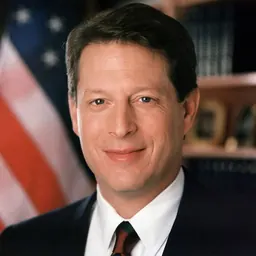




Related people
Same field, nearest in time


Contemporaries
People whose lives overlapped David M. Kennedy's


Frequently asked questions
Who is David M. Kennedy?
Professor of crime prevention
When was David M. Kennedy born?
David M. Kennedy was born in 1958.
What is David M. Kennedy's occupation?
David M. Kennedy is a criminologist.
Sources & further reading
· DBpedia: David M. Kennedy (criminologist)
Cite this page
APA: Biography.guide. (2026). David M. Kennedy. https://biography.guide/david-m-kennedy-criminologist/
MLA: "David M. Kennedy." Biography.guide, https://biography.guide/david-m-kennedy-criminologist/.
Chicago: "David M. Kennedy." Biography.guide. https://biography.guide/david-m-kennedy-criminologist/.
Data last updated: 2026-09-20 · Spot an error? Report a correction.
Page generated 2026-09-27 05:17 UTC