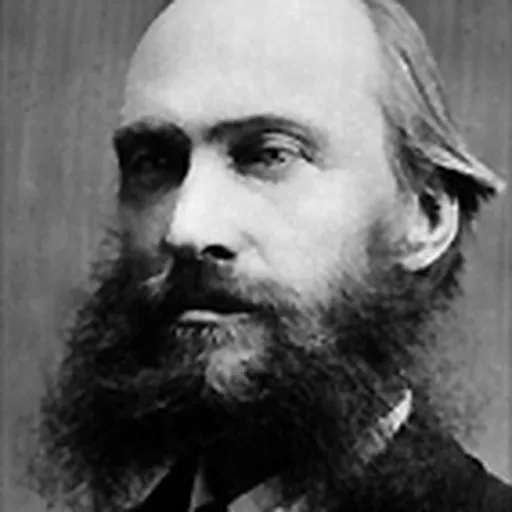
About David Laird
Lived 1833 – 1914 (aged 80). David Laird was a Canadian politician, journalist and editor.
David Laird, (March 12, 1833 – January 12, 1914) was a Canadian politician. He was born in New Glasgow, Prince Edward Island, into a Presbyterian family noted for its civic activism. His father Alexander had been a long time Reformer and Liberal MLA. David became a Liberal MLA for Belfast. He also established and edited The Patriot.
After initially opposing Confederation, he led in the talks by which Prince Edward Island became a province of Canada. He became a Liberal member of the Canadian parliament in the government of Alexander Mackenzie. He served as minister of the interior and guided the passage of the Indian Act into Canadian law. He was the first resident lieutenant governor of North-West Territories. He was the fifth lieutenant governor in charge of the territory. He negotiated several aboriginal treaties. Even though David Laird adopted the paternalistic views of his time in working with aboriginals, colleagues noted his consistent hard work, reliability and honesty in his dealings as a federal official.
Early life and family
David Laird was born in New Glasgow, Prince Edward Island, the son of Alexander Laird and Janet Orr. David's parents had emigrated from Renfrewshire, Scotland, to Prince Edward Island in 1819. His father was a successful farmer and member of the island's executive council. His older brother Alexander held an elected seat in the island's legislative assembly.
On June 30, 1864, David married Mary Louise Owen in Georgetown. Her brother, Lemuel Cambridge Owen, served as the island's postmaster.
David Laird attended the Presbyterian Theological Seminary in Truro, Nova Scotia, after which he planned to become a minister. He became a journalist and newspaper publisher and editor instead.
David Laird served on the Charlottetown City Council, its board of education and board of works, and he was a governor of the Prince of Wales College. He represented the electoral district of Belfast in the Prince Edward Island Legislative Assembly from 1871 to 1873. Then for the next four years he represented Queen's County in the Canadian House of Commons from 1873 to 1876. This treaty is also called the "Qu'appelle Treaty," as its first signings were conducted at Fort Qu'Appelle, Saskatchewan on 15 September 1874. Additional signings or adhesions would continue until September 1877.
The Commissioners of the Queen were: the Honourable Alexander Morris, Lieutenant Governor of the Province of Manitoba and the North-West Territories; the Honourable David Laird, Minister of the Interior, and William Joseph Christie, Esquire, of Brockville, Ontario and retired Hudson's Bay Company factor for the Saskatchewan district.
Morris led the negotiations. David Laird's presence allowed Morris to negotiate confident that the federal government would support the results.
Treaty No. 5, the Winnipeg Treaty
Treaty 5 (1875) involved the Saulteaux and Swampy Cree non-treaty tribes and peoples around Lake Winnipeg in the District of Keewatin. David Laird, Canada's Minister of the Interior, supported Alexander Morris as Morris led in the negotiations. Laird's interest was to get the native people to extinguish their claim to the land so that the incoming settlers could establish their own properties.
Treaty No. 6, Treaties at Fort Carlton and Pitt
Treaty Six (1876) involves the central portions of the present provinces of Alberta and Saskatchewan. Like the preceding Macdonald government, the Mackenzie government entered into treaties gradually. David Laird led out in this process as Interior Minister. The delay created unrest among the native tribes beyond the established treaty boundaries. Leaders residing in the West communicated their concern to the government in Ottawa. This included: the Lieutenant Governor for the region, Alexander Morris; Alfred Selwyn, the head of the Geological Survey working beyond the boundaries of Treaty Four; Lawrence Clarke, in charge of the Hudson's Bay Company's post of Fort Carlton; Commissioner French of the Mounted Police; and, Major-General Selby Smyth, the officer commanding the Canadian Militia.
The natives had been promised a treaty but negotiations had not begun. In the summer of 1875, a Geological Survey party and a telegraph construction crew worked beyond the Treaty Four boundaries where no treaty had yet been made. That summer the Cree stopped the Geological Survey from progress beyond the elbow of the North Saskatchewan. The telegraph crew was also stopped. At a Cree council, it was decided to not allow any further expeditions until a treaty had been made. Morris repeatedly telegraphed Laird about the need for a treaty. He finally received permission to arrange for a treaty negotiation with the Saskatchewan Cree for the following summer at Forts Carlton and Pitt.
David Laird arranged with the Surveyor General to prepare a map showing the boundaries for Treaty Six. Laird relied on Morris to use his experienced judgment in arranging the terms of the treaty: "Your large experience and past success in conducting Indian negotiations relieves me from the necessity of giving you any detailed instructions in reference to your present mission."
In 1877, David Laird reported to the Superintendent General of Indian Affairs (SGIA) in Ottawa that most of the bands in Treaty 6 had been supplied with seed and were beginning to farm. He mentioned that several of the Bands living near Carlton and Prince Albert were very pleased with the potatoes, grain, etc. They planned to get more seed and expand their farming operations. One Band had nearly 100 acres under cultivation.
Treaty No. 7, the Blackfoot Confederacy
Treaty 7 (1877) involved the Blackfoot in what is today the southern portion of Alberta. It was concluded on September 22, 1877. The agreement was signed at the Blackfoot Crossing of the Bow River, at the present-day Siksika Nation reserve, approximately 100 km east of Calgary. Chief Crowfoot was one of the signatories to Treaty 7.
The treaty established a reserve, promised annual payments and/or provisions from the federal government to the tribes and promised continued hunting and trapping rights on the "tract surrendered". In exchange, the tribes ceded their rights to their traditional territory.
In 1877, David Laird was the Lieutenant-Governor of the North-West Territories. The David Mills, the newly appointed Minister of the Interior, noted that the Blackfoot wanted to negotiate a treaty. Mills appointed two commissioners to carry out the task: Laird, who had assisted in the negotiation of Treaty Four in 1874 and Colonel James Macleod, who had recently been promoted to Commissioner of the North-West Mounted Police. Laird was obviously chosen because of his experience and official position, while Macleod was important because of the respect he commanded among the Blackfoot.
Treaty No. 8
May 1899, David Laird and staff traveled by train from Winnipeg to Edmonton. With thirteen wagons of provisions they continued north to Lesser Slave Lake. On June 20 Laird addressed the natives assembled:
Red Brothers! We have come here to-day, sent by the Great Mother to treat with you, and this is the paper she has given us, and is her commission to us signed with her Seal, to show we have authority to treat with you...I have to say, on behalf of the Queen and the Government of Canada, that we have come to make you an offer... As white people are coming into your country, we have thought it well to tell you what is required of you.... The Queen owns the country, but is willing to acknowledge the Indians' claims, and offers them terms as an offset to all of them... (Mair, 1908:56-59).
The Indian Act
In 1876, David Laird, as Minister of the Interior in the Mackenzie government, oversaw the creation of the Indian Act. This legislation consolidated previous Indian legislation. It viewed Indians as children of the State:
Our Indian legislation generally rests on the principle, that the aboriginal peoples are to be kept in a condition of tutelage and treated as wards or children of the State. ...the true interests of the aborigines and of the State alike require that every effort should be made to aid the Red man in lifting himself out of his condition of tutelage and dependence, and that is clearly our wisdom and our duty, through education and every other means, to prepare him for a higher civilization by encouraging him to assume the privileges and responsibilities of full citizenship.
Later years
Laird later moved back west to Manitoba. Twenty years after his first task to work with Plains Indigenous peoples, he was appointed Indian Commissioner of Manitoba, Keewatin and North-West Territories in 1898, and held that position until his death. After 1909 he also became an advisor for the Department of Indian Affairs.
As Indian Commissioner for Manitoba and the North-West Territories, Laird offered a strongly worded negative opinion to the debate of establishing Treaty 8 in Northern Saskatchewan. He said:
There was no particular necessity that the treaty should extend to that region. It was not a territory through which a railway was likely soon to run, nor was it frequented by miners, lumbermen, fishermen or other whites making use of the resources of its soils or waters, in which case, in my opinion, the Indians and Halfbreeds are better left to their hunting and fishing as a means of making a livelihood. The conditions there are the same still, and I therefore do not approve of any immediate steps being taken to include the territory . . . in treaty limits. The matter, I suggest, may very well stand over for the present; and, when the autonomy question is settled in the Northwest Territories, if it is found that any Province, or organized territory with representation, extends over a considerable tract of country in which aboriginal title has not been extinguished, then in such case, or from the entrance of a railway, the discovery of mines, or other cause to bring an inrush of whites, a treaty should be made without delay.
Laird was President of the Manitoba Historical and Scientific Society from 1903 to 1904. He died in Ottawa on January 12, 1914. The town of Laird, Saskatchewan was named in his honour.
Critical views of Laird
Although early historians wrote positively of Laird's work with aboriginal people, he has not fared so well among more recent scholars.
Laird is acknowledged as hard-working and committed to negotiating treaties 4 through 7, but he viewed Indians as "improvident complainers, limited in intelligence," and "troublesome to deal with." He viewed Aboriginal culture as "ludicrous and grotesque." His success in getting natives to surrender the land was offset by his ensuring that his political allies benefited. He believed that higher education was wasted on Native youth. He advocated nothing more than instruction in "basic skills." Laird's policy of denying Indians both land and skills left native youth with few resources for success.
Laird's legacy
The inclusion of Prince Edward Island as a province of the Canadian federation is due, in part, to the negotiation skill of David Laird.
His accomplishments in the arena of aboriginal matters continue to influence the present relationship between the Canadian government and native peoples. The Indian Act and the various treaties provide legal grounds for the courts.
In North Battleford, Saskatchewan, James Marshall has produced "stunning" brick relief sculptures depicting the area's heritage. He included a portrait of David Laird and Government House.
Archives There are David Laird fonds at Library and Archives Canada and the Public Archives and Records Office of Prince Edward Island. Electoral record
Don’t just read it —
keep it.
Full-length biographies made to live with: read them, listen on the way to work, watch them tonight.
- E-book
- Audio
- Video
Instant download · yours to keep · every purchase keeps this site free
Important facts
People in David Laird's life
Named in this biography and alive at the same time




Related people
Same field, nearest in time






Contemporaries
People whose lives overlapped David Laird's

Frequently asked questions
Who was David Laird?
Canadian politician (1833–1914)
When was David Laird born?
David Laird was born on 12 March 1833 in New Glasgow.
When did David Laird die?
David Laird died on 12 January 1914 in Ottawa.
What was David Laird's occupation?
David Laird was a politician, journalist and editor.
What nationality was David Laird?
David Laird was Canadian.
Sources & further reading
Cite this page
APA: Biography.guide. (2026). David Laird. https://biography.guide/david-laird/
MLA: "David Laird." Biography.guide, https://biography.guide/david-laird/.
Chicago: "David Laird." Biography.guide. https://biography.guide/david-laird/.
Data last updated: 2026-09-23 · Spot an error? Report a correction.
Portrait: Wikimedia Commons · author & licence
Page generated 2026-09-27 05:04 UTC