
About David John Garland
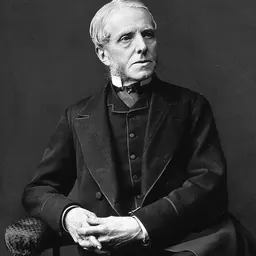
Lived 1864 – 1939 (aged 74–75). David John Garland was a cleric, anglican theologian, lawyer and military chaplain.
David John Garland (1864–1939) was an Anglican clergyman and a military chaplain in Queensland, Australia. As senior army camp chaplain in Queensland from 1914 to 1917, Garland experienced the World War I both at home and at the front. He was one of the originators of the now annual Anzac Day ceremonies. Described as "overpoweringly energetic with a distinctive flair, if not genius, for organisation", he played a pivotal role in the Queensland experience of the war, and was a central figure in a variety of committees and organisations established to aid the war effort and support or commemorate serving or returned soldiers.
Early life
David John Garland was born in Dublin on 4 October 1864, the son of James Garland and his wife Mary Ann (née Saunders). He studied law and immigrated with his parents to New South Wales.
Garland came to Brisbane in 1886. He worked in Toowoomba as a law clerk, where he was influenced by Reverend Tommy Jones at St James’ in Toowoomba and converted from his Irish Protestant faith to Anglo-Catholicism. He became a lay reader at St James.
Garland entered the Church of England ministry in 1889. He served as a deacon in Grafton, Quirindi and Narrandera in New South Wales. In 1892 he was sent to Perth, Western Australia, where he was ordained as a missionary priest by Bishop of Perth Henry Parry. During the Boer War, he was chaplain to the soldiers assembling at Fremantle before heading overseas. His last posting in Western Australia was at St John's in Northam, a congregation of whom he said "I never met a more docile and reverent congregation".
In March 1902, he left Western Australia for St James's Church in Sydney to be a temporary replacement for Rev. Carr Smith who was travelling to Europe, but the move may also have been motivated by a fallout with his bishop in Western Australia.
In December 1902 Garland was appointed rector of St Paul's in Charters Towers, a canon of St James Cathedral, Townsville, Queensland and was appointed archdeacon of North Queensland in 1903.
In August 1912, Garland moved to New Zealand to lead the Bibles in Schools movement in that country.
World War I
At the outbreak of war Garland was in Brisbane, and served as chaplain to soldiers in training camps, as they prepared for active service overseas. He also organised the provision of Bibles and prayer books to Queensland soldiers at the front.
In 1915 he founded the Soldiers Help Society. He also travelled Queensland as honorary organising secretary of the Queensland Recruiting Committee, preaching to encourage greater enlistment. Garland is specifically credited with initiating the Anzac Day march, the wreath-laying ceremonies at memorials and the special church services, the two minutes silence, and the luncheon for returned soldiers. Garland intended the silence to be used in lieu of a prayer to allow the Anzac Day service to be universally attended, allowing attendees to make a silent prayer or remembrance in accordance with their own beliefs. He particularly feared that the universality of the ceremony would fall victim to religious sectarian disputes.
Through this period, Garland was an active correspondent with his fellow priest and army chaplain William Maitland Woods. Garland's letters detailed his everyday duties as archdeacon and later canon in the Anglican Church. He detailed his involvement in the Anzac Day Commemoration Committee, and the establishment of Anzac Day in Queensland. He also wrote of his efforts in recruiting with varying degrees of optimism or despondency, depending on how the conscription debate was leaning. Both men exchanged news of their families, in particular their sons, who were on active service.
Garland died on 9 October 1939 and was buried on 10 October 1939 in Toowong Cemetery.
Legacy The Canon Garland Memorial Society was established on 9 July 2013 at the Holy Trinity Anglican Church at Woolloongabba, Brisbane. The society seeks to honour David Garland's role during the Australian centenary commemorations of World War I.
In November 2015, the Brisbane City Council officially opened a lawn garden called Canon Garland Place at Toowong Cemetery with a commemorative information board. Canon Garland Place is located where he held his Anzac Day services in the cemetery and behind The Cross of Sacrifice and Stone of Remembrance that were funded through Garland's fundraising activities. The bronze wreath was sculpted by Rhyl Hinwood.
The State Library of Queensland holds various collections of Garland's papers. In 2015, the State Library digitised his First World War letters. This collection consists of letters received by Garland from Australian army soldiers, nurses and chaplains serving abroad during World War I, as well as carbon copies of his replies. Also included are letters from his colleague The Reverend William Maitland Woods regarding the discovery, evacuation and transportation to Australia of the Shellal Mosaic. Transcriptions of the digitised letters are also available. Some of Garland's letters are also part of the OM74-101 Maitland Woods Papers 1915–1916.
As a result of a citizens e-petition, on 9 October 2019 (the 80th anniversary of the death of Garland), the overpass across the Western Freeway adjacent to the Toowong Cemetery (formerly known as the Toowong Bicycle and Pedestrian Overpass) was renamed the Canon Garland Overpass.
Don’t just read it —
keep it.
Full-length biographies made to live with: read them, listen on the way to work, watch them tonight.
- E-book
- Audio
- Video
Instant download · yours to keep · every purchase keeps this site free
Important facts
People in David John Garland's life
Named in this biography and alive at the same time






Related people
Same field, nearest in time

Contemporaries
People whose lives overlapped David John Garland's




Frequently asked questions
Who was David John Garland?
(1864-1939) clergyman
When was David John Garland born?
David John Garland was born on 4 October 1864 in Dublin.
When did David John Garland die?
David John Garland died in 1939.
What was David John Garland's occupation?
David John Garland was a cleric, anglican theologian, lawyer and military chaplain.
Sources & further reading
· Wikipedia: David John Garland
Cite this page
APA: Biography.guide. (2026). David John Garland. https://biography.guide/david-john-garland/
MLA: "David John Garland." Biography.guide, https://biography.guide/david-john-garland/.
Chicago: "David John Garland." Biography.guide. https://biography.guide/david-john-garland/.
Data last updated: 2026-09-20 · Spot an error? Report a correction.
Page generated 2026-09-27 05:19 UTC