
About David Graham Phillips
Lived 1867 – 1911 (aged 43). David Graham Phillips was an American journalist, novelist, writer and poet.
David Graham Phillips (October 31, 1867 – January 24, 1911) was an American novelist and journalist of the muckraker tradition.
Early life David Graham Phillips was born in Madison, Indiana, a small town located on the Ohio River, consisting of around ten thousand inhabitants. Born on October 31, 1867, Specifically, his father possessed a vast library, which he persistently encouraged his son to read, especially the books regarding United States history. Already possessing the ability to read the bible at age 4, Phillips was an advanced student and began his college education at the age of 14 years old.
Education David Graham Phillips began his college career by following in his father's footsteps and attending Asbury College (now Depauw University) in Greencastle, Indiana. He went into college with no clear career aspirations, only a potential interest in banking. Three months later Phillips temporarily left Asbury to live with his sister in Cincinnati and studied at the University of Cincinnati.
Literary styles and themes David Graham Phillips's literary style reflected a unique fusion of investigative journalism and fictional storytelling techniques. Early in his career, particularly in works such as The Treason of the Senate, Phillips utilized composite characters, reconstructed dialogue, and vividly dramatized scenes to deliver factual material in a gripping, narrative form.
Phillips's work was characterized by an explicitly moralistic and didactic tone. Critics at the time observed that Phillips often attempted to guide the reader's judgments directly, leaving little room for ambiguity. Throughout his novels and journalism, he consistently addressed major political and social themes, including the corruption of American political institutions, the economic exploitation enabled by corporate monopolies, and the betrayal of democratic ideals.
Like other naturalist writers of the period, Phillips emphasized the power of external forces — such as class structures, political systems, and economic conditions — in determining individual destiny. Characters in his novels were frequently portrayed as trapped by their environments, illustrating the limits of personal agency in a corrupt society. His work suggested that the American Dream of upward mobility and democratic equality was often an illusion sustained by those in power.
Phillips's blend of fact and dramatization created a new form of "reportage fiction," which brought the techniques of investigative journalism into novelistic prose. This hybrid style enhanced the emotional resonance and immediacy of his political critiques, helping to align his literary efforts with the broader Progressive reform movement. Far from being passive documentation, Phillips's realism served as an instrument of social criticism, intended to awaken the conscience of a national readership and advocate for systemic reform.
Death On the morning of January 23, 1911, Phillips was outside the Princeton Club at Gramercy Park in New York City when he was shot six times at close range by Fitzhugh Coyle Goldsborough, a Harvard-educated musician. Goldsborough, a violinist with the Pittsburgh Symphony Orchestra, hailed from a prominent family in Maryland. His fascination with Phillips's work culminated in an obsession, particularly regarding the author's portrayal of the character Margaret Severance in the novel “The Fashionable Adventures of Joshua Craig”, which Goldsborough believed to be a caricature of his sister, Julia Goldsborough. Following the incident, Phillips was admitted to Bellevue Hospital, where he died a day later, on January 24, 1911.
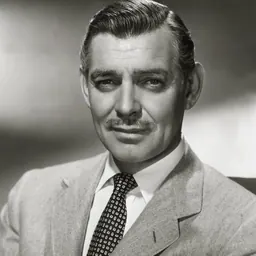
Phillips developed a substantial body of work before his death, encompassing twenty-two novels, numerous articles, short stories, and plays. After his passing, his sister Carolyn took the initiative to organize his final manuscript for posthumous publication under the title “Susan Lenox: Her Fall and Rise.” This book generated considerable controversy, as it presented the narrative of a woman compelled into prostitution for survival. In 1931, that book would be made into an MGM motion picture of the same name and starring Greta Garbo and Clark Gable. Additional novels released posthumously included “The Price She Paid” (1912), “George Helm” (1912), and “Degarmo's Wife and Other Stories” (1913). Furthermore, the book versions of “The Treason of the Senate” (1953) and “Contemporaries” (1981) were also published after Phillips's death.
David Graham Phillips is interred in the Kensico Cemetery in Valhalla, New York.
Novels The Great God Success (1901) A Woman Ventures (1902) Her Serene Highness (1902) Golden Fleece (1903) The Master-Rogue (1903) The Cost (1904) The Social Secretary (1905) The Mother-Light (written anonymously) (1905) The Deluge (1905) The Plum Tree (1905) The Fortune Hunter (1906) The Second Generation (1906). Reissued as Daily Mail sixpenny novel No. 161 in 1912, with illustrations by G. H. Evison. Light-Fingered Gentry (1907) Old Wives for New (1908) The Fashionable Adventures of Joshua Craig (1909) The Hungry Heart (1909) The Husband's Story (1910) White Magic (1910) The Grain of Dust (1911) The Conflict (1911) George Helm (1912) The Price She Paid (1912) Degarmo's Wife (1913) Susan Lenox: Her Fall and Rise (1917)
Drama The Worth of a Woman (A Play in Four Acts) and A Point of Law [a one-act play] (1908)
Non-fiction The Reign of Gilt (1905) The Treason of the Senate (1906) "Restless Husbands" (essay), written in 1909, published by Cosmopolitan in August, 1911
Don’t just read it —
keep it.
Full-length biographies made to live with: read them, listen on the way to work, watch them tonight.
- E-book
- Audio
- Video
Instant download · yours to keep · every purchase keeps this site free
Important facts
People in David Graham Phillips's life
Named in this biography and alive at the same time


Related people
Same field, nearest in time


Contemporaries
People whose lives overlapped David Graham Phillips's


Frequently asked questions
Who was David Graham Phillips?
American writer (1867–1911)
When was David Graham Phillips born?
David Graham Phillips was born on 31 October 1867 in Madison.
When did David Graham Phillips die?
David Graham Phillips died on 24 January 1911 in New York City.
What was David Graham Phillips's occupation?
David Graham Phillips was a journalist, novelist, writer and poet.
What nationality was David Graham Phillips?
David Graham Phillips was American.
Sources & further reading
· Wikipedia: David Graham Phillips
· DBpedia: David Graham Phillips
Cite this page
APA: Biography.guide. (2026). David Graham Phillips. https://biography.guide/david-graham-phillips/
MLA: "David Graham Phillips." Biography.guide, https://biography.guide/david-graham-phillips/.
Chicago: "David Graham Phillips." Biography.guide. https://biography.guide/david-graham-phillips/.
Data last updated: 2026-09-27 · Spot an error? Report a correction.
Page generated 2026-09-27 05:17 UTC