
About David Gardner-Medwin
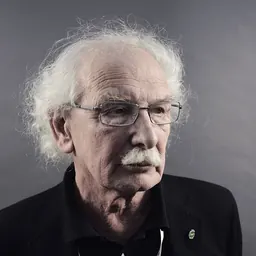
Lived 1936 – 2014 (aged 77). David Gardner-Medwin was a British neurologist.
David Gardner-Medwin (13November 193614June 2014) was a British physician who worked as a paediatric neurologist in Newcastle upon Tyne, serving as the only neurologist for children for a population of 3.5 million. He is credited with introducing multidisciplinary care to the management of boys with Duchenne muscular dystrophy (DMD). When he retired at the age of 60, four consultants were appointed to replace him.
In the 1960s, working as a research fellow with neurologist John Walton, he studied the genetics and clinical features of the diseases of muscles, particularly relating to the identification of female carriers of DMD.
Parallel to his career in medicine was his interest in natural history and involvement with the Natural History Society of Northumbria, the binding and restoration of books and studies on Thomas Bewick. He finished a study of Bewick's family history and contributed to the Bewick Birthplace Trust's campaign to preserve Bewick's birthplace of Cherryburn in Northumberland.
Early life and education David Gardner-Medwin was born on 13 November 1936 at The London Clinic in Marylebone, to Robert Joseph Gardner-Medwin, a British architect, and Margaret Gardner-Medwin née Kilgour, a Canadian. The eldest of four sons, he spent his childhood first in London, followed by evacuation to Canada during the Second World War. Before the end of the war his family moved to Barbados where his father took up a job in development and planning, and later they transferred to Edinburgh, where he was educated at the Edinburgh Academy, and where he became interested in ornithology.
He gained admission to study natural sciences at King's College, University of Cambridge, but shortly after starting, switched to medicine. There, he produced his first publication on the migration of birds across the Pyrenees. After being gifted the first edition of a A History of British Birds by his grandmother on his twentieth birthday, he became interested in the naturalist and wood engraver Thomas Bewick. He completed his clinical training at St Bartholomew's Hospital, and graduated in 1962.
Career
Gardner-Medwin completed his junior posts at Exeter and Farnborough, before taking up a job in pathology at St Bartholomew's.
After spending some time in adult neurology, paediatrics and child psychiatry, he was awarded a neurology fellowship in Boston, working with Raymond Adams at the Massachusetts General Hospital and Charles Barlow at Boston Children's Hospital. In 1971 he returned to Newcastle and the following year was appointed the first consultant paediatric neurologist to the northern region, where for many years, he served as the only neurologist for children for a population of 3.5 million.
To his colleagues he became known as DGM and is credited with introducing multidisciplinary care and nocturnal ventilation to the management of boys with DMD. During his career at Newcastle, the chances of survival for children with DMD improved from 0% to reaching age 25 years in the 1960s to 12% in the 1980s, and 53% after 1990. Despite the initial classification of limb–girdle muscular dystrophy by Walton in the 1950s, both Walton and Gardner-Medwin challenged the term by 1994, describing that some of the features in this group of muscle disorders disguised other conditions, and they "recognize that research in this long neglected group of muscular dystrophies is still in an early and transitional stage". When he retired at the age of 60, four consultants were appointed to replace him.
He co-founded the British Paediatric Neurology Association and later became its secretary and treasurer. He then became secretary of the Mac Keith Press, which publishes work on neurological conditions of children.
Selected publications
Gardner-Medwin, David (May 1980). "Clinical features and classification of the muscular dystrophies". British Medical Bulletin, Volume 36, Issue 2, May 1980, Pages 109–116,
Don’t just read it —
keep it.
Full-length biographies made to live with: read them, listen on the way to work, watch them tonight.
- E-book
- Audio
- Video
Instant download · yours to keep · every purchase keeps this site free
Important facts
People in David Gardner-Medwin's life
Named in this biography and alive at the same time




Related people
Same field, nearest in time



Contemporaries
People whose lives overlapped David Gardner-Medwin's





Frequently asked questions
Who was David Gardner-Medwin?
(1936–2014), paediatric neurologist
When was David Gardner-Medwin born?
David Gardner-Medwin was born on 13 November 1936.
When did David Gardner-Medwin die?
David Gardner-Medwin died on 14 June 2014.
What was David Gardner-Medwin's occupation?
David Gardner-Medwin was a neurologist.
What nationality was David Gardner-Medwin?
David Gardner-Medwin was British.
Sources & further reading
· Wikipedia: David Gardner-Medwin
· DBpedia: David Gardner-Medwin
Cite this page
APA: Biography.guide. (2026). David Gardner-Medwin. https://biography.guide/david-gardner-medwin/
MLA: "David Gardner-Medwin." Biography.guide, https://biography.guide/david-gardner-medwin/.
Chicago: "David Gardner-Medwin." Biography.guide. https://biography.guide/david-gardner-medwin/.
Data last updated: 2026-09-20 · Spot an error? Report a correction.
Page generated 2026-09-27 05:01 UTC