
David Dean Shulman
Israeli-American indologist, historian of religion, and poet
About David Dean Shulman
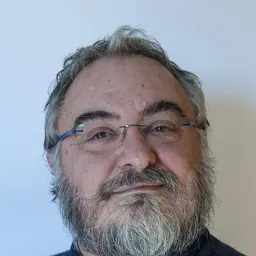
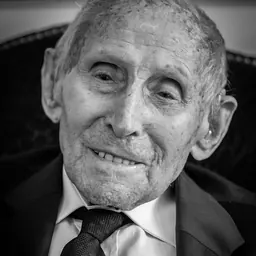
Born 1949. David Dean Shulman is an American and Israeli linguist, poet, anthropologist, peace activist, pacifist and orientalist.
David Dean Shulman (; born January 13, 1949) is an Israeli Indologist, poet and peace activist, known for his work on the history of religion in South India, Indian poetics, Tamil Islam, Dravidian linguistics, and Carnatic music. Bilingual in Hebrew and English, he has mastered Sanskrit, Tamil, Hindi, and Telugu, and reads Greek, Russian, French, German, Persian, Arabic and Malayalam. He was formerly Professor of Indian Studies and Comparative Religion at the Hebrew University, Jerusalem, and professor in the now defunct Department of Indian, Iranian and Armenian Studies. Presently he holds a chair as Renee Lang Professor of Humanistic Studies at the Hebrew University in Jerusalem. He has been a member of the Israel Academy of Sciences and Humanities since 1988.
A published poet in Hebrew, Shulman is also active as a literary critic and cultural anthropologist. He has authored or co-authored more than 20 books on various subjects ranging from temple myths and temple poems to essays that cover the wide spectrum of the cultural history of South India.
Shulman is a peace activist and a founding member of the joint Israeli-Palestininian movement Ta'ayush. In 2007 he published the book "Dark Hope: Working for Peace in Israel and Palestine" which concludes the years of his volunteering activity in the movement. Shulman is a winner of the Israel Prize for 2016. He announced that he would donate his 75,000 shekel prize to Ta'ayush, an Israeli organization that provides support to Palestinian residents in the Hebron area.
Life and work In 1967, on graduating from Waterloo high school, he won a National Merit Scholarship, and emigrated to Israel, where he enrolled at Hebrew University of Jerusalem. He graduated in 1971 with a B.A. degree in Islamic History, specializing in Arabic. His interest in Indian studies was inspired by a friend, the English economic historian Daniel Sperber, and later by the philologist, and expert in Semitic languages, Chaim Rabin.
He gained his doctorate in Tamil and Sanskrit with a dissertation on 'The Mythology of the Tamil Saiva Talapuranam' (which involved field work in Tamil Nadu) at the School of Oriental and African Studies, University of London (1972–1976) under John Ralston Marr. He was appointed instructor, then lecturer in the department of Indian Studies and Comparative Religion at Hebrew University, and became a full professor in 1985. He was a MacArthur Fellow from 1987 to 1992.
In 1988, he was elected member of the Israel Academy of Sciences and Humanities. He was later elected to the American Philosophical Society in 2015. He was Director of the Jerusalem Institute of Advanced Studies for six years (1992–1998) as well as Director of The Martin Buber Society of Fellows. He actively supports the Clay Sanskrit Library, for which he is preparing, with Yigal Bronner, a forthcoming volume. He has served as a Humanities jury member for the Infosys Prize from 2019.
Peace activism Shulman is a founding member of the joint Israeli-Palestinian 'Life-in-Common' or Ta'ayush grass-roots movement for non-violence. He is convinced that unless 'both sides win the war, both sides will lose it.' Shulman shies from the limelight, admitting to an aversion to the idea of heroes, and gives interviews only reluctantly.
More recently he has been active as a leader of international campaigns to defend the Palestinians under threat of eviction from such villages as Susya in the South Hebron Hills, and especially from Silwan, where they are at risk of losing their homes as a result of the pressure on the area to have it rezoned for Israeli archaeological digs, in particular those promoted by the Elad association.
Dark Hope In 2007, he published a book-length account, entitled Dark Hope: Working for Peace in Israel and Palestine, of his years working, and often clashing with police and settlers, to deliver food and medical supplies to Palestinian villages, while building peace in the West Bank. The distinguished Israeli novelist A. B. Yehoshua called it:
One of the most fascinating and moving accounts of Israeli-Palestinian attempts to help, indeed to save, human beings suffering under the burden of occupation and terror. Anyone who is pained and troubled by what is happening in the Holy Land should read this human document, which indeed offers a certain dark hope.
Emily Bazelon, member of the Yale Law Faculty and senior editor at Slate Magazine cited it as one of the best books of 2007. In an extensive review of the book in the New York Review of Books, Israeli philosopher Avishai Margalit cites the following passage to illustrate Shulman's position:
Israel, like any other society, has violent, sociopathic elements. What is unusual about the last four decades in Israel is that many destructive individuals have found a haven, complete with ideological legitimation, within the settlement enterprise. Here, in places like Chavat Maon, Itamar, Tapuach, and Hebron, they have, in effect, unfettered freedom to terrorize the local Palestinian population: to attack, shoot, injure, sometimes kill - all in the name of the alleged sanctity of the land and of the Jews' exclusive right to it.
Shulman's book addresses here what he calls a 'moral conundrum': how Israel, 'once a home to utopian idealists and humanists, should have engendered and given free rein to a murderous, also ultimately suicidal, messianism,' and asks if the 'humane heart of the Jewish tradition' always contains the 'seeds of self-righteous terror' he observed among settlers. He finds within himself an intersection of hope, faith and empathy, and 'the same dark forces that are active among the most predatory of the settlers', and it is this which provides him with 'a reason to act' against what he regards as 'pure, rarefied, unadulterated, unreasoning, uncontainable human evil'. He does not excuse Arabs in the book, but focuses on his own side's culpability, writing: 'I feel responsible for the atrocities committed in my name, by the Israeli half of the story. Let the Palestinians take responsibility for those committed in their name'. Writing of efforts by the IDF and members of hard-core settlements at Susya, Ma'on, Carmel and elsewhere who, having settled on Palestinian land in the hills south of Hebron, endeavour to evict the local people in the many khirbehs of a region where several thousand pacific Palestinian herders and farmers dwell in rock caves and live a 'unique life' of biblical colour, Shulman comments, according to Margalit, that:-
Nothing but malice drives this campaign to uproot the few thousand cave dwellers with their babies and lambs. They have hurt nobody. They were never a security threat. They led peaceful, if somewhat impoverished lives until the settlers came. Since then, there has been no peace. They are tormented, terrified, incredulous. As am I.
Bitter Landscapes of Palestine The "Bitter Landscapes of Palestine" was written by David Shulman in 2024. The author narrates the lives of Palestinians living in the West Bank. He describes the confrontation between Palestinian shepherds and farmers with Jewish settlers and soldiers. He narrates daily challenges such as the destruction of houses and the expulsion of Palestinians from their land. In this book, an attempt has been made to convey to the reader the sense of the endangered Palestinian lifestyle.
Prizes In 1987 he received a MacArthur Fellowship or "Genius Grant". In 2004 he received the Rothschild Prize. In 2010 he received The EMET Prize for Art, Science and Culture. In 2016 he received the Israel Prize for his research on the literature and culture of southern India. He donated the prize money ($20,000) to Ta'ayush.
Personal life Shulman is married to Eileen Shulman (née Eileen Lendman) and has three sons, Eviatar, Mishael, and Edan.
Don’t just read it —
keep it.
Full-length biographies made to live with: read them, listen on the way to work, watch them tonight.
- E-book
- Audio
- Video
Instant download · yours to keep · every purchase keeps this site free
Important facts
Family & relationships
People in David Dean Shulman's life
Named in this biography and alive at the same time





Related people
Same field, nearest in time


Contemporaries
People whose lives overlapped David Dean Shulman's


Frequently asked questions
Who is David Dean Shulman?
Israeli-American indologist, historian of religion, and poet
When was David Dean Shulman born?
David Dean Shulman was born on 13 January 1949 in Waterloo.
What is David Dean Shulman's occupation?
David Dean Shulman is a linguist, poet, anthropologist, peace activist, pacifist and orientalist.
What nationality is David Dean Shulman?
David Dean Shulman is American and Israeli.
Sources & further reading
· Wikipedia: David Dean Shulman
Cite this page
APA: Biography.guide. (2026). David Dean Shulman. https://biography.guide/david-dean-shulman/
MLA: "David Dean Shulman." Biography.guide, https://biography.guide/david-dean-shulman/.
Chicago: "David Dean Shulman." Biography.guide. https://biography.guide/david-dean-shulman/.
Data last updated: 2026-09-26 · Spot an error? Report a correction.
Page generated 2026-09-27 05:16 UTC