
About David Caute
Born 1936. David Caute is a British journalist, historian, screenwriter, writer and opinion journalist.
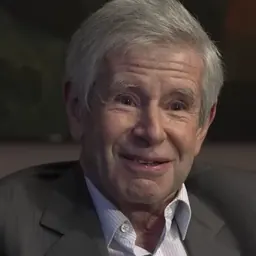
John David Caute (born 16 December 1936) is a British novelist, playwright, journalist, and historian. His fiction and non-fiction have usually focused on leftist politics, often occurring outside England. He wrote a comprehensive history, The Great Fear, about the Second Red Scare in the United States. Several of his novels have been set in Africa, his place of birth and where he served in the military.
Early life Caute was born 16 December 1936 in Alexandria, Egypt. His father Edward was a British Army dentist stationed in Egypt at the time. His mother Rebecca was the daughter of Asher Perlzweig, a rabbi and noted composer. Edward died when David was eleven.
David was educated at Edinburgh Academy, Wellington College, Wadham College, Oxford, and St Antony's College, Oxford. His eighteen months of Army service in 1955–56 were spent in the African Gold Coast colony, which became the independent state of Ghana in 1957. After completing military service, he returned to England and resumed his education. In 1959, he was elected a Fellow at All Souls College, Oxford. He then attended Harvard University as a Henry Fellow from 1960 to 1961.
In 1959, Caute commenced his writing career with the novel At Fever Pitch. It was the first of several fictional works—the others being The Decline of the West, The K-Factor, and News from Nowhere—that used the African decolonization struggle as a backdrop to the story. His historical novel Comrade Jacob (1961), about the 17th-century Digger movement, was adapted into the film Winstanley (1975).
After writing novels primarily in a realist style, Caute started to work more in a postmodernist vein beginning with The Occupation (1972). It was part of a trilogy (dubbed The Confrontation) that included his play, The Demonstration (1970), and his work of literary theory entitled The Illusion (1971).
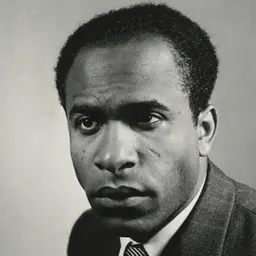
In the mid-1960s, Caute began turning his attention to history and biography, starting with Communism and the French Intellectuals 1914–1960 (1964), The Left in Europe Since 1789 (1966), and a 1970 profile of Frantz Fanon. He also edited The Essential Writings of Karl Marx (1967). After years of research, Caute came out with his lengthy 1978 volume, The Great Fear, which recounts the anti-Communist purges in the U.S. during the 1940s and '50s. Jim Burns wrote the following about it in Tribune: "'The Great Fear' chronicles a sad time in American history, but it's good that Caute has brought his committed and informed mind to bear on it." In the decades that followed, Caute continued to alternate between fiction and non-fiction, and he has been a Fellow at both the Royal Society of Literature and the Royal Historical Society.
In addition to authoring books, Caute has held a variety of academic positions. At the conclusion of his fellowship at All Souls College in 1965, he became a Reader in Political Theory at Brunel University. He was then appointed visiting professor at New York University, Columbia University, University of California, Irvine, and Bristol University.
In 1982, Caute co-chaired the Writers' Guild of Great Britain and served on its executive council. He was Literary Editor of the New Statesman from 1979 to 1980, and has been a regular contributor of book reviews, literary criticism, and journalistic pieces to numerous British publications. Joseph Losey: A Revenge on Life, London & Boston: Faber & Faber, 1994; New York: Oxford University Press, 1994. The Dancer Defects: The Struggle for Cultural Supremacy During the Cold War, Oxford University Press, 2003. Marechera and the Colonel: A Zimbabwean Writer and the Claims of the State, London: Totterdown Books, 2009. Politics and the Novel During the Cold War, New Jersey: Transaction, 2010. Isaac and Isaiah: The Covert Punishment of a Cold War Heretic, London: Yale University Press, 2013. Red List: MI5 and British Intellectuals in the Twentieth Century, London: Verso, 2022
As Editor The Essential Writings of Karl Marx, London: MacGibbon & Kee, 1967; New York: Macmillan, 1968.
Drama
The Demonstration: A Play, London: Deutsch, 1970. Performed at the Nottingham Playhouse, 1969, Unity Theatre, 1970, and Junges Theater, Hamburg, 1971 The Zimbabwe Tapes, a radio drama, BBC Radio, 1983 Henry and the Dogs, a radio drama, BBC Radio, 1986 Sanctions, a radio drama, BBC Radio, 1988 Animal Fun Park, a radio drama, BBC Radio, 1995
Don’t just read it —
keep it.
Full-length biographies made to live with: read them, listen on the way to work, watch them tonight.
- E-book
- Audio
- Video
Instant download · yours to keep · every purchase keeps this site free
Important facts
People in David Caute's life
Named in this biography and alive at the same time



Related people
Same field, nearest in time


Contemporaries
People whose lives overlapped David Caute's




Frequently asked questions
Who is David Caute?
British historian and writer
When was David Caute born?
David Caute was born on 16 December 1936.
What is David Caute's occupation?
David Caute is a journalist, historian, screenwriter, writer and opinion journalist.
What nationality is David Caute?
David Caute is British.
Sources & further reading
Cite this page
APA: Biography.guide. (2026). David Caute. https://biography.guide/david-caute/
MLA: "David Caute." Biography.guide, https://biography.guide/david-caute/.
Chicago: "David Caute." Biography.guide. https://biography.guide/david-caute/.
Data last updated: 2026-09-20 · Spot an error? Report a correction.
Page generated 2026-09-27 05:15 UTC