
About David Cass
Lived 1937 – 2008 (aged 71). David Cass was an American economist and university teacher, known for General equilibrium.
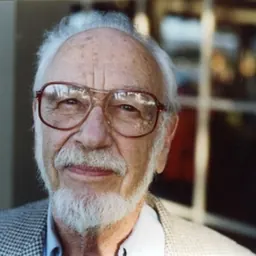
David Cass (January 19, 1937 – April 15, 2008) was a professor of economics at the University of Pennsylvania, mostly known for his contributions to general equilibrium theory. His most famous work was on the Ramsey–Cass–Koopmans model of economic growth.
Biography David Cass was born in 1937 in Honolulu, Hawaii. He earned an A.B. in economics from the University of Oregon in 1958 and started to study law at the Harvard Law School as he thought of becoming a lawyer according to family tradition. As he hated studying law he left the program after one year and served in the army from 1959 to 1960. He then entered the economics Ph.D. program at Stanford University. Here he met Karl Shell, although the two began to work together only after both graduated. Cass's doctoral advisor was Hirofumi Uzawa, who also introduced him to Tjalling Koopmans, who at that time was a professor at Yale University. In 1965, Cass graduated with a Ph.D. in economics and statistics with a dissertation on optimal growth, with parts of the dissertation later published in the Review of Economic Studies.
After graduation Cass began to work from 1965 to 1970 as an assistant professor at the economics department of Yale University and as a research associate at the Cowles Commission for Research in Economics in New Haven. During his time at Yale University he collaborated with Menahem Yaari and Joseph Stiglitz and worked mostly on overlapping generations models. In 1970 he left New Haven for Carnegie-Mellon University in Pittsburgh, where he was a professor of economics until 1974. During his time at Carnegie-Mellon he began to collaborate with Karl Shell, who at this time was a professor at the University of Pennsylvania. One of his doctoral students was Finn E. Kydland, who would later win the Nobel Prize in Economics. In 1974 Cass left for the University of Pennsylvania, where he was a professor of economics until his death. He was divorced and the father of two children.
Cass was a Guggenheim Fellow in 1970, was an elected fellow of the Econometric Society since 1972, received an honorary doctorate from the University of Geneva in 1994, was a distinguished fellow of the American Economic Association in 1999 and was an elected fellow of the American Academy of Arts and Sciences since 2003.
He was also famous for the "Cass criterion" for overlapping generations models and in the neoclassical growth model, and his work, together with Karl Shell, on the influence of extrinsic uncertainty on economic equilibria, also known as the concept of sunspot equilibria or the theory of sunspots. Together with Joseph Stiglitz he proved conditions under which it is possible for an investor to achieve an optimal portfolio under the restriction of being able to buy only two mutual funds. They also showed that generally the demand for money can not be derived from portfolio theory. Cass was also a major contributor to the theory of incomplete markets, the turnpike theory and theory of economies with markets that repeatedly open over time. provides an excellent survey of this literature). The canonical GEI model was formulated by Radner in the early 1970s in a paper which also pointed up one of the fundamental puzzles about models with incomplete markets: the possible loss of dimensionality in the span of the asset payoffs as prices vary.
This potential for non-existence of equilibrium (which was formally developed in Hart’s counterexamples to existence of equilibrium) left the literature in limbo for almost a decade, until Cass’s work on existence in economies with purely financial assets pointed the way out. As Geanakoplos notes
Suddenly in the middle 1980s the pure theory of GEI fell into place. In two provocative and influential papers, Cass showed that the existence of equilibrium could be guaranteed if all the assets promise delivery in fiat money, and he gave an example showing that with such financial assets there could be a multiplicity of equilibrium. Almost simultaneously Werner also gave a proof of existence of equilibrium with financial assets, and Geanakoplos and Polemarchakis showed the same for economies with real assets that promise delivery in the same consumption good.
The first paper that Geanakoplos references above appeared initially in April 1984 as a CARESS Working Paper.
This work was followed very quickly by results showing that the non-existence problem pointed out by Hart was not generic, and led ultimately to the generic existence results of Duffie and Shafer, and again spawned a new literature looking positively at the welfare implication of market incompleteness, and normatively at issues of asset engineering.
In the time after this seminal work in GEI, Cass's various papers dealt with issues of determinacy of equilibrium (and the closely related issue of existence of sunspot equilibria), and with the optimality of allocations in the presence of sunspots and incomplete asset markets. These papers include:
• "The structure of financial equilibrium with exogenous yields: The case of incomplete markets" (with Y. Balasko). Econometrica 57, 135–162 (1989). • "Sunspot equilibrium in an overlapping-generations economy with an idealized contingent claims market" (with K. Shell). Economic Complexity: Chaos, Sunspots, Bubbles, and Nonlinearity (W.A. Barnett, J. Geweke, and K. Shell, eds.). Cambridge University Press, Cambridge, England, 1989. • "The structure of financial equilibrium with exogenous yields: The case of restricted participation" (with Y. Balasko and P. Siconolfi). J Math Econ 19, 195–216 (1990). • "Convexity and sunspots: A remark" (with H. Polemarchakis). J Econ Theory 52, 433-439 (1990). • Perfect equilibrium with incomplete financial markets: An elementary exposition." Value and Capital, Fifty Years Later (L.W. McKenzie and S. Zamagni, eds.). MacMillan, London, 1991. • "Regular demand with several, general budget constraints" (with Y. Balasko). Equilibrium and Dynamics: Essays in Honor of David Gale (M. Majumdar, ed.), Macmillan, London, 1992. • Incomplete financial markets and indeterminacy of competitive equilibrium." Advances in Economic Theory, VI (J.-J. Laffont, ed.), Cambridge University Press, Cambridge, England, 1992. • "Sunspots and incomplete financial markets: The general case," in the Mini-Symposium on "The Structure of Sunspot Equilibria in the Presence of Incomplete Financial Markets". Econ Theory 2, 341–358 (1992). • "Stationary equilibria with incomplete markets and overlapping generations" (with R.C. Green and S.E. Spear). Intl Econ Rev 33, 495–512 (1992). • "Real indeterminacy from imperfect financial markets: Two addenda." General Equilibrium, Growth, and Trade II (R. Becker, M. Boldrin, R. Jones, and W. Thomson, eds.), Academic Press, San Diego, 1993. • "Market participation and sunspot equilibrium" (with Y. Balasko and K. Shell). Rev Econ Studies 62, 491–512 (1995). • "Notes on Pareto improvement in incomplete financial markets." Rivista di Matematica per le Scienze Economiche e Sociale 18, 3–14 (1995). • "Pareto improving financial innovation in incomplete markets" (with A. Citanna). Economic Theory, 11, 467–494 (1998). • "Generic regularity of competitive equilibrium with restricted participation on financial markets" (with P. Siconolfi and A. Villanacci). J Math Econ 36, 61–76 (2001). • "Competitive equilibrium with incomplete financial markets." J Math Econ. 42, 384–405 (2006) • "Musings on the Cass Trick," J Math Econ. 42, 374–383 (2006) • "Multiplicity in general financial equilibrium with portfolio constraints," (with Suleyman Basak, Juan Manuel Licari, Anna Pavlova), J. Econ. Theory, 142, 100–127 (2008)
To round out this summary of Cass's work, despite the very strong evolution of his ideas from his initial work on optimal growth, to the work on sunspots and finally on market incompleteness, Cass continued to be interested in his older interests when he saw opportunities for contributions. Thus, his 1979 paper with Mukul Majumdar, "Efficient intertemporal allocation, consumption-value maximization and capital-value transversality: A unified view" and his 1991 paper with Tappan Mitra, "Indefinitely sustained consumption despite exhaustible natural resources" hearken back to his earlier work on capital theory.
Similarly, his 1996 paper with Chichilnisky and Wu, "Individual risk and mutual insurance: A reformulation" (Econometrica 64, 333–341) and his 2004 paper with his student Anna Pavlova, "On trees and logs" (J Econ Theory 116, 41–83) hearkens back to his original work on asset pricing models with Joe Stiglitz.
Cass's last published paper was "Compatible beliefs and equilibrium" (2008, J. Math. Econ. 44, 625–640) Cass describes this paper as a concept paper, in which he goes back to the primitives of economic theory and asks what beliefs economic agents must hold in order to justify the conventional assumption of competitive equilibrium. Cass's last paper, "Utility-based utility" was under revision at the time of his death. This paper is also conceptual in nature in showing that sunspot equilibria could exist under weaker specifications of preferences than the standard von Neumann-Morgenstern specification.
Personal life David Cass was outspoken about academic and personal freedom. In 1994 he became involved in an administrative dispute with the University of Pennsylvania over the implications of a consensual faculty-student relationship. At this time he had a consensual relationship with a then-graduate student. When a university policy on faculty-student relationships was adopted Cass was denied the appointment as chair of the graduate program of the Department of Economics because of this relationship. As the graduate student in question graduated before the planned appointment of Cass as chair of the department, the timeline of the administrative action rendered the initial objection moot.
Beth Hayes/David Cass Prize In 1994, David Cass was instrumental in establishing the Beth Hayes Prize for Graduate Research Accomplishment at the University of Pennsylvania. The prize was created in honor and memory of Dr. Hayes, one of his former graduate students whom he describes in his essay "On Women." In its original form, the prize was awarded biennially to the woman in the economics graduate program who had produced the most significant piece of original research in the preceding two years. The award was later modified with Cass's approval to include eligibility for male students. Following his death, the university renamed the award as The Beth Hayes/David Cass Prize for Graduate Research Accomplishment in Economics.
Don’t just read it —
keep it.
Full-length biographies made to live with: read them, listen on the way to work, watch them tonight.
- E-book
- Audio
- Video
Instant download · yours to keep · every purchase keeps this site free
Important facts
People in David Cass's life
Named in this biography and alive at the same time







Related people
Same field, nearest in time



Contemporaries
People whose lives overlapped David Cass's



Frequently asked questions
Who was David Cass?
American economist (1937-2008)
When was David Cass born?
David Cass was born on 19 January 1937 in Honolulu.
When did David Cass die?
David Cass died on 15 April 2008 in Philadelphia.
What was David Cass's occupation?
David Cass was an economist and university teacher.
What was David Cass known for?
David Cass was known for General equilibrium.
What nationality was David Cass?
David Cass was American.
Sources & further reading
Cite this page
APA: Biography.guide. (2026). David Cass. https://biography.guide/david-cass-economist/
MLA: "David Cass." Biography.guide, https://biography.guide/david-cass-economist/.
Chicago: "David Cass." Biography.guide. https://biography.guide/david-cass-economist/.
Data last updated: 2026-09-20 · Spot an error? Report a correction.
Page generated 2026-09-27 05:02 UTC