
About Dave Beck
Lived 1894 – 1993 (aged 99). Dave Beck was an American trade unionist.
David Daniel Beck (June 16, 1894 – December 26, 1993) was an American labor leader, and president of the International Brotherhood of Teamsters from 1952 to 1957. He helped found the "Conference" system of organization in the Teamsters union, and shot to national prominence in 1957 by repeatedly invoking his right against self-incrimination before a United States Senate committee investigating labor racketeering.
Early life David Daniel Beck was born in Stockton, California, to Lemuel and Mary (Tierney) Beck. His father was a carpet cleaner. The Becks moved to Seattle, Washington when Dave was 4 years old. He had one sibling, a younger sister named Reba, and his family was poor. He attended Broadway High School but was forced to quit at the age of 16 in order to go to work.
In 1910, Beck took a job as a laundry worker and joined his first labor union, the Laundry Workers' International Union, despite being just 16 years of age, securing a more lucrative position driving a laundry truck shortly thereafter. Following a short-lived strike in 1917, Beck helped to organize and establish Local 566 of the Teamsters Union.
Presidential ambitions
As Beck's influence rose, Tobin attempted to check his growing power but failed. In 1942, Beck began a six-year campaign to seize control of the International Teamster newsmagazine. He ousted its editor and won the executive board's approval to install his own man in the job in 1948. In 1946, Beck successfully campaigned to amend the union's constitution to create the post of executive vice-president. He subsequently won the 1947 election to fill the position.
Five months later, Beck won approval of a significant reform of the union's internal structure. Instead of the four divisions which existed under Tobin, Beck proposed 16 divisions organized around each of the major job categories in the union's membership. Although nearly 1,000 Teamster leaders attended the conference in which the restructuring was debated and approved, Tobin did not.
In 1951, Tobin's tenuous hold on the Teamsters was further exposed when Tom Hickey, reformist leader of the Teamsters in New York City, won election to the executive board. Tobin had needed Beck's support to prevent Hickey's election, and Beck refused to give it.
Presidency Beck (far right) with President Dwight D. Eisenhower in 1955. On September 4, 1952, Tobin announced he would step down as president of the Teamsters at the end of his term. But as the mid-October Teamster convention neared, Tobin and his supporters formed a draft movement designed to subvert Beck's control of the delegates. Beck retaliated by publicly supporting the draft movement, but privately threatening to strip Tobin of his pension and benefits should he lose an election.
At the convention which opened on October 14, the 77-year-old Tobin was paid well to vacate the presidency. His pay was increased from $30,000 to $50,000 and the executive board was authorized to pay him this salary for life. Beck submitted a resolution asking Tobin to stay on as president, but forced Tobin to refuse. As further humiliation, Tobin nominated Beck for president. He was elected by acclamation. Beck pushed through a number of changes intended to make it harder for a challenger to build the necessary majority to unseat a president or reject his policies.
Beck was elected to the Executive Council of the AFL in 1953. Harshly interrogated by committee counsel Robert F. Kennedy about $322,000 missing from the union treasury, Beck invoked his Fifth Amendment right against self-incrimination 117 times. Beck declined to seek reelection in 1957, and was succeeded by Jimmy Hoffa.
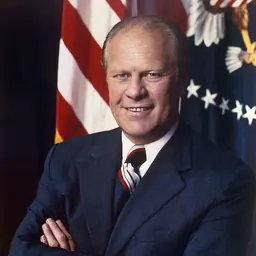
Beck was prosecuted for embezzlement and labor racketeering in 1959 in Washington state. He was convicted for pocketing $1,900 from the sale of a union-owned Cadillac. Beck was convicted later that year on federal charges of income-tax evasion. He appealed his convictions, and his sentence was reduced to three years. He entered prison in 1962. Beck, a former member of the Washington State Board of Prison Terms and Paroles, was himself paroled in 1965 after serving 30 months at McNeil Island Penitentiary. He was pardoned by Washington Governor Albert Rosellini in 1965, and by President Gerald Ford in 1975.
After his release from prison, Beck lived in a basement in a house he himself had built for his mother and sister in the 1940s. He retained his $50,000-a-year Teamster president's pension and became a multimillionaire investing in parking lots.
Beck died at the age of 99 in Northwest Hospital in Seattle on December 26, 1993 and is buried at Calvary Cemetery.
Don’t just read it —
keep it.
Full-length biographies made to live with: read them, listen on the way to work, watch them tonight.
- E-book
- Audio
- Video
Instant download · yours to keep · every purchase keeps this site free
Important facts
People in Dave Beck's life
Named in this biography and alive at the same time




Related people
Same field, nearest in time



Contemporaries
People whose lives overlapped Dave Beck's


Frequently asked questions
Who was Dave Beck?
American labor leader (1894–1993)
When was Dave Beck born?
Dave Beck was born on 16 June 1894 in Stockton.
When did Dave Beck die?
Dave Beck died on 26 December 1993 in Seattle.
What was Dave Beck's occupation?
Dave Beck was a trade unionist.
What nationality was Dave Beck?
Dave Beck was American.
Sources & further reading
Cite this page
APA: Biography.guide. (2026). Dave Beck. https://biography.guide/dave-beck/
MLA: "Dave Beck." Biography.guide, https://biography.guide/dave-beck/.
Chicago: "Dave Beck." Biography.guide. https://biography.guide/dave-beck/.
Data last updated: 2026-09-22 · Spot an error? Report a correction.
Page generated 2026-09-27 05:32 UTC