
About Darius Cadwell
Lived 1821 – 1905 (aged 84). Darius Cadwell was a judge.
Darius Cadwell (April 13, 1821 – November 26, 1905) was an American lawyer, judge and politician who served as a Republican state legislator for Ohio and one of its provosts marshal during the Civil War.
Born to a prominent farmer, Cadwell read law under his relative and future Senator Benjamin Wade and became a prominent local lawyer and minor politician in Ashtabula County. He was successively elected to both chambers of the Ohio General Assembly as a Republican. After a row in 1857 he was punched by fellow member John P. Slough in an incident leading to the latter's expulsion. Cadwell served as provost marshal during the Civil War, when he moved to Cleveland, and spent the remainder of his life in private practice and as an elected judge of common pleas.
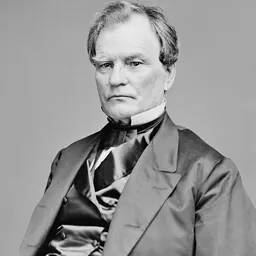
Early life and legal career Cadwell was born in Andover, Ohio on April 13, 1821. He was the second son of Caroline Darius and the farmer and pioneer Roger Cadwell, the latter of whom having emigrated from Hartford County, Connecticut on July 10, 1817. His other siblings were Emily, Jonathan and James D. Ray, a realtor who profited during the Duluth, Minnesota land boom. Cadwell attended local schools before studying one year at Allegheny College in Meadville, Pennsylvania in 1841. ) and future Ohio Supreme Court justice Rufus P. Ranney. Wade and Cadwell remained in correspondence, with Cadwell apparently even writing a flattering monograph about the former's legal competence. When Ranney then left in 1851 following his election to the Supreme Court of Ohio, "Messrs. Cadwell & Simonds" continued practicing together until autumn 1871. Cadwell then served for two terms in the Ohio Senate for the 24th district, encompassing Ashtabula, Lake and Geauga Counties from 1858 to 1860. Cadwell was an abolitionist, who reportedly "once thanked God that in Ohio public sentiment recognized negroes as the social and political equals of the whites" — among his personal papers are a bill to abolish imprisonment for debt and other documents opposing slavery and President Polk in 1848.
Altercation with John P. Slough Different partisan takes on the altercation by The Holmes County Republican and The Cincinnati Enquirer. On January 14, 1857, Cadwell engaged in a debate with fellow lawyer and Cincinnati Democrat John P. Slough over the latter's bill to compensate members for per diem expenses incurred during the time spent adjourned. During the roll call for the vote, Cadwell approached Slough, with whom he had previously a cordial relationship, and told him the bill was "too foolish" to trouble the Attorney General with. In response, Slough said he wouldn't be disrespected any longer, and punched Cadwell in the face; Cadwell did not retaliate, and Slough, refusing to apologize, became the first and only member expelled from the Ohio General Assembly until Larry Householder in 2021. Slough was subsequently renominated by local Democrats, but the next year's election between him and Republican businessman Robert Hosea was incredibly close. Amidst the confusion, Slough returned to Columbus triumphant, only for the House Committee on Elections, on which Cadwell served, to demand recounts in certain wards where mistakes were reported. After the recounts, Hosea was found to have won after all. Slough conceded, moved west and apparently never returned to Ohio. At a time of great political violence, echoing the 1856 caning of Charles Sumner, newspapers described the incident in colorful language as a cause célèbre. He was responsible for winding up the operations of the 18th, 19th and 20th districts before being himself discharged on December 20. Cadwell spent his final years in private practice with his son, Frank.
Personal life On April 13, 1847, Cadwell married Ann Elizabeth 'Eliza' Watrous (b. 1826), the daughter of John B. Watrous (d. 1862), a veteran of the War of 1812. Together they had four children, two of whom (Florence and James R.) died aged three and eleven, respectively. The other children were Clara Gertrude (b. 1855), who in 1886 married the businessman Richard W. Hubbard, and a Frank W. A number of his papers, including official and personal correspondence, were purchased in 1969 by the Western Reserve Historical Society.
Don’t just read it —
keep it.
Full-length biographies made to live with: read them, listen on the way to work, watch them tonight.
- E-book
- Audio
- Video
Instant download · yours to keep · every purchase keeps this site free
Important facts
People in Darius Cadwell's life
Named in this biography and alive at the same time


Related people
Same field, nearest in time

Contemporaries
People whose lives overlapped Darius Cadwell's




Frequently asked questions
Who was Darius Cadwell?
American lawyer and Republican Party politician (1821–1905)
When was Darius Cadwell born?
Darius Cadwell was born on 13 April 1821.
When did Darius Cadwell die?
Darius Cadwell died on 26 November 1905.
What was Darius Cadwell's occupation?
Darius Cadwell was a judge.
Sources & further reading
Cite this page
APA: Biography.guide. (2026). Darius Cadwell. https://biography.guide/darius-cadwell/
MLA: "Darius Cadwell." Biography.guide, https://biography.guide/darius-cadwell/.
Chicago: "Darius Cadwell." Biography.guide. https://biography.guide/darius-cadwell/.
Data last updated: 2026-09-20 · Spot an error? Report a correction.
Page generated 2026-09-27 05:02 UTC