
About Dante Giacosa
Lived 1905 – 1996 (aged 91). Dante Giacosa was an Italian engineer, designer and fiat S.p.A..
Dante Giacosa (3 January 1905 – 31 March 1996) was an Italian automobile designer and engineer responsible for a range of Italian automobile designs — and for refining the front-wheel drive layout to an industry-standard configuration. He has been called the deus ex machina of Fiat.
Background Born in Rome, where his father was undertaking military service, Giacosa's family roots were in Neive on the southern edge of Piedmont. He studied engineering at the Polytechnic University of Turin until 1927. After completing his compulsory military service he joined Fiat in 1928, at first working on military vehicles and then in the aero engine division. The director of the aero-engine division was Tranquillo Zerbi, designer of Grand Prix cars for Fiat. In 1933 when work commenced on the Fiat 500, the director of the aero-engine division was Antonio Fessia. He had sufficient confidence to entrust the design of all the mechanical components of the car including the chassis to Giacosa. Giacosa was engineering manager at Fiat by 1937 and he had become director of the engineering division of Fiat by 1950. He retired from his full-time position with Fiat in 1970, but retained close association with the company courtesy of a position which translates as "Consulting Engineer to Fiat's Presidency and General Management and a Company's Ambassador with National and International Organizations". Following his retirement he wrote several volumes of memoirs concerning his professional life.
Giacosa served as President of FISITA, the International Federation of Automotive Engineering Societies, from 1967 to 1969 and authored Motori Endotermici (translated from Italian: Endothermic Engines), which discusses diverse features related to internal combustion machines with explanations of their design, construction and function. The work became a reference for mechanical engineering courses in many universities and was translated into numerous languages.
Giacosa died in Turin in 1996.
Career The Fiat Topolino was a state of the art two-seat miniature car that soon proved popular when production commenced in 1936. It was a two-seater and had a 569 cc side-valve engine. Its big advantage was the efficient use of the internal space, with the engine located over the front wheels and radiator behind it over the four-speed synchromesh gearbox. Independent front suspension with a transverse leaf spring and wishbones and excellent hydraulic brakes offered good ride comfort and safety. The fuel consumption was very low for the period, around 5.6 l/100 km. The maximum speed of 90 km/h coupled with good handling allowed average cruise speed of 60 km/h. Between 1936 when first introduced until the end of production in 1948, 122,000 were made of this original version.
Giacosa's subsequently designed the Fiat 508C, replacing the 508 Balilla,
Fiat introduced a roomier four-seat two-door saloon in 1964, to run alongside the 600. The 850 had an engine and a increase in the wheelbase, but the specification was the same as the 600. An 850T version of the Multipla was also available the following year. Fiat also produced coupé and spyder versions using the 850 platform, with an engine producing , later and later a engine with . Over a half of a million of these were built by 1972. Spyder production had ceased by 1973. Many special versions were produced by the legion of specialist coachbuilders at work in Italy at the time. The 850 saloon and coupe models were also produced by SEAT. The 600 was discontinued by Fiat in 1970.
The "500" series was fifteen years old by 1972 when Fiat introduced their last rear-engined saloon, the Fiat 126, a four-seater the size of a BMC Mini on the wheelbase of the 500. The engine was increased in capacity to , producing and a top speed of . The 126 was in production before in Italy and then in Poland until 2000 and almost five million examples were produced.
Front wheel drive breakthrough When Fiat began marketing the Fiat 128 in 1969 — with its engine and gearbox situated in an in-line, transverse front-drive layout, combined unequal drive shafts, MacPherson strut suspension and an electrically controlled radiator fan — it became the layout adopted by virtually every other manufacturer in the world for front-wheel drive. The approach of unequal drive shafts was crafted by Dante Giacosa.
Transverse engine and gearbox front-wheel drive had been introduced to small inexpensive cars with the German DKW F1 in 1931, and made more widely popular with the British Mini. As engineered by Alec Issigonis in the Mini cars, the compact arrangement located the transmission and engine sharing a single oil sump — despite disparate lubricating requirements — and had the engine's radiator mounted to the side of the engine, but with fan blades shaped to expel heated air into the left wheel arch, and thus drawing cool rather than heated air over the engine. In various cars with front-drive configuration the whole power unit needed to be removed for many repairs, and especially for the clutch, but that did not apply to the Mini where the clutch could be removed with the power unit in-situ.
As engineered by Dante Giacosa, the 128 featured a transverse-mounted engine with unequal length drive shafts and (thanks to Ettore Cordiano's work ) an innovative and compact clutch release mechanism — an arrangement which Fiat had strategically tested on a previous production model, the Primula, from its less market-critical subsidiary, Autobianchi.
Ready for production in 1964, the Primula featured the four-cylinder water-cooled from the Fiat 1100D mounted transversely with the four-speed gearbox located inline with the crankshaft. With a gear train to the offset differential and final drive and unequal length drive shafts. The layout enabled the engine and gearbox to be located side by side without sharing lubricating fluid while orienting the cooling fan toward fresh air flow. By using the Primula as a test-bed, Fiat was able to sufficiently resolve the layout's disadvantages, including uneven side-to-side power transmission, uneven tire wear and potential torque steer, the tendency for the power of the engine alone to steer the car under heavy acceleration.
Fiat quickly demonstrated the layout's flexibility, re-configuring the 128 drive-train as a mid-engined layout for the Fiat X1/9, and the compact, efficient layout — a transversely-mounted engine with transmission mounted beside the engine driving the front wheels through an offset final-drive and unequal-length driveshafts — subsequently became common with competitors and arguably an industry standard.
Don’t just read it —
keep it.
Full-length biographies made to live with: read them, listen on the way to work, watch them tonight.
- E-book
- Audio
- Video
Instant download · yours to keep · every purchase keeps this site free
Important facts
People in Dante Giacosa's life
Named in this biography and alive at the same time

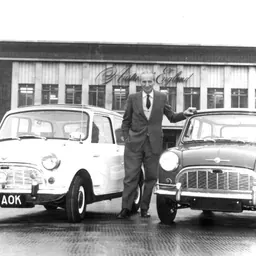

Related people
Same field, nearest in time



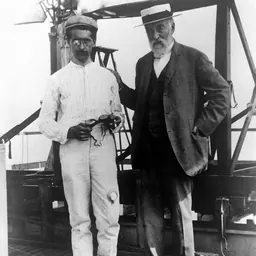
Contemporaries
People whose lives overlapped Dante Giacosa's



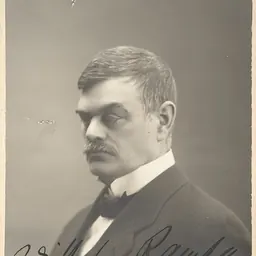

Frequently asked questions
Who was Dante Giacosa?
Italian automobile designer (1905–1996)
When was Dante Giacosa born?
Dante Giacosa was born on 3 January 1905 in Rome.
When did Dante Giacosa die?
Dante Giacosa died on 31 March 1996 in Turin.
What was Dante Giacosa's occupation?
Dante Giacosa was an engineer, designer and fiat S.p.A..
What nationality was Dante Giacosa?
Dante Giacosa was Italian.
Sources & further reading
Cite this page
APA: Biography.guide. (2026). Dante Giacosa. https://biography.guide/dante-giacosa/
MLA: "Dante Giacosa." Biography.guide, https://biography.guide/dante-giacosa/.
Chicago: "Dante Giacosa." Biography.guide. https://biography.guide/dante-giacosa/.
Data last updated: 2026-09-27 · Spot an error? Report a correction.
Page generated 2026-09-27 05:16 UTC