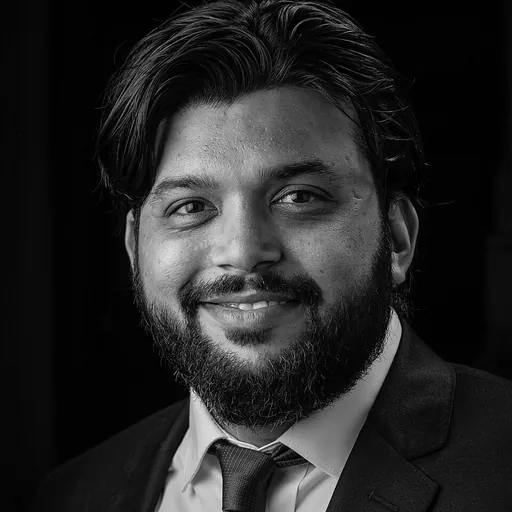
About Danish Siddiqui
Lived 1983 – 2021 (aged 38). Danish Siddiqui was an Indian photojournalist and journalist.
Danish Siddiqui (19 May 1983 – 16 July 2021 ) was an Indian photojournalist based in Delhi, who used to lead the national Reuters multimedia team and was Chief Photographer India. He received his first 2018 Pulitzer Prize for Feature Photography, as part of the Reuters team, for documenting the Rohingya refugee crisis. In 2021, he was killed while covering a clash between Afghan security forces and Taliban forces near a border crossing with Pakistan. His second Pulitzer was awarded posthumously in 2022 for documenting the COVID-19 pandemic.
Early life and education Siddiqui grew up in the neighbourhood of the university, and attended the Fr. Agnel School, New Delhi.
He graduated with a degree in economics from JMI before pursuing post-graduation in Mass Communication from the A.J.K. Mass Communication Research Centre at Jamia in 2007.
Career Siddiqui started his career as a correspondent for the Hindustan Times before shifting to the TV Today Network. BBC News, National Public Radio, and The Caravan noted it to be the defining image of the riot. Another photograph, taken of a teenage right-wing activist brandishing a pistol at protesters while police looked on, became evidence of "the emboldening of Hindu nationalists" in the wake of the Citizenship (Amendment) Act, 2019. Right-wing news portals attacked Siddiqui for capitalizing on "Hindu suffering" and private grief.
Major awards In 2018, he became the first Indian alongside Adnan Abidi to win the Pulitzer Prize for Feature Photography (as part of the Photography staff of Reuters) for documenting the 2015 Rohingya refugee crisis. In 2013, Siddiqui had secured the third position in the Arts and Culture Category at the Sony World Photography Awards 2013. He was also a winner in the recently held Hong Kong 25th Human Rights Press Awards 2021 for Photography (Series) and Photography (Single Image) categories. His work on COVID-19 crisis, titled "Documenting India’s Greatest Healthcare Crisis", was also exhibited in the prestigious Visa pour l'Image photojournalism festival held in August 2021.
On 29 December 2021, Siddiqui was posthumously awarded 'the Journalist of the Year' for 2020 by the Mumbai Press Club. Chief Justice of India N. V. Ramana presented the annual 'RedInk Awards for Excellence in Journalism'. During the event CJI Ramana stated, "He was a man with a magical eye and was rightly regarded as one of the foremost photojournalists of this era. If a picture can tell a thousand words, his photos were novels." — Chief Justice of India N. V. Ramana
Personal life Siddiqui was a Muslim. They had two children. His body was handed to the Afghan Red Crescent Society.
According to local Afghan officials as well as Taliban members, Siddiqui was killed by the Taliban in an ambush-crossfire. The Taliban mutilated and disrespected the body.
A detailed BBC investigative report by Vinit Khare published on 10 Aug 2021 confirmed witness accounts that Danish's body was indeed subjected to mutilation by the Taliban post his murder after displaying the body in the city center and only after intense negotiations by the Red Cross team did they return the body.
Another investigative report published by Reuters on 23 Aug 2021 said that Danish was killed after he was left behind by the Afghan forces in retreat. It quotes a Taliban fighter as saying "You’re bringing Indians to fight against us.” The officer replied, “Don’t shoot him. He’s a journalist.” “We already killed that guy,” the fighter answered which further lends credence to reports that Danish was executed post his capture. The Reuter report did not answer questions related to mutilation of the body, safety of Danish while covering such conflict, absence of security advisors, not recalling him back after 13 July attack. As per official statement issued by Reuters, an internal investigation is being conducted .
Michael Rubin (in an op-ed for the Washington Examiner on 29 July 2021) cited several unnamed sources to claim that the Taliban had eliminated him in a planned operation, which was covered-up by the US Government. He claimed that as part of this operation, they had attacked a mosque where Siddiqui had gone to receive first-aid, captured him, vetted his identity, and then executed him, after fighting off the Afghan forces who came to the rescue. The op-ed was immediately reproduced by multiple outlets of mainstream Indian media. A report by News18 has since confirmed Rubin's version of events from Afghan and Indian intelligence officials; presence of about a dozen close range gunshot wounds on his torso were argued to corroborate his thesis.
Ahmad Lodin, the head of the newspaper Afghan Orband Weekly, claimed to Newslaundry on 19 July that the Taliban had released Siddiqui's "disrespected" and "mutilated" corpse only after prolonged negotiations. Rubin, in his op-ed, claimed to have reviewed photographs and a video of Siddiqui's body from a source in the Indian Government, showing head-injuries and multiple bullet-wounds.
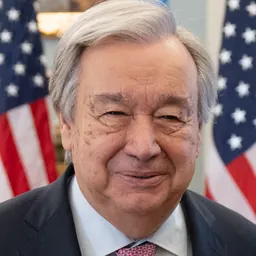
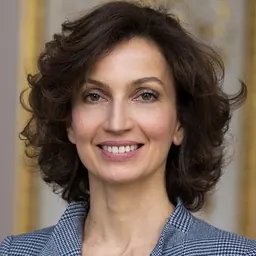
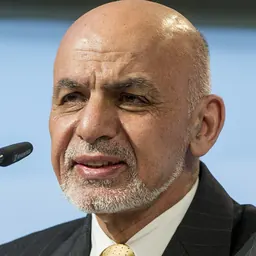
Reactions Official Foreign Secretary Harsh Vardhan Shringla condemned the Taliban actions at an event of the United Nations Security Council. The Minister for Information and Broadcasting, Anurag Thakur, expressed his condolences. U.S. Department of State Principal Deputy Spokesperson Jalina Porter called it a "tremendous loss". President Ashraf Ghani expressed shock and offered his condolences while reiterating the affording of absolute protection to media personnel. UN Secretary General António Guterres expressed his grief. UNESCO Director-General Audrey Azoulay meanwhile condemned the killing. Unofficial The Taliban denied knowledge of his presence in the ambushed entourage and expressed their regret at his death. Days before completion of a successful offensive in Afghanistan, they blamed Siddiqui for not coordinating with their forces.
Burial Siddiqui's coffin arrived in India, in the evening of 18 July 2021. The same night, his body was buried at the Jamia Millia Islamia graveyard. Hundreds attended the funeral.
Don’t just read it —
keep it.
Full-length biographies made to live with: read them, listen on the way to work, watch them tonight.
- E-book
- Audio
- Video
Instant download · yours to keep · every purchase keeps this site free
Important facts
People in Danish Siddiqui's life
Named in this biography and alive at the same time


Related people
Same field, nearest in time




Contemporaries
People whose lives overlapped Danish Siddiqui's

Frequently asked questions
Who was Danish Siddiqui?
Indian photojournalist (1983-2021)
When was Danish Siddiqui born?
Danish Siddiqui was born on 19 May 1983 in New Delhi.
When did Danish Siddiqui die?
Danish Siddiqui died on 16 July 2021 in Spin Boldak.
What was Danish Siddiqui's occupation?
Danish Siddiqui was a photojournalist and journalist.
What nationality was Danish Siddiqui?
Danish Siddiqui was Indian.
Sources & further reading
Cite this page
APA: Biography.guide. (2026). Danish Siddiqui. https://biography.guide/danish-siddiqui/
MLA: "Danish Siddiqui." Biography.guide, https://biography.guide/danish-siddiqui/.
Chicago: "Danish Siddiqui." Biography.guide. https://biography.guide/danish-siddiqui/.
Data last updated: 2026-09-22 · Spot an error? Report a correction.
Page generated 2026-09-27 05:09 UTC