
About Daniel Libeskind
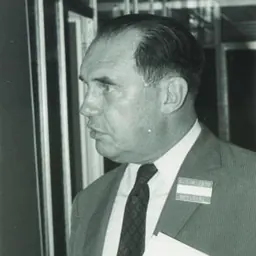
Born 1946. Daniel Libeskind is an American, Polish and German architect, musician, university teacher, designer and lecturer.
Daniel Libeskind (born May 12, 1946) is a Polish and American architect, artist, professor, and set designer. Libeskind founded Studio Daniel Libeskind in 1989 with his wife, Nina, and is its principal design architect. He is known for the design and completion of the Jewish Museum in Berlin, Germany, that opened in 2001. In 2003, Libeskind received further international attention after he won the competition to be the master plan architect for the reconstruction of the World Trade Center site in Lower Manhattan.
Other buildings that he is known for include the extension to the Denver Art Museum in the United States, the Grand Canal Theatre in Dublin, the Imperial War Museum North in Greater Manchester, England, the Michael Lee-Chin Crystal at the Royal Ontario Museum in Toronto, Canada, the Felix Nussbaum Haus in Osnabrück, Germany, the Danish Jewish Museum in Copenhagen, Denmark, Reflections in Singapore and the Wohl Centre at the Bar-Ilan University in Ramat Gan, Israel. His portfolio also includes several residential projects. Libeskind's work has been exhibited in major museums and galleries around the world, including the Museum of Modern Art, the Bauhaus Archives, the Art Institute of Chicago, and the Centre Pompidou.
Early life and education Daniel Libeskind was born May 12, 1946, in Łódź, Poland. He is the second child of Dora and Nachman Libeskind, both Polish Jews and Holocaust survivors. As a young child, Libeskind learned to play the accordion and quickly became a virtuoso, performing on Polish television in 1953. He won a America Israel Cultural Foundation scholarship in 1959 and played alongside a young Itzhak Perlman. Libeskind lived in Poland for 11 years and says "I can still speak, read and write Polish."
In 1957, the Libeskinds moved to Israel, settling in Kibbutz Gvat and Tel Aviv. In his autobiography, Breaking Ground: An Immigrant's Journey from Poland to Ground Zero, Libeskind spoke of how the kibbutz experience influenced his concern for green architecture.
In the summer of 1959, his family moved to New York City on one of the last immigrant boats to the United States. In New York, Libeskind lived in the Amalgamated Housing Cooperative in the northwest Bronx, a union-sponsored, middle-income cooperative development. He attended the Bronx High School of Science. The print shop where his father worked was on Stone Street in Lower Manhattan, and he watched the original World Trade Center being built in the 1960s. Libeskind became a United States citizen in 1965. In 1968, Libeskind briefly worked as an apprentice to architect Richard Meier.
Career Libeskind began his career as an architectural theorist and professor, holding positions at various institutions around the world. From 1978 to 1985, Libeskind was the director of the Architecture Department at Cranbrook Academy of Art in Bloomfield Hills, Michigan. His practical architectural career began in Milan in the late 1980s, where he submitted to architectural competitions and also founded and directed Architecture Intermundium, Institute for Architecture & Urbanism.
Libeskind completed his first building at the age of 52, with the opening of the Felix Nussbaum Haus in Osnabrück, Germany in 1998. Prior to this, critics had dismissed his designs as "unbuildable or unduly assertive". In 1987, Libeskind won his first design competition for housing in West Berlin, but the Berlin Wall fell shortly thereafter and the project was cancelled. Libeskind won the first four project competitions he entered including the Jewish Museum Berlin in 1989, which became the first museum dedicated to the Holocaust in WWII and opened to the public in 2001 with international acclaim. This was his first major international success and was one of the first building modifications designed after reunification. A glass courtyard was designed by Libeskind and added in 2007. The Academy of the Jewish Museum Berlin also designed by Libeskind was completed in 2012.
Libeskind was selected by the Lower Manhattan Development Corporation to oversee the rebuilding of the World Trade Center, which was destroyed in the September 11, 2001 attacks. The concept for the site, which he titled Memory Foundations, was well-received upon its presentation to the public in 2003, although it was ultimately changed significantly before its execution. He was the first architect to win the Hiroshima Art Prize, awarded to an artist whose work promotes international understanding and peace. Many of his projects look at the deep cultural connections between memory and architecture.
Studio Daniel Libeskind is headquartered two blocks south of the World Trade Center site in New York. He has designed numerous cultural and commercial institutions, museums, concert halls, convention centers, universities, residences, hotels, and shopping centers. The studio's most recent completed projects include the MO Museum in Vilnius, Lithuania; Zlota 44, a high-rise residential tower in Warsaw, Poland; the Ogden Centre for Fundamental Physics at Durham University in Durham, England; the National Holocaust Monument in Ottawa, Canada; and Corals at Keppel Bay in Singapore, adjacent to the studio's previous completed project Reflections at Keppel Bay.
Design objects In addition to his architectural projects, Libeskind has worked with a number of international design firms to develop objects, furniture, and industrial fixtures for interiors of buildings. He has been commissioned to work with design companies such as Fiam, Artemide, Jacuzzi, TreP-Tre-Piu, Oliviari, Sawaya & Moroni, Poltrona Frau, Swarovski, and others.
Sculpture and installations Libeskind's design projects also include sculpture. Several sculptures built in the early 1990s were based on the explorations of his Micromegas and Chamberworks drawings series that he did in the late 1970s and early 1980s. The Polderland Garden of Love and Fire in Almere, Netherlands is a permanent installation completed in 1997 and restored on October 4, 2017. Later in his career, Libeskind designed the Life Electric sculpture that was completed in 2015 on Lake Como, Italy. This sculpture is dedicated to the physicist Alessandro Volta.
Opera and verse Libeskind has designed opera sets for productions such as the Norwegian National Theatre's The Architect in 1998 and Saarländisches Staatstheater's Tristan und Isolde in 2001. He also designed the sets and costumes for Intolleranza by Luigi Nono and for a production of Messiaen's Saint Francis of Assisi by Deutsche Oper Berlin. He has also written free verse prose, included in his book Fishing from the Pavement.
Academia Daniel Libeskind was the Head of the Architecture Department at Cranbrook Academy of Art in Bloomfield Hills, Michigan from 1978 to 1985. He produced exhibitions, several essays and books, suites of drawings, and large-scale explorations like the three machines (Reading Machine, Writing Machine and Memory Machine). The machines, produced with his Cranbrook graduate students during the 1984–85 academic year, called the Three Lessons in Architecture were displayed at the Venice Biennale in 1985. Libeskind and the group won a Stone Lion award for the work.
Libeskind has taught at several universities, including the University of Kentucky, Yale University, UCLA, Harvard, the University of London, and the University of Pennsylvania. He continues to teach students at various universities including the Catholic University of America.
Criticism Libeskind's building for the London Metropolitan University has been the subject of criticism. His work is inscribed within the loosely-defined style of deconstructivism. While much of Libeskind's work has been well-received, it has also been the subject of often severe criticism. Critics charge that it reflects a limited architectural vocabulary of jagged edges, sharp angles and tortured geometries, that can fall into cliche, and that it ignores location and context. In 2008 Los Angeles Times critic Christopher Hawthorne wrote: "Anyone looking for signs that Daniel Libeskind's work might deepen profoundly over time, or shift in some surprising direction, has mostly been doing so in vain." Nicolai Ouroussoff stated in The New York Times in 2006: "His worst buildings, like a 2002 war museum in England suggesting the shards of a fractured globe, can seem like a caricature of his own aesthetic." William JR Curtis in Architectural Review called his Run Run Shaw Creative Media Centre "a pile-up of Libeskindian clichés without sense, form or meaning" and wrote that his Hyundai Development Corporation Headquarters delivered "a trite and noisy corporate message".
Work
The following projects are listed on the Studio Libeskind website. The first date is the competition, commission, or first presentation date. The second is the completion date or the estimated date of completion.
Completed
1989–2001 Jewish Museum Berlin – Berlin, Germany 1995–1998 Felix Nussbaum Haus – Osnabrück, Germany 1997–2001 Imperial War Museum North – Greater Manchester, England, United Kingdom 1998–2008 Contemporary Jewish Museum – San Francisco, California, United States 2000–2003 Studio Weil – Mallorca, Spain 2000–2006 Extension to the Denver Art Museum, Frederic C. Hamilton Building – Denver, Colorado, United States 2000–2006 Denver Art Museum Residences – Denver, Colorado, United States 2000–2008 Westside Shopping and Leisure Centre – Bern, Switzerland 2001–2003 Danish Jewish Museum – Copenhagen, Denmark 2001–2004 London Metropolitan University Graduate Centre – London, England, United Kingdom 2001–2005 The Wohl Centre – Bar-Ilan University, Ramat Gan, Israel 2002–2007 Michael Lee-Chin Crystal, extension to Royal Ontario Museum and renovation of ten of its existing galleries – Toronto, Ontario, Canada 2003–2005 Tangent, Facade for Hyundai Development Corporation Headquarters – Seoul, South Korea 2004–2005 Memoria e Luce, 9/11 Memorial – Padua, Italy 2004–2007 Glass Courtyard addition to the Jewish Museum Berlin – Berlin, Germany
2005–2009 MGM Mirage's CityCenter, retail and public space on the Las Vegas Strip – Paradise, Nevada 2004–2010 Grand Canal Square, Grand Canal Theatre and Commercial Development – Dublin, Ireland 2010 Wheel of Conscience monument, M.S. St. Louis Memorial, Pier 21 – Halifax, Canada
2002–2011 Run Run Shaw Creative Media Centre at the City University of Hong Kong – Hong Kong 2006–2011 Reflections at Keppel Bay, high-rise and low-rise villa apartment blocks – Keppel Bay, Singapore 2007–2008 18.36.54 private residence – Connecticut, United States 2007–2011 Haeundae I Park Marina, skyscraper complex – Busan, South Korea 2009 Libeskind Villa – prefab smart house – Rheinzink GmbH & Co. KG Global Headquarters, Datteln, Germany 2010–2012 Jewish Museum Berlin Academy in the Eric F. Ross Building, academy – Berlin, Germany 2009–2013 Kö-Bogen, Königsallee, Düsseldorf, Germany 2012–2015 Mons International Congress XPerience, Mons, Belgium 2013–2014 Ohio Holocaust & Liberators Memorial, Columbus, Ohio 2014–2015 Life Electric, sculpture – Como, Italy 2015 Vanke Pavilion, sculpture – Milan, Italy 2015 Future Flowers, sculpture – Milan, Italy 2015 Milan Expo Gates, sculpture – Milan, Italy 2010–2015 Vitra Tower – Sao Paulo, Brazil 2013–2016 Lotte Mart – Songdo, South Korea 2005–2016 L Tower and Sony Centre for the Performing Arts Redevelopment – Toronto, Canada 2013–2016 Corals at Keppel Bay, Singapore 2012–2016 Sapphire, – Berlin, Germany 2007–2017 Złota 44, residential tower – Warsaw, Poland 2011–2017 Main building and auditorium, Leuphana University of Lüneburg – Lüneburg, Germany 2015–2017 Odgen Centre for Fundamental Physics at Durham University, Durham, England
2011–2018 Zhang Zhidong Museum – Wuhan, China 2017–2018 MO Museum – Vilnius, Lithuania 2013–2019 Century Spire, Manila, Philippines 2013-2021- National Holocaust Names Memorial (Amsterdam), Amsterdam, the Netherlands 2018–2021 Tampere Deck Arena, Tampere, Finland 2015–2019 CityLife (Milan), Tower – Milan, Italy
Under construction 2002-ongoing World Trade Center master plan – New York City, New York 2004–2020 CityLife (Milan), masterplan – Milan, Italy 2012–2021 Lotte Mall Songdo & Officetel, Songdo, South Korea 2012–2020 Amsterdam Holocaust Memorial – Amsterdam, Netherlands 2017–2020 Verve, Frankfurt, Germany 2017–2020 East Thiers Station, Nice, France 2018– 2023 Atrium at Sumner – Brooklyn, New York, US 2019–2023 Artery – Vilnius, Lithuania 2003– 2023 Maggie's Centre at the Royal Free, London, UK
Proposed or in design 2009–? Archipelago 21, masterplan – Seoul, South Korea 2009–? Harmony Tower, Seoul, South Korea 2009–? Dancing Towers, Seoul, South Korea 2009–? Kurdistan Museum, Erbil, Kurdistan Region, Iraq 2008–? New York Tower, New York City, United States 2018 – Great Synagogue of Vilna restoration, Vilnius, Lithuania 2017–2022 Occitanie Tower, Toulouse, France 2019–2024 Ngaren: The Museum of Humankind – Kenya 2020–? Baccaratt Hotel and Residences – Dubai, UAE 2021–? Tree of Life Synagogue, Pittsburgh, Pennsylvania 2022–? Boerentoren 'crown', Antwerp, Belgium 2025 Museo Regional de Tarapaca, Iquique, Chile 2025 Fan d'Issy, Paris, France
Libeskind design products
2009 Tea Set, Sawaya & Moroni 2009 Denver Door Handle, Olivari 2011 eL Masterpiece, Zumtobel Group, Sawaya & Moroni 2012 Torq Armchair and Table, Sawaya & Moroni 2012 Zohar Street Lamp, Zumtobel Group 2012 The Idea Door 1 & 2, TRE-Più 2013 The Wing Mirror, Fiam 2013 Flow, Jacuzzi 2013 Paragon Lamp, Artemide 2013 Nina Door Handle, Olivari 2014 Ice Glass Installation 2016 Water Tower, Alessi 2016 Gemma Collection, Moroso 2016 Swarovski Chess Set, Swarovski 2017 Cordoba light, Slamp 2017 Dining and side Table, Citco 2019 Boaz Chair, Wilde + Spieth
Awards and recognition Alexander Hamilton Immigrant Achievement Award (2025) First architect to receive the Jan Kaplicky Lifetime Achievement Award (2023) First architect to receive the Dresden International Peace Prize (2023) First architect to win the Hiroshima Art Prize, awarded to an artist whose work promotes international understanding and peace (2001) In 2003, he received the Leo Baeck Medal for his humanitarian work promoting tolerance and social justice. AIANY Merit Award for the National Holocaust Monument, Ottawa, Canada (2018) MIPIM/The Architectural Review Future Project Award, for L'Occitanie Tower in Toulouse, France (2018) CTBUH Urban Habitat Award for the World Trade Center Master Plan (2018) American Institute of Architects National Service Award for the World Trade Center Master Plan (2012) Fellow for the American Institute of Architects (2016) RIBA Regional Award for Ogden Centre for Fundamental Physics at Durham University (2017) Received an Honorary Doctorate of Architecture from the University of South Florida. Doctor Honoris Causa of the New Bulgarian University in 2013 in recognition of his influence on contemporary architectural research and practice First recipient of honorary degree of Doctor of Fine Art from University of Ulster in recognition of his outstanding services to global architecture and design (2009) MIPIM award in Best Urban Regeneration Project for KoBogen (2014) FIABCI Prix d'Excellence Award, Residential for Reflections at Keppel Bay (2013) European Museum Academy Prize for the Military History Museum (2013) Buber-Rosenzweig-Medal (2010) Gold medal for Architecture at the National Arts Club (2007) RIBA International Award for Wohl Centre at Bar-Ilan University (2006) RIBA International Award for the Imperial War Museum North (2004) RIBA Award for the London Metropolitan University Graduate Centre (2004) Appointed as the first Cultural Ambassador for Architecture by the U.S. Department of State (2004) Honorary member of the Royal Academy of Arts in London, England (2004) Man of the Year Award from the Tel Aviv Museum of Art (2004) Goethe Medal for cultural contribution by the Goethe Institute (2000) Time magazine Best of 1998 Design Awards for the Felix Nussbaum Haus (1998) Elected to the American Academy of Arts and Letters (1996) Venice Biennale First Prize Stone Lion Award for Palmanova Project (1985) National Endowment for the Arts Design Arts Grant for Studies in Architecture (1983) American Institute of Architects Medal for Highest Scholastic Achievement (1970)
Personal life Libeskind met Nina Lewis, his future wife and business partner, at the Bundist-run Camp Hemshekh in upstate New York in 1966. They married a few years later and, instead of a traditional honeymoon, traveled across the US visiting Frank Lloyd Wright buildings on a Cooper Union fellowship. Nina is co-founder for Studio Daniel Libeskind. She is the daughter of the late-Canadian political leader David Lewis and the sister of former Canadian Ambassador to the United Nations, Stephen Lewis.
Libeskind has lived, among other places, in New York City, Toronto, Michigan, Italy, Germany, and Los Angeles.
Nina and Daniel Libeskind have three children: Lev, Noam, and Rachel.
Don’t just read it —
keep it.
Full-length biographies made to live with: read them, listen on the way to work, watch them tonight.
- E-book
- Audio
- Video
Instant download · yours to keep · every purchase keeps this site free
Important facts
People in Daniel Libeskind's life
Named in this biography and alive at the same time





Related people
Same field, nearest in time



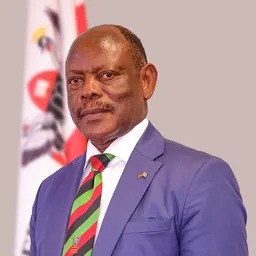

Contemporaries
People whose lives overlapped Daniel Libeskind's
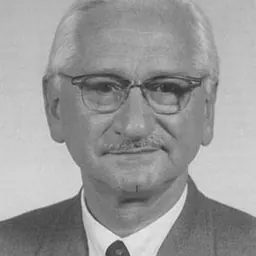
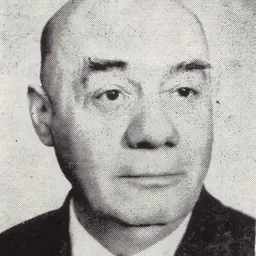
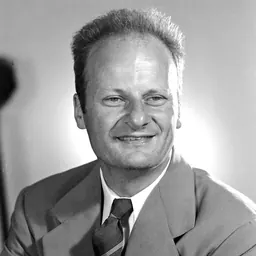
Frequently asked questions
Who is Daniel Libeskind?
Polish-American architect (1946)
When was Daniel Libeskind born?
Daniel Libeskind was born on 12 May 1946 in Łódź.
What is Daniel Libeskind's occupation?
Daniel Libeskind is an architect, musician, university teacher, designer and lecturer.
What nationality is Daniel Libeskind?
Daniel Libeskind is American, Polish and German.
Sources & further reading
Cite this page
APA: Biography.guide. (2026). Daniel Libeskind. https://biography.guide/daniel-libeskind/
MLA: "Daniel Libeskind." Biography.guide, https://biography.guide/daniel-libeskind/.
Chicago: "Daniel Libeskind." Biography.guide. https://biography.guide/daniel-libeskind/.
Data last updated: 2026-09-20 · Spot an error? Report a correction.
Page generated 2026-09-27 05:33 UTC