
About Daniel Hopfer
Lived 1470 – 1536 (aged 65–66). Daniel Hopfer was a German engraver, armourer, painter, graphic artist, copper engraver and draftsperson.
Daniel Hopfer ( – 1536) was a German artist who is widely believed to have been the first to use etching in printmaking, at the end of the 15th century. He also worked in woodcut. Although his etchings were widely ignored by art historians for years, more recent scholarship is crediting him and his work with "single-handedly establishing the salability of etchings" and introducing the print publisher business model. The couple had three sons: Jörg, Hieronymus and Lambert, the last two of whom carried on their father's profession of etching, Hieronymus in Nuremberg and Lambert in Augsburg. Jörg's sons Georg and Daniel (junior), also became distinguished etchers, patronised by no less than the Emperor Maximilian II, whose successor, Rudolf II, raised Georg to the nobility. thumb Daniel Hopfer: Gib Frid – three old women beating a devil on the ground. Before the Funck number 252x252px Daniel was trained as an etcher of armour. There are only two proven examples of his own work on armour: a shield from 1536 now in the Royal Armoury museum (La Real Armería) of the Royal Palace of Madrid and a sword in the Germanisches Nationalmuseum of Nuremberg. An Augsburg horse armour in the German Historical Museum, Berlin, dating to between 1512 and 1515, is decorated with motifs from Hopfer's etchings and woodcuts, but this is no evidence that Hopfer himself worked on it.
The etching of metals with acid was known in Europe from at least 1400, but the elaborate decoration of armour (in Germany at the least) was an art probably imported from Italy around the end of the 15th century — little earlier than the birth of etching as a printmaking technique. Although the first extant dated etchings are the three by Albrecht Dürer of 1515, and despite the fact that none of his works are dated, stylistic evidence suggests that Daniel Hopfer was using this technology as early as 1500. It is often thought that Hopfer taught Dürer the technique. thumb Hieronymus Hopfer: Three ornate vessels, probably a model for goldsmiths. With the Funck number, lower right: "68" 244x244px The Hopfers prospered in Augsburg, and by 1505 Daniel owned a house in the city centre.
None of the Hopfer family were trained artists, or natural draughtsmen: their designs show a certain naïveté that never gained an artistic following. But the extraordinary diversity of the Hopfers' works have made them collector's items. From religious prints to designs for goldsmiths, secular subjects such as peasants, military figures (especially Landsknechts), portraits of contemporary worthies, mytholological and folkloric themes, the sheer range of the Hopfers' productions are both remarkable and unique, designed to appeal to a clientele far wider than the metalsmiths who bought their patterns to create their wares. However, the Hopfer family did not hesitate to plagiarize the work of their contemporaries: of Daniel's 230 known prints, 14 are copies of other masters, mainly Mantegna, whilst only a minority of Hieronymus' 82 plates are his original work — no fewer than 21 are copies of Dürer's works, and around 30 others are copies from Jacopo de' Barbari, Raimondi and Altdorfer among others.
In the next century, David Funck (1642–1705), a distant relative of the Hopfers and a bookseller of Nuremberg, acquired 230 of the Hopfers' iron plates and reprinted these under the title Operae Hopferianae. He added a scratched number, known as the Funck number, to each one, thus creating a second state of the hitherto un-retouched plates.
A further print run of 92 plates was made in 1802 by the publishers C. W. Silberberg of Frankfurt under the title Opera Hopferiana. The quality of the prints is a tribute to the care with which the Hopfer family maintained these rust-prone plates, many of which are now in the Berlin print cabinet.
Gallery
Don’t just read it —
keep it.
Full-length biographies made to live with: read them, listen on the way to work, watch them tonight.
- E-book
- Audio
- Video
Instant download · yours to keep · every purchase keeps this site free
Important facts
more
Daniel Hopfer the ElderPeople in Daniel Hopfer's life
Named in this biography and alive at the same time
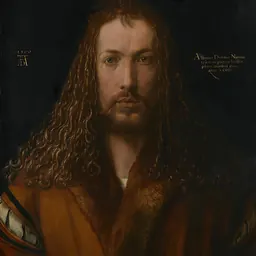
Related people
Same field, nearest in time




Contemporaries
People whose lives overlapped Daniel Hopfer's
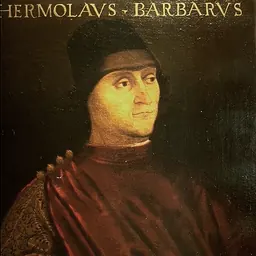



Frequently asked questions
Who was Daniel Hopfer?
Engraver from Germany (1470-1536)
When was Daniel Hopfer born?
Daniel Hopfer was born in 1470 in Kaufbeuren.
When did Daniel Hopfer die?
Daniel Hopfer died in 1536 in Augsburg.
What was Daniel Hopfer's occupation?
Daniel Hopfer was an engraver, armourer, painter, graphic artist, copper engraver and draftsperson.
What nationality was Daniel Hopfer?
Daniel Hopfer was German.
Sources & further reading
Cite this page
APA: Biography.guide. (2026). Daniel Hopfer. https://biography.guide/daniel-hopfer/
MLA: "Daniel Hopfer." Biography.guide, https://biography.guide/daniel-hopfer/.
Chicago: "Daniel Hopfer." Biography.guide. https://biography.guide/daniel-hopfer/.
Data last updated: 2026-09-20 · Spot an error? Report a correction.
Page generated 2026-09-27 05:24 UTC