
Daniel E. Lieberman
American paleoanthropologist
About Daniel E. Lieberman
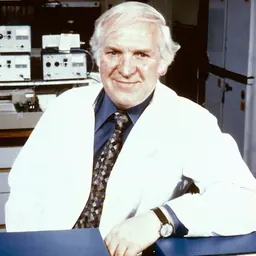
Born 1964. Daniel E. Lieberman is an American anthropologist, paleoanthropologist, researcher and biologist, known for Human evolution.
Daniel E. Lieberman (born June 3, 1964) is a paleoanthropologist at Harvard University, where he is the Edwin M Lerner II Professor of Biological Sciences, and Professor in the Department of Human Evolutionary Biology. He is best known for his research on running, the evolution of the human head He served as chair from 2009 to 2018, and from 2022 to 2025. In other papers, Lieberman with colleagues showed how this integrated configuration has implications for a range of functions and adaptations including speech, swallowing, and head balance during locomotion.
Lieberman has also worked on many other aspects of hominin craniofacial evolution. Of particular note, he worked with Michel Brunet and colleagues to describe and analyze the oldest known hominin species, Sahelanthropus tchadensis, and with David Pilbeam to argue that the first hominins likely evolved from a last common ancestor with chimpanzees that largely resembled extant chimpanzees. Lieberman also published on the challenges of using craniofacial data to reconstruct evolutionary relationships among hominins, and on the evolutionary biomechanics of mastication, including a study with Katherine Zink showing that mechanically processing meat and underground storage organs with Oldowan stone tools considerably increases the efficiency and effectiveness of chewing and likely made possible selection for reduced tooth size in the genus Homo.
Skeletal biomechanics Because mechanical forces affect skeletal morphology and vice versa, much of Lieberman's research has tested how behaviors such as chewing, walking and running load the musculoskeletal system and influence how bones grow. Many of these studies involve experimentally testing biomechanical models of human or hominin anatomical variations in humans and model organisms in the lab. Lieberman and colleagues showed that loading from locomotion causes sheep to grow more bone in proximal limb bones almost entirely when they are immature and to repair bone as adults, especially in distal elements. Lieberman and colleagues also showed that the cross-sectional geometry of these bones does not accurately reflect the orientations in which they are loaded. These experiments call into question using cross sections of human and other hominin limb bones to infer how they walked and ran. In other experiments, Lieberman showed that processing food causes the upper and lower jaws to grow less in model organisms (hyraxes) that, like humans, have retracted faces, thus causing dental crowding and increasing the risk of impacted wisdom teeth. Experiments with A. W. Crompton showed that fusion of the mandibular symphysis in primates and other species like wombats transfers forces from muscles on the non-chewing side of the head to increase bite forces.
Evolution of human physical activity
Running Lieberman is best known for his work on the evolution of running. Building off a proposal by David Carrier, he and Dennis Bramble developed the endurance running hypothesis, which proposes that between 3 and 2 million years ago, the genus Homo evolved anatomical and physiological adaptations for long-distance running as part of hunter-gatherer lifestyles. In their 2004 "Born to Run" paper in the journal Nature, entitled "Endurance running and the evolution of Homo", he and Bramble reviewed how effective humans are at distance running, identified a long list of traits that improve endurance running performance, showed that these traits first appear in the genus Homo, especially Homo erectus, and argued that endurance running likely evolved to permit persistence hunting. These traits, which Lieberman and his students and others have studied and tested experimentally in a series of papers, include an enlarged gluteus maximus; short toes; a longitudinal arch in the foot; elongated, spring-like tendons in the leg such as the Achilles and iliotibial band; a nuchal ligament for head stabilization; long legs; lack of fur and an elaboration of sweat glands to permit efficient sweating; mobile rib joints to supplement diaphragmatic ventilation with thoracic ventilation; and a large, thin-walled left ventricle of the heart to maintain high cardiac output.
Barefoot running Lieberman also conducted experiments with Madhusudan Venkadesan and others on barefoot versus shod running, showing that many habitually barefoot runners often adopt forefoot or midfoot strikes that reduce the impact peak caused by the collision of the foot with the ground. Lieberman and colleagues have published studies claiming that forefoot or midfoot striking may help prevent some running injuries, and promote stronger feet. These studies have stimulated considerable research on running biomechanics. Lieberman and colleagues also showed that calluses, which barefoot individuals normally develop, protect the foot from injury without compromising mechanosensation. Many of Lieberman's insights on running were popularized in the book Born to Run, but Lieberman has questioned some aspects of the book, including its characterization of Tarahumara running and runners as "the myth of the athletic savage". Lieberman is an avid runner, including marathons. He sometimes runs barefoot, and has studied barefoot running, which earned him the nickname "the Barefoot Professor".
Walking Lieberman also worked on the evolution of bipedal walking and posture. In collaboration with Michel Brunet and others, he analyzed the cranium of Sahelanthropus tchadensis, the oldest known hominin species, showing that its inferiorly oriented foramen magnum indicates the species was an upright biped of some sort. And in conjunction with Anna Warrener and other colleagues, he showed that female humans walk just as efficiently as males despite having wider pelves, contradicting the obstetric dilemma hypothesis.
Throwing Lieberman, Neil Roach, Madhusudan Venkadesan and Michael Rainbow showed that the genus Homo evolved unique anatomical features enabling high-speed overhand throwing, including elastic energy storage in a wide, horizontally oriented shoulder, as well as other features such as low humeral torsion, a mobile waist, and hyperextensible wrists. They proposed that these adaptations evolved in Homo erectus for hunting.
Metabolism Lieberman's research on physical activity also explores how physical activity affects metabolism and health. His active grandparent hypothesis proposes that human hunter-gatherers evolved to be highly physically active throughout their lifespan, including after they stop reproducing, thereby activating repair and maintenance mechanisms that extend healthspan and lifespan. Using a new method to compare metabolic rates using quotients, Lieberman and colleagues also proposed that humans evolved uniquely high resting, activity, and total metabolic rates by overcoming energy allocation tradeoffs and thermoregulatory constraints that limit other primates, enabling humans to evolve large brains, high reproductive rates, extended longevity, and active lifestyles.
Mismatch and dysevolution Lieberman has advanced the concept of evolutionary mismatch, which he defines as "conditions that are more common or severe because the body is inadequately or imperfectly adapted to novel environmental conditions". Lieberman divides mismatches into three categories: mismatches of too much (such as sugar), too little (such as physical activity), or too novel (such as tobacco). He further proposes that treating the symptoms not causes of mismatch conditions causes a form of cultural evolution he terms dysevolution, which perpetuates and sometimes worsens the condition. Lieberman is a co-author on the carbohydrate–insulin model proposed by David Ludwig. His book Fed Up (2026) tells the story of how humans evolved to be the planet's ultimate omnivores but never to choose their food, explores how and why there is no single optimal diet, argues against oversimple diets based primarily on elimination, and reviews the evidence that the healthiest diets are based primarily on unrefined plants. Harvard College Professorship, 2010–2015
Books
Don’t just read it —
keep it.
Full-length biographies made to live with: read them, listen on the way to work, watch them tonight.
- E-book
- Audio
- Video
Instant download · yours to keep · every purchase keeps this site free
Important facts
People in Daniel E. Lieberman's life
Named in this biography and alive at the same time



Related people
Same field, nearest in time





Contemporaries
People whose lives overlapped Daniel E. Lieberman's

Frequently asked questions
Who is Daniel E. Lieberman?
American paleoanthropologist
When was Daniel E. Lieberman born?
Daniel E. Lieberman was born on 3 June 1964 in Cambridge.
What is Daniel E. Lieberman's occupation?
Daniel E. Lieberman is an anthropologist, paleoanthropologist, researcher and biologist.
What is Daniel E. Lieberman known for?
Daniel E. Lieberman is known for Human evolution.
What nationality is Daniel E. Lieberman?
Daniel E. Lieberman is American.
Sources & further reading
· Wikipedia: Daniel E. Lieberman
Cite this page
APA: Biography.guide. (2026). Daniel E. Lieberman. https://biography.guide/daniel-e-lieberman/
MLA: "Daniel E. Lieberman." Biography.guide, https://biography.guide/daniel-e-lieberman/.
Chicago: "Daniel E. Lieberman." Biography.guide. https://biography.guide/daniel-e-lieberman/.
Data last updated: 2026-09-27 · Spot an error? Report a correction.
Page generated 2026-09-27 05:17 UTC