
About Daniel Dunklin
Lived 1790 – 1844 (aged 54). Daniel Dunklin was an American politician, governor and jurist.
Daniel Dunklin (January 14, 1790 – August 25, 1844) was the fifth governor of Missouri, serving from 1832 to 1836. He also served as the state's third lieutenant governor of Missouri. Dunklin is considered the "Father of Public Schools" in Missouri. Dunklin was also the father-in-law of Missouri Lieutenant Governor Franklin Cannon. Dunklin County, in the Missouri bootheel, is named so in his honor.
Early life Daniel Dunklin was born to Sarah Margaret (Sullivan) and Joseph Dunklin Jr. in 1790 in Greenville, South Carolina. In 1805 Daniel's father purchased land in Caldwell County, Kentucky and intended to move his family there. However he died before the move could happen. Dunklin's older brother and mother were successful in moving the family the next year. The teenage Dunklin worked unsuccessfully at farming while he also studied the writings of William Blackstone and others in hopes of a career as a lawyer. During the War of 1812 Dunklin served with the Missouri militia, seeing battle in several actions in Missouri and Illinois.
Following the war Daniel Dunklin traveled back to Kentucky for a short time so that he might marry his childhood sweetheart, Emily Willis "Pamela" Haley, on May 2, 1815. Soon after the couple returned to the Potosi area where Dunklin engaged in mining activities as well as built and ran a tavern. By this time Dunklin had also fulfilled an earlier dream and was a practicing frontier lawyer in Potosi and elsewhere in the region.
Public service In 1815 territorial Governor William Clark appointed Daniel Dunklin sheriff of Washington county, Dunklin hailed from the "Old guard" Jeffersonian school of politics. As such, he opposed the Second Bank of the United States, supported internal improvements at the state level, and opposed high tariffs on states' rights grounds. Like Missouri Senator Thomas Hart Benton and other Jacksonian Democrats, Dunklin favored hard-money currency. As governor, he also controlled a network of political patronage at the state capitol in Jefferson City. Under the patronage system, newspaper editors and other men of middling means could pledge their loyalty to the party by writing favorable editorials, endorsing candidates, organizing political meetings, and galvanizing voters. Governors and other party leaders could then reward editors by hiring them to run postal routes, providing them with subscribers, or by doling out lucrative printing contracts. Calvin Gunn and John Steele were two editors that received contracts from Dunklin for printing legislative debates at the state capitol.
In 1833 one of Dunklin's earliest acts as Governor was to appoint a commission on education. This three member body would determine the needs of the state and draw up a plan for public education facilities. The commissions report was presented to the Governor in 1834 and through his efforts its recommendations were approved by the legislature the next year. Effectively establishing a state board of education, standards, and a means of funding, it placed Missouri among the forefront in educating its citizens, outshining even some long-established eastern states. The perception of a promise from Dunklin, to provide armed support from state troops (in restoring the Mormons to their lands in Jackson County), played a role in the plans of Zion's Camp. The Mormon issue would continue to be a problem in Missouri politics for Dunklin's successor, Lilburn Boggs, until Boggs issued Missouri Executive Order 44 the so-called "Extermination Order".
Governor Daniel Dunklin resigned his position in the summer of 1836, having been granted a Federal appointment by President Andrew Jackson as Surveyor General for Missouri and Illinois. Today the cemetery is maintained as the Gov. Daniel Dunklin's Grave State Historic Site.
Don’t just read it —
keep it.
Full-length biographies made to live with: read them, listen on the way to work, watch them tonight.
- E-book
- Audio
- Video
Instant download · yours to keep · every purchase keeps this site free
Important facts
People in Daniel Dunklin's life
Named in this biography and alive at the same time
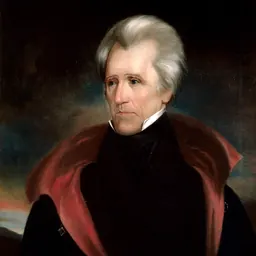

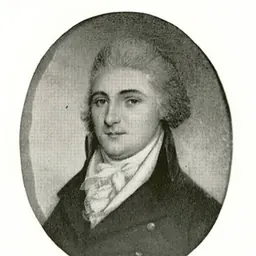

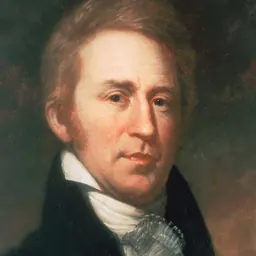

Related people
Same field, nearest in time
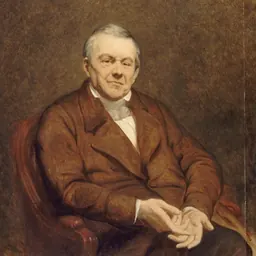




Contemporaries
People whose lives overlapped Daniel Dunklin's


Frequently asked questions
Who was Daniel Dunklin?
Missouri politician (1790-1844)
When was Daniel Dunklin born?
Daniel Dunklin was born on 14 January 1790 in Greenville.
When did Daniel Dunklin die?
Daniel Dunklin died on 25 August 1844 in Herculaneum.
What was Daniel Dunklin's occupation?
Daniel Dunklin was a politician, governor and jurist.
What nationality was Daniel Dunklin?
Daniel Dunklin was American.
Sources & further reading
Cite this page
APA: Biography.guide. (2026). Daniel Dunklin. https://biography.guide/daniel-dunklin/
MLA: "Daniel Dunklin." Biography.guide, https://biography.guide/daniel-dunklin/.
Chicago: "Daniel Dunklin." Biography.guide. https://biography.guide/daniel-dunklin/.
Data last updated: 2026-09-20 · Spot an error? Report a correction.
Page generated 2026-09-27 05:26 UTC