
Dan of Zhou
Legendary regional lord, regent, and culture hero of the early Zhou dynasty
About Dan of Zhou
Lived 1100 BC – 1032 BC. Dan of Zhou was a Chinese military leader, writer and culture hero.
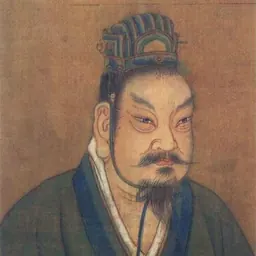
Dan, Duke Wen of Zhou, commonly known as the Duke of Zhou, was a member of the royal family of the early Zhou dynasty who played a major role in consolidating the kingdom established by his elder brother King Wu. He was renowned for acting as a capable and loyal regent for his young nephew King Cheng, and for successfully suppressing the Rebellion of the Three Guards and establishing firm rule of the Zhou dynasty over eastern China. He is also a Chinese culture hero, with the authorship of the I Ching and the Classic of Poetry having traditionally been attributed to him, as well as the establishment of the Rites of Zhou.
Life Painting of the Duke of Zhou by Kanō Sansetsu.Japan, Edo period, 1632. His personal name was Dan . He was the fourth son of King Wen of Zhou and Queen Tai Si. His eldest brother, Bo Yikao predeceased their father, and the second-eldest, Ji Fa, defeated the Shang dynasty at the Battle of Muye around 1046 BC, ascending the throne as King Wu. King Wu distributed many fiefs to his relatives and followers and charged Dan with securing the former Shang capital region near present-day Luoyang.
Regency Only three years after assuming power, King Wu died and left the kingdom to his young son King Cheng. The Duke of Zhou successfully attained the regency and administered the kingdom himself, At some point, the new king became ill, to which Ji Fan prayed for his safety. He would also write numerous treatises for the young king. Within five years, the Duke of Zhou had managed to defeat the Three Guards and other rebellions as Heaven itself follows the will of the people. Therefore upholding virtue and ruling with justice and clemency, showing pity to the orphans and widows, and ensure respectful treatment to everyone corresponds to the will of Heaven and the people, as Duke Zhou expresses and emphasized to the young king Cheng and his courtiers.
On a more practical level, the Duke of Zhou expanded and codified his brother's system of territorial administration, Laid out according to exact geomantic principles, Chengzhou was the home of King Cheng, the Shang nobility, and the nine tripod cauldrons symbolic of royal authority, while the Duke continued to administer the kingdom from the former capital of Haojing. Once Cheng came of age, according to traditional narrative, the Duke of Zhou dutifully gave up the throne without trouble.
Legacy
The duke's eight sons all received land from the king. The eldest son received Lu; the second succeeded to his father's fief.
In later centuries, subsequent emperors considered the Duke of Zhou a paragon of virtue and honored him with posthumous names. The empress Wu Zetian named her short-lived 8th-century Zhou dynasty (known as Wu Zhou in historiography) after him and called him the Honorable and Virtuous King (, Bāodé Wáng). In 1008, the Zhenzong Emperor gave the Duke the posthumous title King of Exemplary Culture . He was also known as the First Sage .
In 2004, Chinese archaeologists reported that they may have found his tomb complex in Qishan County, Shaanxi.
God of Dreams Duke of Zhou is also known as the "God of Dreams". The Analects record Confucius saying, "How I have gone downhill! It has been such a long time since I dreamt of the Duke of Zhou." This was meant as a lamentation of how the governmental ideals of the Duke of Zhou had faded, but was later taken literally. In Chinese legends, if an important thing is going to happen to someone, the Duke of Zhou will let the person know through dreams: hence the Chinese expression "Dreaming of Zhou Gong". Zhou Gong's is attributed to him.
Descendants The main line of the Duke of Zhou's descendants came from his firstborn son, the State of Lu ruler Bo Qin's third son Yu whose descendants adopted the surname Dongye . The Duke of Zhou's offspring held the title of Wujing Boshi (; ). One of the Duke of Zhou's 72 generation descendants family tree was examined and commented on by Song Lian.
Duke Huan of Lu's son Qingfu was an ancestor of Mencius. He was descended from Duke Yang of Lu, who was the son of Bo Qin, who was the son of the Duke of Zhou. The genealogy is found in the Mencius family tree .
The Zhikou Jiangs (also romanized as "Chiangs") such as Chiang Kai-shek were descended from Jiang Shijie who during the 17th century moved there from Fenghua District, whose ancestors in turn came to southeastern China's Zhejiang province after moving out of Northern China in the 13th century CE. The 12th-century BCE Duke of Zhou's third son was the ancestor of the Jiangs.
Don’t just read it —
keep it.
Full-length biographies made to live with: read them, listen on the way to work, watch them tonight.
- E-book
- Audio
- Video
Instant download · yours to keep · every purchase keeps this site free
Important facts
more
Duke of Chou, Chi Tan, Zhou Wengong, Duke Wen of the Zhou, Chou Wen-kung, Duke Wen of Chou, Literary Duke of Zhou, Literary Duke of the Zhou, Literary Duke of Chou, Literary Duke of the Chou, Civilized Duke of Zhou, Civilized Duke of the Zhou, Civilized Duke of Chou, Civilized Duke of the Chou, King Wenxian, Wenxian King of Zhou, Wenxian King of the Zhou, Wenxian King of Chou, Wenxian King of the Chou, Wen Duke of Zhou, Wen DukFamily & relationships
Related people
Same field, nearest in time




Contemporaries
People whose lives overlapped Dan of Zhou's


Frequently asked questions
Who was Dan of Zhou?
Legendary regional lord, regent, and culture hero of the early Zhou dynasty
When was Dan of Zhou born?
Dan of Zhou was born in 1100 BC.
When did Dan of Zhou die?
Dan of Zhou died in 1032 BC.
What was Dan of Zhou's occupation?
Dan of Zhou was a military leader, writer and culture hero.
What nationality was Dan of Zhou?
Dan of Zhou was Chinese.
Sources & further reading
Cite this page
APA: Biography.guide. (2026). Dan of Zhou. https://biography.guide/dan-of-zhou/
MLA: "Dan of Zhou." Biography.guide, https://biography.guide/dan-of-zhou/.
Chicago: "Dan of Zhou." Biography.guide. https://biography.guide/dan-of-zhou/.
Data last updated: 2026-09-26 · Spot an error? Report a correction.
Page generated 2026-09-27 05:15 UTC