
About Dan Lungu
Born 1969. Dan Lungu is a Romanian poet, historian, sociologist, literary historian, writer and literary critic.
Dan Lungu (; born September 15, 1969) is a Romanian novelist, short story writer, poet and dramatist, also known as a literary theorist and sociologist. The recipient of critical acclaim for his short story volume Cheta la flegmă ("Quest for Phlegm") and his novels Raiul găinilor ("Chicken Paradise") and Sînt o babă comunistă! ("I'm a Communist Biddy!"), he is also one of the most successful authors to have emerged in post-1990 Romanian literature. Lungu's literary universe, which mainly comprises "microsocial" images of life under the communist regime and during the subsequent transitional period, bridges a form of Neorealism with Postmodernism. Often included among a group of authors who signed their first major contracts with Polirom publishing house, he is also seen as a distinctive voice from his adoptive provincial city of Iași.
A lecturer at the Faculty of Sociology, University of Iași, and former editor in chief of Timpul newspaper, Dan Lungu is also the noted author and co-author of essays and sociological research into everyday life under communist rule, scientific preoccupations which share similarities with his work in fiction. His main interests in the area of historical research include the feminine experience of totalitarian rule, the connection between official propaganda and the actual lives of working class members, and the development of cultural attitudes in relation to communist censorship.
Biography Born in Botoșani city into a Romanian Orthodox family, Lungu has been described as one of the decreței, or children of the baby boom imposed by the communist ban on abortion. He completed his education in Iași, at the local university's Sociology Department, while pursuing interests in track and field, as well as Go. Having received his Ph.D. with a thesis on identity formation, he later pursued postdoctoral studies at the University of Paris. and he consequently came to be seen as its main theorist. Lungu also debuted as a dramatist, his work being included in two anthologies of young Romanian theater. They were followed in 2004 by the novel Raiul găinilor. A second volume of short stories, titled Băieți de gașcă (Romanian for both "Boys in a Gang" and "Good Fellows"), saw print in 2005. After joining fellow Club 8 member Gheo in authoring a study of social history and microsociology, investigating impact of communist rule on Romanian women, published in 2008 as Tovarășe de drum. Experiența feminină în comunism ("Female Fellow Travelers. Female Experience under Communism"), Lungu returned to fiction with the 2009 novel Cum să uiți o femeie ("How to Forget a Woman").
A resident of Iași, Dan Lungu is married and the father of two. he invested his money into a chalet on the outskirts of Iași.
As of 2009, Lungu's work had been translated into nine languages, In its Spanish translation, published in 2009, Sînt o babă comunistă! was included by El País daily in a "best of" chart for humorous literature. Also in 2009, a chart compiled by the satirical and lifestyle magazine Academia Cațavencu ranked Lungu 46th among the "50 sexiest Romanian intellectuals".
Style
Context Ever since his debut in prose, Dan Lungu has drawn attention as a leading figure among a generational wave of prose writers, most of whom published their work with Polirom. Within the Polirom collection, which primarily comprises autofictional works, Poet and critic Octavian Soviany notes: "Dan Lungu refuses [...] the monarchic perspective of the demiurge-novelist who always gazes on the world from above [...], for he treats his characters 'from one equal to another', places himself among them, advancing a vision 'from within' which confers upon the narrative some extra authenticity and naturalness." Researcher Cristina Chevereșan sees a special link between the works of Lungu, Florian and Stoica, "epics of life lived in the often suffocating circle of a collectivity as scanty and organically welded as it is oppressive". Lungu has also become one of the Romanian authors best known outside Romania, These aspects include Lungu's parodic take on clichés and commonplace ideas, a process which, according to Ursa, results in "cultural short-circuits". and seen by Moldovan literary critic Iulian Ciocan as less indebted to "the Postmodern paradigm". Commenting on Lungu's relation to a larger historical and stylistic context, Burța-Cernat wrote: "the prose writers of the newer category, the 'social anthropologists', do not aim to reinvent the world by capturing it within fabulous scenarios, but merely to describe it. They operate with a lens, a microscope [...], avid for describing its textures and the most anodyne of its details." Dan Lungu acknowledges that his main literary works tend to center each on a particular narrative technique, but recounts that the substance for this technique is only apparent to himself a posteriori. Their retrospective images of the era vary significantly, fluctuating between nostalgia and virulent anti-communism. Vasile quotes the book for its conclusions about the impact of agitprop, socialist realism and censorship on Romanian literature and education, including a corroboration of the censors' own dissatisfaction with their activity, or the link Lungu establishes between the spread of atheism and the communist version of science education. A distinct section of the essay refers to the tradition of Jewish Romanian literature, and in particular to the Jewish impact on modernist literature. In his review of the chapter, Cernat discussed the "relevant—if at times exaggerated—conclusions" Lungu draws on minority authors having been pushed by their social marginalization into becoming the cultural avant-garde. In Cernat's view, Construcția identității... "imposes itself through span, seriousness and an irreproachable professionalism", but suffers from "a savant jargon which limits [its] reception to the circle of specialists." According to Bianca Burța-Cernat, the study, part of a "war on silence", falls in line with earlier contributions in this field—particularly those of Gabriel Horațiu Decuble, Doina Jela and Tia Șerbănescu. Marius Chivu also underlines their subject's proximity to Cristian Mungiu's award-winning film 4 Months, 3 Weeks and 2 Days.
Among the diverse accounts in Tovarășe de drum, Burța-Cernat singles out those of Babeți, who recalls the importance tote bags had for her family during two decades of communism, and Bittel, who speaks about the ideal female cook, as "the queen of sarmale". She is however critical of the fact that such a contribution was initiated by men, arguing that this impinges on its merits: "given the way in which they write here, the ladies invited to partake in this collective project leave the impression that they are striving to fall in line with the rules of a game, [...] to confirm [...] the already consolidated idea about them: the idea of difference—much too essentialist (and it is biological essentialism that is involved here)—, the idea that [...] they see the world, politics included, different from humanity's masculine majority." As part of this comment, she also argues that the book is excessively indebted to concrete economic aspects which women found especially challenging, whereas the "generically human" intellectual needs are "placed in brackets". Chivu, who saw the work as fluctuating between the seriousness of Ruști's account and Babeți's humorous recollection, believed Simona Popescu's contribution, which describes communist experience as "laughing out of pity", to be "the most balanced". In reference to the entire text, and in particular accounts of the ban on abortion, he argues: "all [its] female authors fundamentally speak about the same thing: the torment of being a woman, between the frustration of having one's intimacy forbidden and the efforts of illicit femininity." Babeți's account was also viewed with interest by journalist Florentina Ciuverca, who also drew attention to Ruști's story about how, despite the official campaign against abortion, a doctor preemptively subjected her to curettage over a case of vaginal bleeding.
Cum să uiți o femeie Written during Lungu's stay at the Villa Mont Noir, Cum să uiți o femeie is the story of Andi, an investigative journalist employed by a seedy newspaper, covering the period after his lover Marga decides to leave him unannounced. Lungu, who likens the volume's technique with a Möbius strip and a "psychological zoom", focuses on his protagonist's subsequent dismay, showing him as both character and narrator, while detailing his series of failed love affairs and his conclusion that Magda had never loved him. A secondary element in the plot recounts Andi's tightening bond with his landlord, the Adventist preacher Set, a process illustrated by dialogues which evolve between proselytism and compassion. According to Marius Chivu, the relationship between Set and Andi is "the novel's consistent part" and a "tour de force", owing to "the natural manner and the authenticity with which [Lungu] recomposes the missionary and religious message." Chivu concludes: "Set is the actual character in this (elegantly written, but lacking in stylistic pretensions) novel, having, overall, enough pathos for a subject far more delicate than love for a woman, that is the love for one's neighbor. For some readers, this may mean very much." According to critic and writer Ovidiu Șimonca, Cum să uiți o femeie is "tight, ambitious, inciting", but the story line "is wrapped in too many outside details".
The author himself compared Cum să uiți o femeie with Sînt o babă comunistă!, noting that it was the first of his works to be completely separated from the memory of communism. He specified feeling "intoxicated" by his earlier themes and having an explicit wish was to create "a one hundred percent romance novel", arguing: "It was much harder for me to write about the world of Neoprotestantism than from a feminine perspective." He added having felt "a vague and persistent fear that there were mistakes to be made with each step [of the writing process]", explaining: "This being a setting relatively unknown to me, it was easily conceivable that I could have missed or inadequately placed significant details. I was also obsessed with the fear of not offending, not carelessly hurting the dignity of a religious minority. I did not write these articles so as to vilify the born again, to perpetuate all sort of stereotypes about them, but to understand them and to create a powerful character, as I would hope is the case with presbyter Set [...]." Lungu also mentioned having learned to discard his own preconceptions about minority religions, and recounted having asked a pastor to verify the narrative as one from inside the religious phenomenon.
Answering to objections about the lack of focus on the central love affair, he commented: "It is, most of all, a novel about memory: what happens to memory and how it restructures itself after a sentimental fracture in one's biography. Things are not very clear-cut, there is no single narrative in one's resurrecting memory, there is a passage from one zone to another, things are slippery, subtle, nuanced. [...] Memory is like an onion that, when peeled, only grows bigger." He added that the novel could be read as the antithesis between the daily and the eternal: Andi's place of employment ("the newspaper") and the object of Christian reverence ("the Bible").
Don’t just read it —
keep it.
Full-length biographies made to live with: read them, listen on the way to work, watch them tonight.
- E-book
- Audio
- Video
Instant download · yours to keep · every purchase keeps this site free
Important facts
People in Dan Lungu's life
Named in this biography and alive at the same time


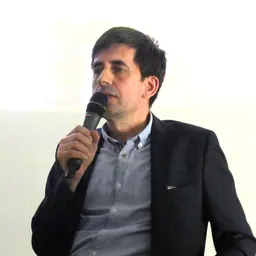
Related people
Same field, nearest in time


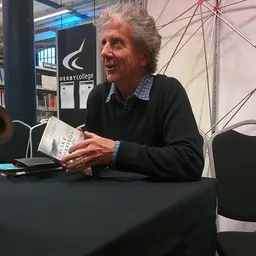

Contemporaries
People whose lives overlapped Dan Lungu's






Frequently asked questions
Who is Dan Lungu?
Romanian writer
When was Dan Lungu born?
Dan Lungu was born on 15 September 1969 in Botoșani.
What is Dan Lungu's occupation?
Dan Lungu is a poet, historian, sociologist, literary historian, writer and literary critic.
What nationality is Dan Lungu?
Dan Lungu is Romanian.
Sources & further reading
Cite this page
APA: Biography.guide. (2026). Dan Lungu. https://biography.guide/dan-lungu/
MLA: "Dan Lungu." Biography.guide, https://biography.guide/dan-lungu/.
Chicago: "Dan Lungu." Biography.guide. https://biography.guide/dan-lungu/.
Data last updated: 2026-09-26 · Spot an error? Report a correction.
Page generated 2026-09-27 05:16 UTC