
Dan Keating
IRA member
About Dan Keating
Lived 1902 – 2007 (aged 105). Dan Keating was an Irish.
Daniel Keating (, 2 January 1902 – 2 October 2007) was a lifelong Irish republican and former president of the Republican Sinn Féin. At the time of his death, he was Ireland's oldest man and the last surviving veteran of the Irish War of Independence.
Republican activity
Keating joined Fianna Éireann in 1918.
On 21 April 1921, Royal Irish Constabulary (RIC) Constable Denis O'Loughlin was shot dead in Knightly's public house in Tralee. Keating, Jimmy O'Connor and Percy Hanafin were suspected of the killing, and were forced to go on the run. On 1 June, Keating was involved in an ambush between Castlemaine and Milltown which claimed the lives of five RIC men. On 10 July, a day before the truce between the IRA and British forces, Keating's unit was involved in a gun battle with the British Army near Castleisland. This confrontation resulted in the deaths of four British soldiers and five IRA volunteers.
Keating opposed the 1921 Anglo-Irish Treaty and fought on the anti-treaty side in the Irish Civil War.
In 1933, he was involved in an attempt to assassinate the leader of the Irish Blueshirts, Eoin O'Duffy, during a visit to County Kerry. The attack was to happen at Ballyseedy, where Free State forces had carried out the Ballyseedy massacre during the Irish Civil War. However, the plot failed when the person travelling with O'Duffy refused to divulge what car the latter would be travelling in.
Keating remained an IRA member for a long time after the Civil War. He was arrested several times during the 1930s on various charges relating to his Irish republican activities and in 1935 he was sentenced to 12 months in Mountjoy Prison.
Keating was active in London during the 1939/1940 IRA bombing/sabotage campaign - the S-Plan. In January 1940 Keating was put in charge of an IRA Active Service Unit in London. This group carried out a series of bombings and arson attacks in central London and remained active until the end of the campaign. Back in Ireland, Keating was arrested again in August 1940 and again interned at the Curragh Camp and was released after the May 1944 election victory of Fianna Fáil.
Later life and death
In 1944 Keating married Dolly Fleming from County Waterford. Keating subsequently returned to Dublin and worked as a barman in several public houses. He retired and returned to his native Kerry in 1978, living out the rest of his life with relatives in Knockbrack. Until his death he refused to accept a state pension because he considered the 26-county Republic of Ireland an illegitimate state which usurped the 1916 Irish Republic.
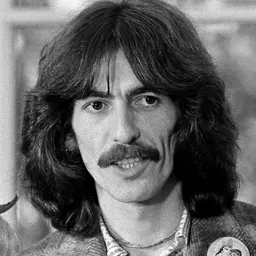
In 2002, he refused the state's standard €2,500 award to centenarians from President Mary McAleese. After former IRA volunteer George Harrison died in October 2004, Keating became patron of Republican Sinn Féin until his own death. By the time of his death he was the oldest man in Ireland. He was buried in Kiltallagh cemetery near Castlemaine.
Don’t just read it —
keep it.
Full-length biographies made to live with: read them, listen on the way to work, watch them tonight.
- E-book
- Audio
- Video
Instant download · yours to keep · every purchase keeps this site free
Important facts
People in Dan Keating's life
Named in this biography and alive at the same time


Contemporaries
People whose lives overlapped Dan Keating's




Frequently asked questions
Who was Dan Keating?
IRA member (1902-2007)
When was Dan Keating born?
Dan Keating was born on 2 January 1902 in Castlemaine.
When did Dan Keating die?
Dan Keating died on 2 October 2007 in County Kerry.
What nationality was Dan Keating?
Dan Keating was Irish.
Sources & further reading
Cite this page
APA: Biography.guide. (2026). Dan Keating. https://biography.guide/dan-keating/
MLA: "Dan Keating." Biography.guide, https://biography.guide/dan-keating/.
Chicago: "Dan Keating." Biography.guide. https://biography.guide/dan-keating/.
Data last updated: 2026-09-20 · Spot an error? Report a correction.
Page generated 2026-09-27 05:30 UTC