
About Dan H. Yaalon
Lived 1924 – 2014 (aged 89). Dan H. Yaalon was an Israeli scientist and university teacher.
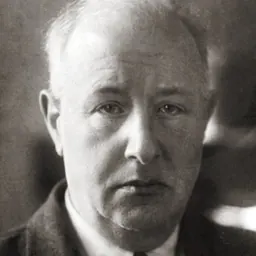
Dan Hardy Yaalon (; May 11, 1924 – January 29, 2014) was an Israeli pedologist and soil scientist. He contributed to the fields of arid and Mediterranean pedology and paleopedology, as well as the history, sociology, and philosophy of soil science. Through a research career spanning over six decades (1950–2014), Yaalon was an active member of the International Union for Quaternary Research (INQUA) and the International Soil Science Society (ISSS; later the International Union of Soil Sciences; IUSS). He was awarded the Sarton Medal for his contribution to the history of science, and the Dokuchaev Award.
Early life and education Dan Hardy Yaalon was born as Hardy Berger on May 11, 1924, in Uherské Hradiště, Czechoslovakia (modern day Czech Republic) to a middle-class Jewish family involved in the textile business. He was the youngest child of Hugo J. Berger and Elsa Jellinek, and had two older sisters, Dita and Stella. Yaalon was a curious child and a high-achieving pupil, who showed an early interest in exploring his environment. Typical for his family background, Yaalon was part of the Maccabi youth movement, an international Zionist movement aimed at motivating Jewish youth to immigrate to "Eretz Israel". Yaalon's comfortable childhood was disrupted at the age of 10 by the death of his father.
The Nazi occupation of Czechoslovakia five years later in 1939 further fragmented the family. Yaalon's mother encouraged him to leave the country to escape the escalating Anti-Jewish measures. In March 1939, Yaalon left Uherske Hradiste for the Youth Aliyah School in Prague, a Jewish Youth Immigration School, where he was a student for three months. During that time, Yaalon was offered an internship at the Zionist agricultural training program in Denmark, as a preparatory step for emigrating to Israel. Yaalon left Czechoslovakia and travelled by train via Germany to Denmark, after which he never saw his mother again. In September 1943, after a long period of hiding and struggling to feed himself, he began academic studies at the Royal Veterinary and Agricultural University in Copenhagen. Two months later, Denmark was also occupied by the Nazis, and Yaalon escaped to Sweden. His first publication was a detailed laboratory textbook written in 1952 during his studies, with his fellow student, Meir Rigby. Yaalon's research guidance was disrupted by Reifenberg's health problems, and when he died in 1953, Yaalon's supervision was passed over to Shlomo Ravikovitch (1899–2000). In 1957, Yaalon was appointed as lecturer at the Hebrew University of Jerusalem, where he would stay until his retirement and after. Due to his initial background in the field of soil colloids, his academic career focused on the finest fraction and texture of soils, one of his main motivations in working on aeolian dust throughout his research career.
In 1965, Yaalon urged INQUA to adopt the term "Paleopedology" (ancient Pedology), establishing the subject as a commission of INQUA, In 1966, Yaalon presented his original concept of 'metapedogenesis', in which he defined humans as an important factor of soil formation. In August 1970, a joint ISSS and INQUA symposium was held in Amsterdam, on the 'Age of Parent Material and Soils', a result of correspondence between Yaalon, Robert Ruhe (1918–1993), and Ferdinand van Baren (1905–1975). The symposium was later summarized in the book Paleopedology: Origin, Nature and Dating of Paleosols, edited by Yaalon, which collated 29 selected multidisciplinary papers, including several contributions from Yaalon. In "Soil-forming processes in time and space", Yaalon suggested a dynamic model of the soil system, distinguishing between two major groups of soil equilibrium processes: 1) those approaching an equilibrium state at different rates, and; 2) irreversible or self-terminating processes. He then further developed each group and presented a classification of diagnostic pedofeatures according to their state of origin and relative nature of persistence.
In 1973 Yaalon and his former student, Eliezer Ganor (1935–2011), published a work concerning the important role of aeolian dust on the formation of soils in the eastern Mediterranean during the Quaternary. In that work, he discussed the global modes of dust and paths of distribution, and presented evidence that the red color of the Terra Rossa soils originated from the presence of iron oxides in airborne dust, while contradicting Reifenberg and others, who had attributed this color to carbon oxides from the underlying parent rock. a high-profile article in which Yaalon demonstrated the complexity of the quantifying of pedogenetic processes. Consequently, in 1977 Yaalon was elected president of the INQUA Commission on Paleopedology. Another of Yaalon's editorial works was a special issue of Geoderma entitled "Climatic and Lithostratigraphic Significance of Paleosols", summarizing a symposium of the same name held in Ottawa, Canada. In 1994, at the age of 70 and two years past official retirement, Yaalon left his office at the Hebrew University of Jerusalem and only seldom returned to it, continuing his writing, editing and reviewing from his home. In 1997, Yaalon published a paper on the uniqueness of Mediterranean Soils, asking "What makes them different?". In that paper, he characterized the global nature of Mediterranean climates, while focusing on the region which encompasses the Mediterranean Sea. Discussing the soil and landscape characteristics, this paper gives a broad and detailed overview of the typical Mediterranean environmental conditions, geomorphology, geochemistry, pedology, and anthropogenic impacts on Mediterranean ecosystems.
Alongside his main focus on soil forming processes, Yaalon also made contributions to the fields of the history, philosophy and sociology of soil science. He played a key role in the establishment of the ISSS Working Group on the History of soil science (today the IUSS Commission 4.5 - History, philosophy and sociology of soil science). In 1997 he co-edited the book History of Soil Science: International Perspectives. This book is a collection of treaties which show historical developments in the understanding and attitude of humans to the soil. As demonstrated in this book, Yaalon's approach to the history of soil sciences emphasized the acknowledgment of soil distinctions and the unfolding of sub-disciplines as utilized by early agriculturists.
Yaalon continued publishing new work until the last days of his life. In 2012, after years of draft writing, he published his autobiography, A Passion for Science and Zion: The Yaalon Story. This event was followed by a special Memorial Issue in the journal of CATENA. In 2016, the IUSS commemorated Dan Yaalon with the Dan Yaalon Young Scientist Medal, to be awarded every four years on an interdivisional level in the framework of the World Congresses of Soil Science.
Selected publications Dan Yaalon has contributed to more than 200 publications, including original articles, book chapters and reviews, conference papers, scientific notes, encyclopedia entries and highly cited abstracts. Furthermore, Yaalon has been the editor of numerous collections on pedology and soil science. He was a founding editor of CATENA, and an editorial board member of CATENA, Geoderma, and Soil Science. Some of Yaalon's key publications include: 1971 – Soil-forming processes in time and space. 1997 – Soils in the Mediterranean region: What makes them different? The fullest bibliographical list of Dan H. Yaalon is given in the Editorial of the CATENA Dan H. Yaalon Memorial Issue (Vol. 146), on pages 3-9.
Don’t just read it —
keep it.
Full-length biographies made to live with: read them, listen on the way to work, watch them tonight.
- E-book
- Audio
- Video
Instant download · yours to keep · every purchase keeps this site free
Important facts
People in Dan H. Yaalon's life
Named in this biography and alive at the same time

Related people
Same field, nearest in time


Contemporaries
People whose lives overlapped Dan H. Yaalon's

Frequently asked questions
Who was Dan H. Yaalon?
Israeli pedologist and soil scientist (1924-2014)
When was Dan H. Yaalon born?
Dan H. Yaalon was born on 11 May 1924 in Uherské Hradiště.
When did Dan H. Yaalon die?
Dan H. Yaalon died on 29 January 2014 in Mevaseret Zion, Israel.
What was Dan H. Yaalon's occupation?
Dan H. Yaalon was a scientist and university teacher.
What nationality was Dan H. Yaalon?
Dan H. Yaalon was Israeli.
Sources & further reading
Cite this page
APA: Biography.guide. (2026). Dan H. Yaalon. https://biography.guide/dan-h-yaalon/
MLA: "Dan H. Yaalon." Biography.guide, https://biography.guide/dan-h-yaalon/.
Chicago: "Dan H. Yaalon." Biography.guide. https://biography.guide/dan-h-yaalon/.
Data last updated: 2026-09-25 · Spot an error? Report a correction.
Page generated 2026-09-27 05:11 UTC