
About Dan Ben-Amotz
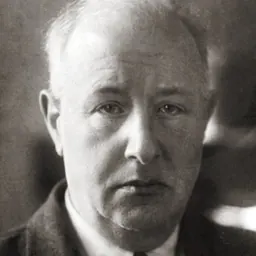
Lived 1924 – 1989 (aged 65). Dan Ben-Amotz was an Israeli journalist, actor, writer, lexicographer and aliyah Bet activist.
Dan Ben-Amotz (; April 13, 1924 – October 20, 1989) was an Israeli radio broadcaster, journalist, playwright, and author, as well as a former Palmach member. Despite having immigrated from Poland in 1938, he was often considered the epitome of the "Sabra", a native born Israeli Jew. His parents were murdered in the Holocaust.
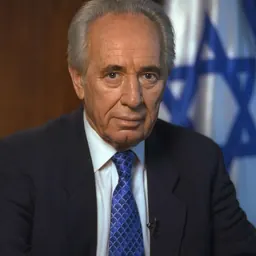
In Palestine he was sent to Ben Shemen Youth Village, where his counselor was Shimon Peres. He changed his name to Moshe Shimony and later to Dan Ben-Amotz, feeling the latter had the right sabra sound. Reinventing his personal history to portray himself as a true native sabra, Ben-Amotz claimed to be an orphan who had relatives in some of the older Zionist settlements.
Media and literary career Amotz spent the years of the 1948 Arab-Israeli War in Europe as a national emissary. After the war he worked for a short while as a Paris correspondent for Israeli papers. He then traveled to the United States and went to Hollywood. He made friends with Marlon Brando and Blackie Dammett, Anthony Kiedis's father, and had a small part in A Streetcar Named Desire (1951).
According to the Los Angeles Times, "Ben-Amotz was one of the pioneers in the revival of modern Hebrew from a dormant language of prayer and study. He authored a dictionary of Hebrew slang and wrote articles and novels that shocked many Israelis with their frankness." He died in 1989 in Jaffa and was survived by two sons and two daughters.
Published works Parents Meeting (1962) was semi-autobiographical short story about the hardships of the new immigrants in an Israeli boarding school in the Yishuv. The screenplay for the movie Siege (1968), in which he also acted, dealt with the difficulties that a war widow faces in militaristic Israeli society. His novel To Remember, To Forget (1968) revealed some autobiographical motifs – the protagonist is a young man who lost his family in the Holocaust and attempted (by changing his name) to re-create himself as a true sabra. In the book, Ben-Amotz tried to confront such questions as his European past and German guilt over the Holocaust. In 1972 he published his dictionary of Hebrew slang, which he co-wrote with Netiva Ben Yehuda. The novel Does Not Give a Damn (1973) told of a soldier who was wounded in battle and his rehabilitation efforts.
Novels Lizkor lishcoah. 1968; as To Remember, to Forget, 1968. Lo sam zayin [Does Not Give a Damn]. 1973. Ziyunim zeh lo ha-kol: Roman mafteah le-lo man'ul (Screwing Isn't Everything). 1979. Ziyunyune ha-derekh: Roman mafteah le-lo man'ul (sequel to Ziyunim zeh lo ha-kol). 1980.
Short stories Arba'ah ve-'arba'ah: Sipurim [Four and Four: Stories]. 1950. Sipurim poh sipurim sham. 1982.
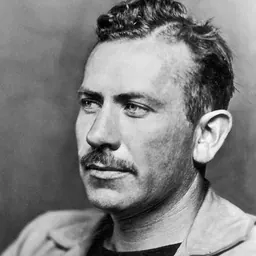
Plays Tefos kamah she-atah yakhol (Seret-metah-meforash) [Catch As Much You Can] (screenplay). 1975; as Mishak yeladim [Nothing to It], 1982. Tel-Aviv ha-ketanah: Hizayon [Little Old Tel-Aviv], with Hayim Hefer. 1980. 'Al 'akhbarim va-anashim, with Ehud Manor, adaptation of Of Mice and Men by John Steinbeck (produced 1990).
Screenplays Matzor [Siege], with Gilberto Tofano, 1968 Sheloshah yamim ve-yeled, with Uri Zohar and Amatsia Hiouni, adaptation of a story by A. B. Yehoshua, 1976.
Other Yalkut ha-kezavim, with Hayim Hefer. 1956. Mah nishma' [What's New]. 1959. Ekh la-'asot mah [How to Do What]. 1962. Milon olami le-'ivrit miduberet [The World Dictionary of Hebrew Slang] (2 vols.), with Netiva Ben-Yehuda. 1972, 1982. Yofi shel milhamah. 1974. Keri'ah tamah; Sifrutek [Reflection in Time]. 1974. Nashim kotvot le-Dan Ben-Amots: Bi-teguvah le-sefer "Ziyunim zeh lo ha-kol," with Varda Rasiel Jackont (correspondence). 1980. Sipurei Abu-Nimer [Stories and Fables from Arab Folklore]. 1982. Sefer ha-felots veha-shikhehah, with Donald Wetzel and Martin Riskin. 1985. Kelil tif'eret ha-melitsah (dictionary and reader of 19th century Hebrew). 1986. Ten hiyukh: Metav ha-kezavim she-lo hikhzivu ba-'itonut hatseva'it, with Ze'ev Anner and Dani Kerman. 1989. Editor, with Shlomo Shva, Erets Tsiyon Yerushalayim. 1973. Translator, with Amnon Dankner, Adif melafefon 'al hagever mi-pene she, (Why Cucumbers are Better Than Men by M. L. Brooks). 1985.
Don’t just read it —
keep it.
Full-length biographies made to live with: read them, listen on the way to work, watch them tonight.
- E-book
- Audio
- Video
Instant download · yours to keep · every purchase keeps this site free
Important facts
People in Dan Ben-Amotz's life
Named in this biography and alive at the same time




Related people
Same field, nearest in time

Contemporaries
People whose lives overlapped Dan Ben-Amotz's


Frequently asked questions
Who was Dan Ben-Amotz?
Israeli writer (1924-1989)
When was Dan Ben-Amotz born?
Dan Ben-Amotz was born on 13 April 1924 in Rivne.
When did Dan Ben-Amotz die?
Dan Ben-Amotz died on 20 October 1989 in Tel Aviv.
What was Dan Ben-Amotz's occupation?
Dan Ben-Amotz was a journalist, actor, writer, lexicographer and aliyah Bet activist.
What nationality was Dan Ben-Amotz?
Dan Ben-Amotz was Israeli.
Sources & further reading
Cite this page
APA: Biography.guide. (2026). Dan Ben-Amotz. https://biography.guide/dan-ben-amotz/
MLA: "Dan Ben-Amotz." Biography.guide, https://biography.guide/dan-ben-amotz/.
Chicago: "Dan Ben-Amotz." Biography.guide. https://biography.guide/dan-ben-amotz/.
Data last updated: 2026-09-20 · Spot an error? Report a correction.
Page generated 2026-09-27 05:19 UTC