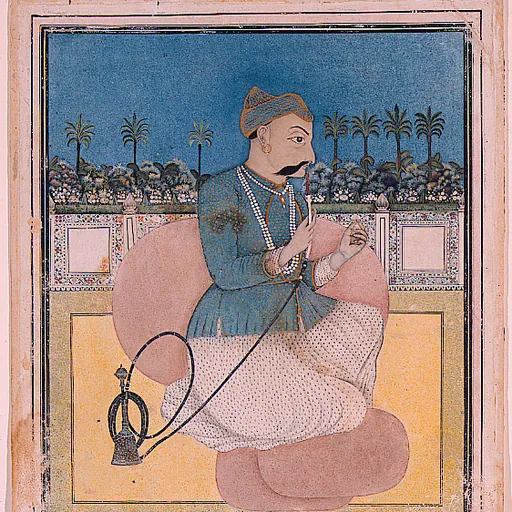
Damaji Rao Gaekwad
Maratha ruler of Baroda State
About Damaji Rao Gaekwad
Damaji Rao Gaekwad (died 18 August 1768) was the second Maharaja of Baroda reigning from 14 May 1732 until his death on 18 August 1768.
Early life Damaji, also known as Damaji II, was the third son of Pilaji Rao Gaekwad. His father Pilaji was an adopted son of Damaji I, who had received the hereditary title Shamsher Bahadur from Chhattrapati Shahu. Pilaji himself had received another hereditary title, Sena Khas Khel.
Rebellion against the Peshwa
The Gaekwads were originally lieutenants of the Dabhade family, the Maratha chiefs of Gujarat and holders of the senapati (commander-in-chief) title. In 1731, Trimbak Rao Dabhade was killed for rebelling against Peshwa Baji Rao. The Peshwa allowed the Dabhades to retain their title and territories in Gujarat, on the condition that they would remit half of their revenues to the Maratha Chhatrapati's treasury. His minor brother Yashwant Rao Dabhade was appointed as the senapati, with his mother Umabai Dabhade exercising the executive powers. Pilaji, and after his death in 1732, Damaji held the actual military power as Yashwant Rao was a minor. Even as he grew up, Yashwant Rao got addicted to alcohol and opium, and Damaji gradually increased his power during this time.
Umabai initially pretended reconciliation with Peshwa Bajirao, but maintained a grudge against him for killing her son. After Bajirao's death, she pleaded with the new Peshwa Balaji Rao, to release the Dabhades from the revenue-sharing covenant. When he refused to do so, she sided with Tarabai in a rebellion against the Peshwa. When Balaji Baji Rao left for the Mughal frontier, Tarabai imprisoned Chhatrapati Rajaram II and Umabai dispatched Damaji Gaekwad with a 15,000-strong force to support her. In Pune, the Peshwa repeatedly pressurized Damaji to cede half of Gujarat on behalf of Yashwant Rao Dabhade. Damaji kept refusing, and on 19 July 1751, the Peshwa placed him and his dewan Ramchandra Baswant in strict confinement. On 14 November, he sent them to a captivity in Lohagad.
Damaji Rao Gaekwad commanded a bold fleet that attacked English and Dutch ships at Surat. In 1757, his forces captured an English boat and the galbat Shark, prompting the Dutch and English to plan a joint attack on his fleet based in Billimora. Appaji Gopal, a notorious pirate known as the Billimora Pandit, was enough to make the British hesitant to confront him.
The relationship between Appaji Gopal and Damaji is unclear; the English were instructed to avoid Damaji's ports while pursuing Gopal, suggesting Gopal operated independently. By 1764, Jayaramrao Appaji led Damaji's fleet, refusing to return an English ship that had washed ashore, citing a prior incident.
The Gaekwad fleet was not under the Peshwa's control, despite their nominal allegiance, and they frequently defied his authority, rarely cooperating during critical moments.
Don’t just read it —
keep it.
Full-length biographies made to live with: read them, listen on the way to work, watch them tonight.
- E-book
- Audio
- Video
Instant download · yours to keep · every purchase keeps this site free
Important facts
Family & relationships
Frequently asked questions
Who was Damaji Rao Gaekwad?
Maratha ruler of Baroda State
When did Damaji Rao Gaekwad die?
Damaji Rao Gaekwad died on 18 August 1768 in Patan.
Sources & further reading
· Wikipedia: Damaji Rao Gaekwad
Cite this page
APA: Biography.guide. (2026). Damaji Rao Gaekwad. https://biography.guide/damaji-rao-gaekwad/
MLA: "Damaji Rao Gaekwad." Biography.guide, https://biography.guide/damaji-rao-gaekwad/.
Chicago: "Damaji Rao Gaekwad." Biography.guide. https://biography.guide/damaji-rao-gaekwad/.
Data last updated: 2026-09-24 · Spot an error? Report a correction.
Portrait: Wikimedia Commons · author & licence
Page generated 2026-09-27 05:08 UTC